CRUCIAL 102472Z8D3N16813 Eudimm Axion DDR3 8GB 1600 1.35V CL11 CT102472BD160B.18FE
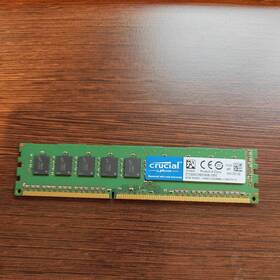
( Brand: Crucial ), ( Manufacturer Part Number: 102472Z8D3N16813 ), ( Model: AXION ), ( Form Factor: Pc3 ), ( Type: Server Memory ), ( Total Capacity: 8 Gb ), ( Bus Speed: 12800 1600 )
Review CRUCIAL 8gb Eudimm 1.35v Used Tested
The **Crucial 8GB (2x4GB) DDR3 1600MHz ECC Registered DIMM (RDIMM) memory module, model CT102472BD160B.18FE**, is a high-performance, enterprise-grade solution designed to meet the demanding requirements of servers, workstations, and data-intensive applications. Engineered with precision and reliability in mind, this module features **1600MHz (PC3-12800) DDR3 memory**, delivering sustained data transfer speeds of 12.8 GB/s per channel, ensuring rapid processing and reduced latency for critical workloads. The **ECC (Error-Correcting Code) Registered DIMM** architecture provides robust error detection and correction, safeguarding against data corruption in mission-critical environments where uptime and accuracy are paramount. Operating at a **1.35V voltage**, this module optimizes power efficiency while maintaining peak performance, making it an ideal choice for systems where thermal management and energy consumption are key considerations.
Each module is constructed with **8GB of capacity (2x4GB) using 16-bit wide data buses**, allowing for seamless integration into dual-channel memory configurations. The **CL11 (CAS Latency 11) timing** ensures a balanced performance profile, offering a harmonious blend of speed and stability without compromising system responsiveness. Built to adhere to strict industry standards, this RDIMM module is fully compatible with a wide range of **Intel Xeon and AMD Opteron-based servers**, as well as high-end workstations and storage solutions. The **240-pin DIMM form factor** ensures compatibility with modern server motherboards, while the **Registered (Buffered) design** mitigates signal integrity issues on longer memory channels, reducing the risk of data corruption in multi-socket systems.
Crucial s reputation for quality and reliability is further reinforced by this module s **low-power, high-density construction**, making it a cost-effective upgrade for businesses seeking to enhance their infrastructure without excessive energy overhead. Whether deployed in virtualized environments, database servers, or high-performance computing clusters, this memory module delivers the speed, stability, and endurance required to handle the most demanding computational tasks. With Crucial s commitment to quality assurance and rigorous testing, users can trust that this **CT102472BD160B.18FE** module will operate flawlessly for years, providing a solid foundation for seamless performance in enterprise-grade systems.
### **Pros and Cons of buying a Crucial 102472Z8D3N160B (8GB DDR3 1600MHz ECC UDIMM 1.35V CL11)**
#### **Pros:**1. **High Performance for Server/Workstation Use** DDR3 1600MHz is a solid speed for older or mid-range server/workstation builds, offering better throughput than slower DDR3 modules (e.g., 1333MHz).
2. **ECC Memory Support** Error-Correcting Code (ECC) memory is essential for servers, workstations, and applications requiring data integrity (e.g., databases, virtualization, scientific computing).
3. **Reliability** Crucial is a trusted brand with a reputation for stable, long-lasting memory modules. ECC modules are generally more durable than non-ECC counterparts.
4. **Compatibility with Older Systems** DDR3 is widely supported in enterprise servers, high-end desktops, and older workstations, making this a versatile choice for upgrades.
5. **Low Power Consumption (1.35V)** Running at 1.35V reduces heat and power draw compared to higher-voltage DDR3 modules, which can be beneficial for efficiency.
6. **Registered (RDIMM) Option** If this is a registered variant (though the part number suggests it may be unbuffered UDIMM), it can handle higher memory capacities in multi-channel systems.
7. **Good Latency (CL11)** A CAS latency of 11 is reasonable for DDR3, balancing speed and stability without being overly aggressive.
#### **Cons:**1. **Outdated Technology** DDR3 is several generations old (released 2010), meaning it lacks the efficiency and performance of newer DDR4/DDR5. If you're building a modern system, this may be underpowered.
2. **Limited Availability of DDR3 Systems** Most new motherboards and CPUs support DDR4 or DDR5, making this module less useful for contemporary builds unless upgrading an existing DDR3 system.
3. **Higher Cost per GB Compared to DDR4/DDR5** While DDR3 modules are often cheaper upfront, the performance per dollar is lower than newer generations, especially for high-capacity needs.
4. **Potential for Bottlenecks** If paired with a modern CPU (e.g., Intel 12th Gen or AMD Ryzen 5000 ), DDR3 will likely bottleneck memory bandwidth, reducing overall system performance.
5. **No Support for Advanced Features** DDR3 lacks features like XMP/DOCP (overclocking), AVX-512, or lower power states found in newer DDR standards, limiting optimization options.
6. **Physical Compatibility Issues** DDR3 modules won t fit in DDR4/DDR5 slots, so this purchase is locked into older hardware.
7. **End-of-Life Risk** Crucial (and other brands) may discontinue support for DDR3 over time, making future upgrades or replacements harder.
---
### **Conclusion**
This **Crucial 8GB DDR3 1600MHz ECC UDIMM** is a solid choice if you are:- **Upgrading an existing DDR3-based server, workstation, or older gaming PC** where memory bandwidth isn t a bottleneck.
- **Prioritizing reliability and data integrity** (e.g., for databases, virtualization, or scientific computing).
- **Working within a budget** where newer DDR4/DDR5 modules aren t feasible.
However, if you are building a **new system**, this module is **not recommended** due to its outdated technology. Modern CPUs and motherboards (especially those supporting DDR4/DDR5) will severely limit performance, and the lack of future-proofing makes it a poor long-term investment.
---
### **Recommendation**
- **For DDR3 Systems:** Proceed with confidence this is a reliable, high-quality module for legacy hardware.
- **For New Builds:** Avoid this module. Instead, opt for **DDR4 (e.g., 3200MHz/3600MHz) or DDR5 (e.g., 4800MHz/6000MHz)** depending on your motherboard and CPU. Modern memory offers better performance, efficiency, and future compatibility.
- **For Workstations/Servers:** If DDR3 is unavoidable, ensure your system architecture fully supports it (e.g., Xeon/E5/E7 CPUs, older Intel/AMD server chips). Consider **DDR4 ECC** (e.g., 2666MHz) as a transitional upgrade if possible.
If you re unsure about your system s compatibility, verify with your motherboard/CPU manual before purchasing.
Details:
part #: 102472z8d3n16813 prices
- $25.00-$38.95
specifications servermemor:
- brand: Crucial
- mpn: 102472z8d3n16813
- model: Axion
- form factor: Pc3
- type: Server Memory
- total capacity: 8 Gb
- bus speed: 12800 1600
shipping servermemor:
- type: Calculated
- class: Standard
- transit: 4-8 Days
- cost: $5.20
- carrier: USPS
- service: USPS Ground Advantage
returns servermemor:
- policy: No Returns
payments servermemor:
- credit card: Diners-club
- wallet: Google-pay
- other
general servermemor:
- condition: Used
- Enterprise Networking, Servers > Server Components > Server Memory RAM
offer servermemor:
- quantity: 4
- started: March 5, 2026
- best offers: True
- availability: In Stock
- options: Ship-to-home
- sold: 0
seller servermemor:
- # reviews: 201
- city: Cleveland, Ohio
- rating: 100.0%
Crucial 102472Z8D3N16813 Is Similar To:
- Bls4g3d169ds3 Crucial Ballistix Desktop Ram Tested Grade (27.4% similar) 30 day warranty included. Cosmetic issues are not covered under warranty...(July 20th, 2018)
- Ct102472ba160b.18fed Crucial Tested (43.2% similar) This memory is not compatible with desktop computers 8GB PC3-12800E dual-branded micron MT18JSF1G72AZ-1G6E1ZF Crucial CT102472BA160B. 5 - Feb memory diagnostic software including the new row hammer test protective clam shell included all modules are shipped with a and bubble wrap inside an actual ...(November 9th, 2018)
- Ct51264ba160b.c16fkd Crucial Ram Tested (24.8% similar) C16FKD ram has been removed from a working unit, tested for complete functionality by our expert in-house Crucial certified technician, and is ready to ship today. The Crucial CT51264BA160B...(March 22nd, 2019)
- Mt18vddt6472dg-265c3 Or Ct6472y265.18lt Crucial-micron Tested (19.9% similar) Fully tested using mem test 86...(June 18th, 2017)
- Mt8ktf51264az-1g9e1 Ct51264bd186dj Crucial Micron Ram Desktop Memory Tested Grade (24.6% similar) 30 day warranty included...(October 20th, 2018)
- Crucial Bls8g3d169ds3 Ballistix Sport Ddr3-1600mhz 8gb X 1 Gaming Ram Used (35.4% similar) Domestic shipping: we primarily use the USPS, or ups as a shipping service on most of our listings, although we ultimately reserve right to change method ship by preferred courier if it makes more financial sense. The item exteriors may have normal use scratches/scuffs/mars/dents/nicks/chips, etc. ...(February 17th, 2025)
- Crucial Ct8g4dfs824a.m8fe Lot Of 27 8gb Pc4-2400 Ram Used (34% similar) The product is a lot of 27 Crucial 8GB PC4-2400 DDR4 dram memory modules, each with capacity and bus speed PC4-19200 DDR4-2400. Items are Crucial 8GB PC4-2400 CT8G4DFS824A.M8FE. These memory modules are designed for server use in an enterprise networking environment, offering reliable and high-...(July 29th, 2025)
- Crucial Ct51264bd160b.c16fpd2 4gb Ram Ddr3l-1600 Udimm 1.35v Cl11 1732 Tested (64.7% similar) Ideal for energy-efficient desktop systems.: Crucial 4GB DDR3L-UDIMM desktop memory. Tested and fully functional. Brand: Crucial, manufacturer: micron, capacity: 4GB, type: DDR3L udimm PC3L-128 manufacturer part number: CT51264BD160B.C16FPD2, condition: used, tested working...(March 5th, 2026)