SAMSUNG 235802 Sdram Memory Module 818240452639 DDR4 M393A2K40CB2CVF
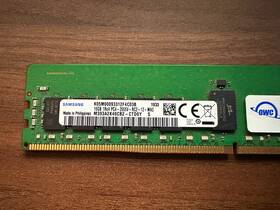
( Brand: Samsung ), ( Manufacturer Part Number: 235802 ), ( Type: Server Memory ), ( UPC: 818240452639 )
Review SAMSUNG 16gb Ddr4 Sdram Memory Module
The **Samsung M393A2K40CB2CVF** is a high-performance **DDR4 SDRAM memory module**, specifically designed to deliver exceptional speed, reliability, and efficiency for modern computing systems. Part of Samsung s premium **K4 series** of DDR4 modules, this **235802** model is engineered to meet the demanding requirements of high-end desktops, workstations, and servers, ensuring seamless multitasking, smooth graphics rendering, and optimized data processing. Operating at a **2400 MHz** clock speed, it achieves an impressive **19.2 GT/s** data transfer rate, allowing for rapid data access and reduced latency, which is critical for applications such as video editing, 3D modeling, and large-scale data analysis. Built with **16-gigabit (Gb) DDR4 DRAM chips**, this module provides **8GB of high-density memory** in a single **288-pin SODIMM (Small Outline Dual In-Line Memory Module)** form factor, making it ideal for compact yet powerful systems like ultrabooks, gaming laptops, and professional-grade machines.
What sets the **M393A2K40CB2CVF** apart is its **low-power, high-efficiency architecture**, which incorporates Samsung s advanced **10nm-class process technology**, reducing power consumption while maintaining peak performance. This makes it an excellent choice for energy-conscious systems where thermal management is a priority. The module features **Samsung s proprietary error correction (ECC) support**, enhancing data integrity by detecting and correcting errors in real-time, which is particularly valuable in enterprise, scientific, and financial computing environments where accuracy is non-negotiable. Additionally, its **low-voltage design (1.2V)** ensures compatibility with a wide range of motherboards while minimizing heat generation, contributing to longer component lifespans and reduced cooling requirements.
For users seeking **future-proofing**, the **M393A2K40CB2CVF** adheres to strict **JEDEC standards**, ensuring broad compatibility with major motherboard manufacturers and operating systems, including Windows, Linux, and macOS (with appropriate EFI support). Whether deployed in a **high-performance gaming rig, a professional workstation, or a mission-critical server**, this memory module delivers a balance of speed, stability, and efficiency that elevates overall system performance. Its **rugged construction and rigorous testing** including extended burn-in procedures guarantee long-term reliability, making it a trusted component for both enthusiasts and IT professionals alike. With the **Samsung M393A2K40CB2CVF**, users can expect not just faster processing speeds but also a smoother, more responsive computing experience across all workloads.
**Pros and Cons of buying a Samsung M393A2K40CB2CVF (235802) DDR4 SDRAM Memory Module**
### **Pros**
1. **High Performance and Speed** This module is a **DDR4-2400** (PC4-19200) with a **CL15** CAS latency, offering reliable performance for mid-range systems. It is optimized for efficiency in gaming, content creation, and general computing tasks where smooth operation is critical.
2. **Reliability and Brand Reputation** Samsung is a well-established manufacturer known for producing high-quality memory modules with robust error correction and stability. The **M393A2K40CB2CVF** is part of Samsung s **DDR4 series**, which is widely trusted in both consumer and enterprise markets.
3. **Compatibility with a Wide Range of Systems** This module supports **240-pin DIMM** sockets and is designed for **DDR4-compatible motherboards**, making it suitable for mid-to-high-end desktops, laptops (if using a laptop-compatible variant), and workstations. It is particularly well-suited for systems with **Intel 7th/8th/9th/10th/11th/12th Gen CPUs** and **AMD Ryzen 2000/3000/5000/7000 series** processors, though exact compatibility depends on the motherboard s memory controller.
4. **Low Power Consumption** DDR4 modules are more power-efficient than older DDR3 variants, reducing heat generation and improving longevity in systems where thermal management is a concern.
5. **Stability and Overclocking Potential** While this is a **standard-speed module (2400MHz)**, it is designed to run stably at its rated speed without requiring aggressive overclocking. If paired with a compatible CPU and motherboard, it may support **XMP/DOCP profiles** for slight overclocking (e.g., 2666MHz or 3000MHz, depending on the system).
6. **Long-Term Availability** As a widely used part number, this module is likely to remain available for several years, reducing the risk of obsolescence compared to niche or proprietary memory.
7. **Cost-Effective for Mid-Range Systems** For users who do not require extreme performance (e.g., DDR4-3600 or higher), this module offers a **good balance of price and performance**, making it a cost-effective choice for upgrading existing systems.
---
### **Cons**
1. **Not the Fastest Option for High-End Use Cases** While **2400MHz is sufficient for most gaming and productivity tasks**, it may feel outdated in comparison to newer **DDR4-3200/3600/4000** modules, which offer better performance in CPU-bound applications (e.g., video editing, 3D rendering, or competitive gaming). If upgrading a system for future-proofing, a faster module may be preferable.
2. **Limited Overclocking Headroom** Unlike high-end memory kits, this module does not support extreme overclocking (e.g., 3800MHz ). Users looking to push memory speeds beyond **2666MHz** (if supported by the motherboard) will need a different kit.
3. **Single-Channel or Dual-Channel Limitations** Performance depends on how it is installed:- **Single-channel mode** (one stick) will result in **significantly lower bandwidth** compared to dual-channel (two sticks).
- If using only one stick, consider adding a second identical module to unlock dual-channel benefits.
- Some motherboards may not support **dual-channel with mismatched modules**, so compatibility should be verified.
4. **Potential Latency Bottlenecks** While **CL15 is reasonable**, some newer CPUs (especially high-end Intel/AMD) benefit from lower CAS latencies (e.g., CL16 or CL18 at higher speeds). This module may not be optimal for systems where latency-sensitive applications (e.g., some CPU-intensive tasks) are prioritized.
5. **No ECC Support** This is a **non-ECC (standard) module**, meaning it lacks error-correcting code for data integrity. If used in **servers, workstations, or professional environments** where data accuracy is critical, an ECC module would be a better choice.
6. **Physical Size and Form Factor** The **240-pin DIMM** form factor is standard, but users with **laptops or small form-factor (SFF) builds** may need to check if the module fits physically. Some ultrabooks or mini-ITX systems have limited memory slot space.
7. **Potential for Mixing with Other Modules** If upgrading an existing system, mixing this module with older or faster memory can lead to **speed throttling** (the system will default to the slowest module s speed). It is best to use **identical modules** for optimal performance.
---
### **Conclusion**
The **Samsung M393A2K40CB2CVF (235802) DDR4-2400 CL15** module is a **solid, reliable choice** for users who need a **cost-effective, stable upgrade** for mid-range systems. It excels in **general computing, gaming, and light content creation** where **2400MHz is sufficient**. However, it may not be ideal for **high-end overclocking, future-proofing, or latency-sensitive applications**, where faster or ECC modules would be preferable.
For most **gamers, office users, and casual content creators**, this module provides **good value without sacrificing performance**. If the system already supports **dual-channel**, installing a second identical module will further enhance throughput.
---
### **Recommendation**
- **Buy this module if:**- You are upgrading a **mid-range desktop** (Intel 7th-12th Gen or AMD Ryzen 2000-5000 series).
- Your motherboard supports **DDR4-2400** and you want a **stable, reliable upgrade**.
- You plan to use **dual-channel** (install two identical modules).
- You are on a **budget** and do not need cutting-edge speeds.
- The system is **not used for professional workloads** (e.g., servers, rendering farms).
- **Consider alternatives if:**- You need **faster speeds (DDR4-3200/3600 )** for **high-end gaming or content creation**.
- You require **ECC support** for data integrity.
- Your CPU is **high-end (e.g., Intel i9, AMD Ryzen 9/Threadripper)**, where lower latency modules may help.
- You are building a **future-proof system** and want to avoid upgrading memory soon.
- **Pair with:**- A **compatible CPU** (e.g., Intel i5/i7, AMD Ryzen 5/7).
- A **motherboard with dual-channel DDR4 support**.
- **Two identical modules** if possible for dual-channel benefits.
For most users, this module strikes a **good balance between cost and performance**, making it a **recommended purchase** for standard use cases. However, those with specific high-performance needs should evaluate whether a faster or ECC module would better suit their requirements.
Details:
I would assume that it works with PC servers as well - its basically all XEON ram. Working pull from Mac Pro 2019.
part #: 235802 prices
- $109.00-$263.85
specifications servermemor:
- brand: Samsung
- mpn: 235802
- type: Server Memory
- upc: 818240452639
shipping servermemor:
- cost: $9.38
- type: Fixed
- transit: 4-11 Days
- service: USPS Priority Mail
- carrier: USPS
- class: Expedited
returns servermemor:
- policy: No Returns
offer servermemor:
- availability: In Stock
- quantity: 1
- options: Ship-to-home
- sold: 0
- started: February 9, 2026
payments servermemor:
- other
- credit card: Mastercard
- wallet: Google-pay
seller servermemor:
- rating: 100.0%
- city: Monroe, North Carolina
- # reviews: 468
general servermemor:
- Enterprise Networking, Servers > Server Components > Server Memory RAM
- condition: Used
Samsung 235802 Is Similar To:
- 0.11338225633667265 Lot Samsung Ecc Server Ram Memory (35.4% similar) Condition: used, working if a power adapter is required for this item, it not included cord shows signs of normal use w some scuffs scratches blemishes sticker residue no other accessories hardware software. I'll get back to you as soon I can...(March 27th, 2018)
- 0.9516050138760368 Samsung Registered Ecc Memory (33.3% similar) Condition: used, working if a power adapter is required for this item, it not included cord shows signs of normal use w some scuffs scratches blemishes sticker residue no other accessories hardware software. I'll get back to you as soon I can...(May 26th, 2018)
- 00lp726 Ibm Samsung Memory Cdimm Dram For (35.6% similar) Product quality conditions: all of our a mainly used refurbished item so its natural for an to have cosmetic wear and tear on them. Bubble wrap static-bag shipping packing: package star IBM 00LP726 32GB DDR3 1600MHZ memory M351B4G73DB0 comm dram for POWER8 part number Samsung brand power 8 ...(July 12th, 2018)
- 00v5404 Ibm Mmb Server Memory Samsung (26.8% similar) IBM part number: 00V5404 pulled from: 9117MM b server memory 8GB 1KX72 Samsung M396B1K73DH0-YF8M1 from a working environment average used cosmetic condition DOA warranty only what is pictured included. Don't see what you are looking for...(March 24th, 2018)
- 03t7861 Lenovo Lot Of Samsung Server Memory Fru (35.5% similar) Leno Frau 03T7861 memory is clean, tested, and ready to use. This listing is for a 16GB lot of Leno Samsung 2X8GB 1RX4 PC4-2133P server memory. Fast, free shipping...(February 16th, 2019)
- 03t8431 Ibm Samsung Workstation Memory (34.7% similar) Condition is used. Shipped with USPS first class package. Samsung PC3L-10600E 4GB 2RX8 DDR3 workstation memory M391B5273DH0-YH9...(January 22nd, 2019)
- 10x2gb 10600s Elbida Samsung Laptop Ddr3 Hynix Micron Lot Memory (33.9% similar) ...(May 11th, 2015)
- 12541755-16gb Samsung Server Memory (35.8% similar) 35 v no item ships from china include a register for enhancing clock, command and control signals supports x4 x8 organization up to 2 ranks per dim 3DPC configuration error correction available by added 8 bit parity application: server specifications type: radium ddr capacity: 16GB rank x org. ...(October 6th, 2018)
- 12541759-2-x-16gb Samsung Ecc Registered Server Memory (36.8% similar) 35V DDP1G x 4/3 6 this item ships from china. Samsung 16GB DDR3 PC3-8500R 1066MHZ eccl registered server memory 4RX4 proven dram module solution in the global markets modules are designed for a wide range of applications to deliver best performance with low power requirements. Error correction ...(October 6th, 2018)
- Ddr3 Pc3 240 Samsung 12800 4gb Dimm Ram Pin 1600 Mhz Unbuff Cl11 ecc Memory (38% similar) 2 error checking non encumber of MODULES1 x 4 SPEED1600 SIZE4 TECHNOLOGYDDR3 sdram memory STANDARDDDR3 1600 PC3 width 1...(March 4th, 2015)
- Ddr2 Ram 512mx72 Memory 12r6452 Reg Ecc Pc-4200 Ibm 4gb Mhz Cl4 Samsung 533 (26.7% similar) If you are not sure, ask. Please refer to the offer photographs for reference. There are a few minor scratches dings scuffs on the corners sides, and normal wear and tear. As such, it shows signs of moderate use. 1390THIS item is backed by our 30 day guarantee against failure of components or parts...(May 5th, 2015)