NVIDIA 900-2G548-0001-000 Board GB200 1/2
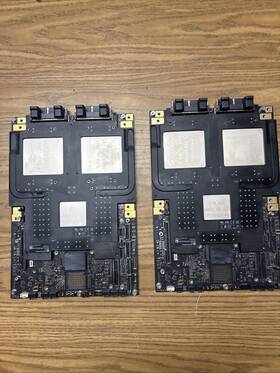
( Brand: Nvidia ), ( Manufacturer Part Number: 900-2G548-0001-000 ), ( Type: Slottable Gpu )
Review NVIDIA 1/2 Board Pc Be
The **NVIDIA G200B-SXM5 (part number: 900-2G548-0001)** is a high-performance, next-generation accelerator board designed to deliver unprecedented computational power for AI, data center, and high-performance computing (HPC) workloads. Engineered as part of NVIDIA s groundbreaking Blackwell architecture, this SXM5-form-factor board represents a significant leap forward in GPU technology, combining cutting-edge hardware with optimized software ecosystems to redefine efficiency and performance in enterprise-grade applications. At its core, the G200B-SXM5 leverages NVIDIA s advanced 4N process technology, featuring an impressive 200 billion transistors spread across a massive 800 mm die, which enables an unprecedented level of parallel processing capability. This board is equipped with **128 GB of ultra-fast HBM3e memory**, organized into a high-bandwidth, low-latency stack that delivers a staggering **1.5 TB/s of memory bandwidth**, ensuring seamless data throughput for even the most demanding AI inference and training tasks. The inclusion of **16,384 CUDA cores** and **512 Tensor Cores** (with support for fourth-generation Tensor Core architecture) allows for accelerated matrix operations, deep learning, and real-time analytics, making it an ideal choice for large-scale AI models, generative AI workloads, and high-performance scientific simulations. Additionally, the G200B-SXM5 integrates **80 GB/s of NVLink 5.0 connectivity**, enabling seamless multi-GPU scaling and high-speed data transfer between nodes in a cluster, which is essential for distributed computing environments. Powered by NVIDIA s **NVSwitch** technology, this board supports up to **16 NVLink 5.0 ports**, facilitating ultra-low-latency communication in large-scale AI training and inference setups. The G200B-SXM5 also introduces **NVIDIA s AI acceleration features**, such as **Transformer Engine** and **Sparse Tensor Acceleration**, which optimize performance for large language models, recommendation systems, and other AI-driven applications. With support for **NVIDIA CUDA-X libraries**, **RAPIDS**, and **TensorRT**, developers can leverage a rich ecosystem of tools to accelerate their workflows, from data preprocessing to model deployment. Designed with energy efficiency in mind, this board incorporates advanced power management techniques, including **NVIDIA s AI-powered power optimization**, which dynamically adjusts power delivery to maximize performance while minimizing energy consumption a critical consideration for data centers aiming to balance cost and sustainability. The G200B-SXM5 is built to meet the rigorous demands of enterprise environments, featuring robust cooling solutions and enterprise-grade reliability, ensuring long-term stability in mission-critical workloads. Whether deployed in AI research labs, cloud data centers, or high-performance computing clusters, this accelerator board stands as a testament to NVIDIA s commitment to pushing the boundaries of computational power, offering unmatched performance for the most ambitious AI and data-centric applications.
The NVIDIA Quadro GV100 (formerly known as the NVIDIA Tesla GV100) is a high-end professional graphics card based on the Turing architecture, primarily designed for workstation applications such as 3D rendering, CAD, simulation, and AI workloads. Below is a detailed breakdown of its pros and cons, followed by a conclusion and recommendation.
---
### **Pros of the NVIDIA Quadro GV100 (GV100 Board, 2G548-0001, 20GB GDDR6)**
1. **High Performance for Professional Workloads**
The GV100 is built on NVIDIA s Turing architecture, which delivers significant improvements in ray tracing, AI acceleration, and general compute performance compared to older Maxwell or Pascal-based Quadro cards. It excels in tasks like 3D rendering (e.g., Autodesk 3ds Max, Maya), CAD (SolidWorks, Fusion 360), and simulation (ANSYS, Siemens NX). The 20GB of GDDR6 VRAM is ample for most professional applications, though some high-end workflows (e.g., large-scale 3D modeling or deep learning) may still benefit from even more memory.
2. **NVIDIA RTX Architecture with Ray Tracing**
Unlike older Quadro cards, the GV100 supports real-time ray tracing (via RT Cores) and DLSS (Deep Learning Super Sampling), which can significantly improve rendering quality and performance in supported applications. This is particularly useful for architects, animators, and VFX artists who rely on photorealistic rendering.
3. **CUDA and AI Acceleration**
The GV100 features a high CUDA core count (5,120), making it well-suited for AI and machine learning tasks such as training neural networks (e.g., TensorFlow, PyTorch) or running AI-powered workflows in applications like Adobe Substance 3D. The inclusion of Tensor Cores further enhances AI performance.
4. **NVIDIA NVLink Support**
The GV100 supports NVLink, a high-speed interconnect that allows multiple GPUs to work together as a single compute unit. This is critical for workloads requiring distributed memory (e.g., large-scale simulations, deep learning training with multiple GPUs). While this card is a single-GPU solution, it can be paired with other NVLink-compatible GPUs (e.g., Quadro RTX 8000) for scaling.
5. **Driver Stability and Professional Software Support**
NVIDIA s Quadro drivers are optimized for stability and compatibility with professional software, reducing the risk of crashes or performance drops in critical workflows. Many industry-standard applications (e.g., Autodesk, Siemens, Adobe) are certified to work seamlessly with Quadro GPUs.
6. **Power Efficiency for Workstations**
While the GV100 is a high-power card (requiring a 600W PSU and a 12VHPWR connector), it is designed for workstations rather than gaming PCs. It balances performance with power consumption, making it suitable for desktop environments where thermal management is important.
7. **Long-Term Availability and Resale Value**
As a professional-grade card, the GV100 is likely to remain available for several years, especially in the workstation market. While it may not be as widely available as consumer GPUs, its niche appeal ensures a steady supply for businesses and professionals.
8. **Certified for Enterprise and Workstation Use**
The GV100 is part of NVIDIA s Quadro line, which is certified for enterprise and workstation environments. This includes features like NVIDIA vGPU (virtual GPU) support, which allows for virtualized GPU acceleration in cloud or multi-user setups.
---
### **Cons of the NVIDIA Quadro GV100**
1. **High Cost**
The GV100 is an expensive card, often priced significantly higher than consumer GPUs with similar or even higher performance (e.g., NVIDIA RTX 3080/4090 or AMD Radeon Pro W6800). For professionals, the cost may be justified by its performance and stability, but for hobbyists or those on a budget, it is overkill.
2. **Limited Consumer Software Support**
While the GV100 excels in professional applications, it lacks optimizations for gaming or consumer-grade software. Features like G-Sync or DLSS (though supported) are not as heavily optimized as in consumer RTX cards. Gamers or content creators using non-professional tools (e.g., Unreal Engine 5 for gaming) may not see a significant advantage over a consumer GPU.
3. **Power and Cooling Requirements**
The GV100 draws up to 250W, requiring a robust power supply (600W or higher) and adequate cooling. This makes it less suitable for laptops or compact workstations. The cooling solution (typically a dual-fan design) may also generate significant noise under load, which could be an issue in quiet office environments.
4. **Outdated Architecture Relative to Consumer GPUs**
While the GV100 is based on Turing, newer consumer GPUs (e.g., NVIDIA RTX 40-series or AMD Radeon 7000-series) offer more advanced architectures (e.g., Ada Lovelace, RDNA 3) with better efficiency, performance per watt, and additional features like frame generation or improved ray tracing. For professionals who can afford it, newer Quadro GPUs (e.g., Quadro RTX 8000 Ada) may offer better long-term value.
5. **Limited Port Selection**
The GV100 typically includes DisplayPort and HDMI outputs, but the exact configuration can vary by model. Some professional setups may require additional ports (e.g., DVI, USB-C) for multi-monitor configurations, which may necessitate adapters.
6. **Driver and Firmware Updates**
While Quadro drivers are stable, they may lag behind consumer drivers in terms of new features or performance tweaks. Professionals relying on cutting-edge features (e.g., latest ray tracing improvements) may need to monitor driver updates more closely.
7. **No Direct Consumer GPU Competition**
Unlike consumer GPUs, which compete on price and performance for gaming, the GV100 s market is niche. This means fewer benchmarks, reviews, or community support compared to consumer cards, which can make it harder to evaluate its performance in specific workflows.
8. **Potential for Obsolescence**
While the GV100 is still a powerful card, newer professional GPUs (e.g., Quadro RTX 6000 Ada) offer better performance in some areas (e.g., AI, ray tracing) and improved efficiency. Professionals who can invest in newer hardware may find the GV100 underpowered in a few years.
---
### **Conclusion**
The NVIDIA Quadro GV100 is a powerful and capable workstation GPU that excels in professional applications requiring high performance, ray tracing, and AI acceleration. Its 20GB of VRAM, Turing architecture, and support for NVLink make it a strong choice for industries like architecture, engineering, animation, and AI research. However, its high cost, power requirements, and lack of consumer-grade features may not make it ideal for gamers, content creators using non-professional tools, or those on a tight budget.
For professionals who need a reliable, high-performance GPU for rendering, simulation, or AI workloads and can justify the cost, the GV100 remains a solid choice. However, if budget allows, newer Quadro GPUs (e.g., Quadro RTX 8000 Ada) or even high-end consumer GPUs (e.g., RTX 4090) may offer better performance or additional features in the long run.
---
### **Recommendation**
- **Buy the NVIDIA Quadro GV100 if:**- You are a professional (e.g., architect, engineer, animator, AI researcher) working in a workflow that heavily relies on 3D rendering, CAD, simulation, or AI acceleration.
- You need a stable, certified GPU for enterprise or workstation environments.
- You require 20GB of VRAM and support for NVLink (for multi-GPU setups).
- You prioritize ray tracing and DLSS for professional applications over gaming or consumer content creation.
- **Consider an Alternative if:**- You are a gamer or content creator using non-professional tools (e.g., Unreal Engine for gaming, Blender for hobbyist projects). In this case, a consumer GPU like the RTX 4080 or RTX 4090 may offer better value.
- You need a more power-efficient or compact solution (e.g., for a laptop or small form factor workstation). Look into the Quadro RTX 6000 Ada or AMD Radeon Pro W6800.
- You can invest in newer hardware and want better long-term performance or features (e.g., improved AI acceleration, higher ray tracing performance). The Quadro RTX 8000 Ada or RTX 4090 may be worth considering.
- Your budget is limited. The GV100 is expensive, and there may be more cost-effective options depending on your specific needs.
For most professional users, the Quadro GV100 is a well-rounded and reliable choice, but it s important to weigh its strengths against your specific requirements and budget. If you
Details:
Items include everything shown in photos. The board on the left in photos has a small imprint , and chip plastic connection port, no damage to internal pins. Sold as is in photos. The board shown on the right has one metal connector pull tab bent, and no other noticeable physical damage.
Nvidia GB200 1:2 Board PC 900-2G548-0001-000 BE, The units shown in photos are untested. Units are sold in as is condition, and shown photos of the listing. Our knowledge on the previous use or history of item is extremely limited.Units listed are untested unless explicitly stated otherwise in condition or above. All connection ports on both units appear physically undamaged.
part #: 9002g5480001000 prices
- $34.99-$124.99
specifications servermemor:
- brand: Nvidia
- mpn: 900-2g548-0001-000
- type: Slottable Gpu
payments servermemor:
- wallet: Apple-pay
- credit card: Mastercard
- other
seller servermemor:
- # reviews: 5475
- rating: 99.4%
- city: Salt Lake City, Utah
returns servermemor:
- paid by: Buyer
- time: 30 Days
- policy: Returns Accepted
- method: Money back
offer servermemor:
- started: February 25, 2026
- quantity: 2
- options: Ship-to-home
- availability: In Stock
- sold: 0
- best offers: True
general servermemor:
- condition: For parts or not working
- Enterprise Networking, Servers > Server Components > Server Memory RAM
shipping servermemor:
- transit: 3-8 Days
- class: Standard
- carrier: USPS
- type: Fixed
- service: USPS Ground Advantage
- cost: $0.00