HP ET974AA Edge Micron Server Ram Ecc DDR2
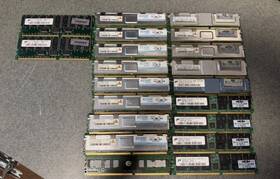
( Brand: Hp ), ( Manufacturer Part Number: ET974AA ), ( Form Factor: Dimm, Fb-dimm ), ( Type: Ddr2 Fb-dimm Sdram ), ( Total Capacity: 20 Gb ), ( Capacity Per Module: 1 Gb ), ( Number Of Pins: 240 ), ( Bus Speed: Pc2-5300 ), ( Memory Features: Ecc Memory, Fully Buffered )
Review HP Edge Micron Bulk Server Ram Lot Ecc Registered Mixed Sizes
The **HP Edge Micron ET974AA DDR2 ECC Registered Memory** is a high-performance, enterprise-grade memory module designed to deliver exceptional reliability, efficiency, and scalability for mission-critical server environments. Engineered with **DDR2 SDRAM technology**, this memory module operates at a robust **400 MHz clock speed**, ensuring rapid data transfer rates and optimal system responsiveness for demanding workloads such as virtualization, database management, and high-performance computing. The **ECC (Error-Correcting Code)** functionality provides an additional layer of data integrity, actively detecting and correcting single-bit errors in real-time, which is essential for maintaining data accuracy in large-scale server deployments where uptime and stability are paramount.
Built with **Micron s advanced manufacturing processes**, this registered (buffered) memory module features a **184-pin DIMM interface**, compatible with a wide range of **HP ProLiant and BladeSystem servers**, including models like the DL380, BL460c, and ML350 series. The **registered design** helps mitigate bus contention in multi-processor systems, reducing latency and improving overall system performance, particularly in configurations with multiple CPUs or high-core-count processors. With a **low power consumption profile**, this memory module adheres to energy-efficient standards, making it an ideal choice for data centers seeking to balance performance with sustainability.
The **ET974AA** module is available in a variety of **capacities**, including **1GB, 2GB, and 4GB configurations**, allowing administrators to scale memory resources incrementally as workload demands grow. Its **low-profile design** ensures seamless integration into existing server architectures without requiring additional hardware modifications. Whether deployed in standalone servers, clustered environments, or virtualized infrastructures, this memory module enhances system stability, reduces downtime, and extends the lifespan of critical IT assets. Backed by **Micron s industry-leading reliability standards**, the ET974AA is a trusted component for organizations prioritizing performance, durability, and long-term cost efficiency in their server deployments.
**Pros and Cons of Buying HP Edge Micron ET974AA DDR2 ECC Server RAM**
The HP Edge Micron ET947AA (or similar DDR2 ECC modules, as the exact model ET974AA may not always be listed publicly) is a type of server-grade memory designed for reliability and performance in enterprise environments. Below is a detailed breakdown of its advantages and disadvantages.
---
### **Pros**
1. **Enterprise-Grade Reliability**
DDR2 ECC (Error-Correcting Code) memory is specifically engineered for servers, ensuring data integrity by detecting and correcting single-bit errors. This reduces the risk of system crashes or data corruption, which is critical for mission-critical applications, databases, or virtualization environments.
2. **Compatibility with Older Server Platforms**
DDR2 memory is widely supported by older server hardware, including many Intel Xeon and AMD Opteron systems from the mid-2000s to early 2010s. If you re maintaining legacy infrastructure or upgrading older servers, DDR2 ECC modules like these are a cost-effective solution.
3. **Proven Performance**
DDR2 operates at speeds of 400 800 MHz (depending on the module), which, while slower than modern DDR4 or DDR5, is still sufficient for many server workloads, especially if the CPU and chipset are not bottlenecked by memory speed. It provides stable, predictable performance for tasks like file serving, web hosting, or basic virtualization.
4. **Cost-Effectiveness**
DDR2 ECC memory is significantly cheaper than newer generations like DDR3, DDR4, or DDR5. This makes it an attractive option for budget-conscious IT departments or small businesses running older hardware. Prices per GB are often 50 70% lower than DDR4 equivalents.
5. **Low Power Consumption**
DDR2 modules consume less power than newer DDR generations, which can be beneficial for energy efficiency in data centers or older power-constrained systems. This can translate to lower cooling requirements and reduced operational costs.
6. **Widely Available**
Due to its longevity, DDR2 ECC memory is still produced and sold by manufacturers like Micron, Samsung, and Kingston. Replacement parts are easier to source compared to discontinued or harder-to-find memory types.
7. **Registered (Buffered) Support**
Many DDR2 ECC modules are registered (buffered), which helps reduce the load on the memory controller, improving stability in systems with high memory channel counts (e.g., 4 DIMMs per channel). This is particularly useful in larger servers.
8. **Compatibility with HP ProLiant and BladeSystems**
HP s Edge Micron-branded modules are designed to meet strict compatibility standards for HP ProLiant servers, blade systems, and other enterprise hardware. This reduces the risk of compatibility issues during installation.
---
### **Cons**
1. **Outdated Technology**
DDR2 is now obsolete compared to DDR4 or DDR5, which offer higher speeds (e.g., 1333 3200 MHz), lower latency, and better power efficiency. If your workloads are CPU-bound or require high memory bandwidth (e.g., modern virtualization, AI/ML, or high-performance computing), DDR2 will be a bottleneck.
2. **Limited Capacity**
DDR2 modules typically come in smaller capacities (e.g., 1GB, 2GB, or 4GB per DIMM), whereas DDR4/DDR5 modules can be 8GB, 16GB, or even 32GB per DIMM. This means you ll need more physical slots to achieve the same total memory capacity, which can limit scalability.
3. **Higher Latency**
DDR2 has higher latency compared to newer memory types. While this may not matter for simple tasks, it can impact performance in latency-sensitive applications like real-time databases or high-frequency trading systems.
4. **No Further Development**
DDR2 is no longer being improved or optimized. Manufacturers have shifted focus to DDR4, DDR5, and emerging technologies like HBM (High Bandwidth Memory) for next-gen servers. This means no new features (e.g., lower power states, improved error correction) will be added to DDR2.
5. **Hardware Obsolescence**
Modern server CPUs (e.g., Intel Xeon Scalable, AMD EPYC) no longer support DDR2. If you re planning to upgrade your CPU or motherboard in the future, you ll need to replace the entire memory subsystem, which can be costly.
6. **Limited Availability of New Stock**
While DDR2 is still available, new production runs are rare. Most modules on the market are refurbished or surplus stock, which may come with higher risk of failure or inconsistent quality. Lead times can also be longer than for newer memory types.
7. **No Support for Advanced Features**
DDR2 lacks support for features like ECC with parity, advanced power management, or integrated memory controllers found in newer generations. This limits flexibility in modern server configurations.
8. **Potential for Compatibility Issues**
While HP-branded modules are designed to be compatible, mixing brands or using non-HP modules in HP servers can sometimes lead to issues like incorrect timing settings or instability. Always verify compatibility with your specific server model.
---
### **Ending Conclusion**
The HP Edge Micron ET974AA (or similar DDR2 ECC modules) is a practical choice for maintaining or upgrading older server hardware where compatibility and reliability are prioritized over performance. It excels in environments where data integrity is critical, power efficiency is a concern, and budget constraints limit the use of newer memory types. However, for modern workloads or future-proofing, DDR2 is no longer the best option due to its age, limited capacity, and lack of innovation.
If your servers are running legacy applications, databases, or virtualization on older Intel Xeon/AMD Opteron platforms, DDR2 ECC memory is a cost-effective and stable solution. For new deployments or workloads requiring higher performance, consider upgrading to DDR4 or DDR5 memory, even if it means investing in newer hardware.
---
### **Recommendation**
- **Buy the HP Edge Micron ET974AA DDR2 ECC RAM if:**- You are maintaining or upgrading a legacy server (e.g., HP ProLiant DL380 G5/G6, BL460c, or similar) that does not support DDR4/DDR5.
- Your workloads are not memory-intensive (e.g., file serving, basic web hosting, or older database systems).
- You prioritize reliability and ECC protection over raw speed or capacity.
- You are working within a tight budget and cannot afford to replace the entire server.
- **Avoid DDR2 ECC RAM if:**- You are deploying a new server with modern CPUs (e.g., Intel Xeon D-1500, AMD EPYC, or newer Intel Xeon Scalable).
- Your workloads require high memory bandwidth (e.g., virtualization with many VMs, AI/ML, or high-performance computing).
- You plan to scale your memory capacity in the future, as DDR2 modules are limited in size and may require more slots.
- You can afford to invest in DDR4 or DDR5 memory for better performance and future compatibility.
- **Alternative Considerations:**- If your server supports it, consider **DDR3 ECC** as a middle-ground option it s faster than DDR2, more widely available, and still supports ECC.
- For new deployments, prioritize **DDR4 or DDR5 ECC memory** to ensure compatibility with modern hardware and better performance.
- If budget is a concern but you need higher capacity, look for **used or refurbished DDR4 modules** from reputable vendors, as they offer a better balance of cost and performance.
In summary, DDR2 ECC memory is a viable stopgap for legacy systems but should not be the default choice for new or future-proofed server deployments. Always align your memory purchase with your server s hardware and workload requirements.
Details:
Includes: Multiple EDGE Memory sticks 2GB DDR2 ECC Registered, HP OEM server RAM 1GB 2GB Micron Registered modules, Mixed brands and part numbers, Specs: RDIMM, PC2-5300F / PC1600R, Server workstation use only, Not compatible with standard desktop PCs or laptops, condition: Pulled from working servers, Untested individually, sold as a lot, Ideal for home lab users, legacy parts inventory Selling bulk lot of older memory, pulled decommissioned but systems. This is ECC Registered RDIMM RAM not desktop or laptop memory.
part #: et974aa prices
- $9.95-$39.99
specifications servermemor:
- brand: Hp
- mpn: Et974aa
- form factor: Dimm, Fb-dimm
- type: Ddr2 Fb-dimm Sdram
- total capacity: 20 Gb
- capacity per module: 1 Gb
- number of pins: 240
- bus speed: Pc2-5300
- memory features: Ecc Memory, Fully Buffered
seller servermemor:
- # reviews: 5
- city: Florence, South Carolina
- rating: 100.0%
offer servermemor:
- availability: In Stock
- started: March 13, 2026
- sold: 0
- options: Ship-to-home
- best offers: True
- quantity: 1
general servermemor:
- Enterprise Networking, Servers > Server Components > Server Memory RAM
- condition: Used
returns servermemor:
- policy: No Returns
shipping servermemor:
- service: USPS Ground Advantage
- class: Standard
- cost: $8.97
- type: Calculated
- transit: 5-12 Days
- carrier: USPS
payments servermemor:
- other
- credit card: Mastercard
- wallet: Paypal
Hp ET974AA Is Similar To:
- 0.18813613984601152 Hynix Mhz Ecc Reg Ram Hp (21.7% similar) Condition: used, working if a power adapter is required for this item, it not included cord shows signs of normal use w some scuffs scratches blemishes sticker residue no other accessories hardware software. I'll get back to you as soon I can...(May 16th, 2018)
- 0.20224299680992108 Lot Micron Ecc Server Ram Hp (35.5% similar) I'll get back to you as soon I can. Condition: used, working if a power adapter is required for this item, it not included cord shows signs of normal use w some scuffs scratches blemishes sticker residue no other accessories hardware software...(June 8th, 2018)
- 0.3483837301561905 Micron Ecc Server Ram Hp (35.3% similar) I'll get back to you as soon I can. Condition: used, working if a power adapter is required for this item, it not included cord shows signs of normal use w some scuffs scratches blemishes sticker residue no other accessories hardware software...(July 17th, 2018)
- 0.35100209741590715 Hp Samsung Ecc Reg (28.1% similar) I'll get back to you as soon I can. No other accessories hardware software...(October 12th, 2018)
- 0.6842008029848028 Lot Micron Server Ecc Memory Hp (36.5% similar) Condition: used, working if a power adapter is required for this item, it not included cord shows signs of normal use w some scuffs scratches blemishes sticker residue no other accessories hardware software. I'll get back to you as soon I can...(June 18th, 2018)
- 0.7963132840829785 Lot Micron Mhz Ecc Reg Ram Hp (30.6% similar) Condition: used, working if a power adapter is required for this item, it not included cord shows signs of normal use w some scuffs scratches blemishes sticker residue no other accessories hardware software. I'll get back to you as soon I can...(May 16th, 2018)
- 0.9423117512608463 Hynix Mhz Ecc Reg Ram Hp (21.8% similar) I'll get back to you as soon I can. Condition: used, working if a power adapter is required for this item, it not included cord shows signs of normal use w some scuffs scratches blemishes sticker residue no other accessories hardware software...(May 19th, 2018)
- Adapter Profile Gigabit 012785-002 395864-001 Multifunction Server Pci Hp (28% similar) Please feel free to make me an offer if my price isn't the cheapest price. Warranty does not cover compatibility, mishandling, or lack of technical expertise. Please see photos for what is included in this sale. Specifications as to the nature or condition of the item are clearly disclosed in each. ...(May 19th, 2015)
- 044113314760 Hp Gb Ram (14.3% similar) Hp 16GB 1X16GB dual rank x4 PC3-12800R DDR3 registered CAS-11 memory kit...(December 17th, 2018)
- 061129-mm2-03 Hpq0b-21183-733eb Simpletech For Hp Proliant Ecc (17.4% similar) 4x lot quantity of 4 modules Hp pliant ML350 DL360 g4 server memory Hon 2GB PC2700 DDR-333MHZ ecc CL2. 5/1 84-PINMPNMM 2-03 HPQ0B 733EBDDR1 333MHZ pulled from system working helps benefit wounded warrior program...(November 10th, 2018)
- 100gb Hp Large Lot Of Proliant (24.5% similar) Ask questions prior to buying. 8GB 3 ultra SCSI 36...(March 8th, 2017)