SK HYNIX HMA82GR7DJ8N-XN Ecc Dimm Server Memory Ram DDR4-3200
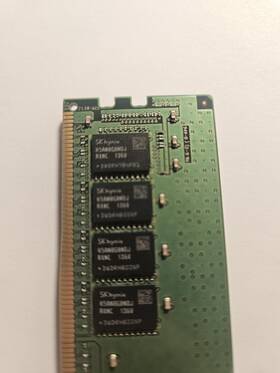
( Brand: Sk Hynix ), ( Manufacturer Part Number: HMA82GR7DJ8N-XN ), ( Form Factor: Dimm ), ( Type: Ddr4 Sdram ), ( Total Capacity: 16 Gb ), ( Number Of Pins: 288 ), ( Bus Speed: Pc4-3200aa ), ( Memory Features: Ecc Memory )
Review SK HYNIX 16gb Ddr4-3200 Ecc Dimm Server Memory Ram
The **SK Hynix HMA82GR7DJ8N-XN** is a high-performance, enterprise-grade **DDR4-3200 MHz ECC Registered DIMM** designed to deliver exceptional reliability, speed, and efficiency in demanding server environments. Engineered with cutting-edge **20nm process technology**, this memory module features **8GB of high-density GDDR4 chips**, providing ample capacity for modern workloads while maintaining optimal performance. The **DDR4-3200 MHz** clock speed ensures rapid data transfer rates, enabling faster processing, reduced latency, and improved system responsiveness ideal for virtualization, database management, and high-performance computing applications. As an **ECC (Error-Correcting Code) module**, it actively detects and corrects single-bit errors, safeguarding critical data integrity in mission-critical server operations where uptime and accuracy are non-negotiable. The **Registered (Buffered) DIMM** architecture further enhances stability by buffering signals between the memory controller and the DIMMs, reducing electromagnetic interference and preventing timing issues in multi-socket systems. Built with **low-power, high-efficiency components**, this module operates within strict thermal and power constraints, making it suitable for energy-conscious data centers while maintaining peak performance. Compatible with a wide range of **Intel Xeon and AMD EPYC** server platforms, the **HMA82GR7DJ8N-XN** is a versatile solution for both legacy and next-generation server architectures. Its robust construction, including **fully shielded connectors and high-quality soldered chips**, ensures durability and longevity, minimizing the risk of failures in high-availability environments. Whether deployed in cloud infrastructure, enterprise storage, or AI/ML workloads, this SK Hynix memory module delivers a perfect balance of speed, reliability, and scalability, making it an indispensable component for modern server deployments.
The **SK Hynix HMA82GR7DJ8N-XN** is a **DDR4-3200 ECC RDIMM** module designed for server applications. Below is a detailed analysis of its pros and cons, followed by a conclusion and recommendation.
---
### **Pros**
1. **High Performance at DDR4-3200**
The module supports **DDR4-3200** speeds, which is a solid choice for modern servers requiring balanced performance between CPU and memory bandwidth. This speed is well-suited for workloads like virtualization, database management, and general server operations where memory latency is a critical factor.
2. **ECC (Error-Correcting Code) Support**
ECC memory is essential for servers to detect and correct single-bit errors, preventing data corruption in critical applications. This makes it ideal for enterprise, cloud, and high-availability environments where data integrity is non-negotiable.
3. **RDIMM (Registered DIMM) Design**
RDIMMs use a **register** to buffer signals between the memory controller and the DIMMs, reducing signal interference and improving stability in multi-socket servers. This is particularly beneficial in systems with multiple CPU sockets or high memory channel counts.
4. **Compatibility with Modern Servers**
This module is designed for **DDR4** platforms, which remain widely used in enterprise and data center environments. It is backward-compatible with many server motherboards and CPUs that support DDR4-3200, including Intel Xeon and AMD EPYC processors.
5. **Reliability and Durability**
SK Hynix is a reputable manufacturer known for producing high-quality memory modules. The **XN** variant (likely indicating a specific SKU or certification) suggests it meets strict reliability standards, making it suitable for 24/7 operations.
6. **Scalability**
DDR4-3200 RDIMMs can be paired with other compatible modules to scale memory capacity in servers, which is useful for growing workloads or high-memory applications like memory-intensive databases or AI/ML workloads.
7. **Lower Power Consumption Compared to DDR5**
While DDR5 offers higher speeds, DDR4 modules like this one consume less power, which can be advantageous for energy efficiency in large-scale deployments.
---
### **Cons**
1. **Limited Future-Proofing**
DDR4 is nearing the end of its lifecycle, with many new servers now shipping with **DDR5** as the standard. While DDR4-3200 is still viable for existing systems, upgrading to DDR5 in the future may require replacing the entire memory subsystem, which can be costly.
2. **Higher Latency Than DDR5**
DDR5 modules generally offer lower latency and higher bandwidth per pin compared to DDR4. For workloads that are extremely sensitive to memory latency (e.g., high-frequency trading or certain AI workloads), DDR5 may provide a performance edge.
3. **Potential for Higher Cost per GB Over DDR5**
While DDR4 prices have stabilized, DDR5 modules are becoming more competitive in terms of cost per gigabyte, especially as DDR5 adoption increases. This module may not offer the best value for new purchases if DDR5 is an option.
4. **Compatibility Restrictions**
Not all servers support DDR4-3200, and some may require **DDR4-2400 or DDR4-2666** for optimal performance. Users must verify compatibility with their specific motherboard and CPU to avoid issues. Additionally, some newer Intel Xeon or AMD EPYC CPUs may not support DDR4-3200, requiring downgrades to lower speeds.
5. **Limited Availability of High-Capacity Options**
While this module is a **8GB (x8) RDIMM**, higher-capacity DDR4 modules (e.g., 16GB or 32GB) may not be available at the same speed, limiting scalability in some configurations.
6. **Potential for Overheating in High-Density Servers**
RDIMMs can generate more heat than LRDIMMs (Load-Reduced DIMMs) due to the register s power consumption. In high-density server racks, adequate cooling may be required to maintain optimal performance and longevity.
---
### **Conclusion**
The **SK Hynix HMA82GR7DJ8N-XN DDR4-3200 ECC RDIMM** is a **solid choice for servers running on DDR4 platforms**, particularly those requiring **reliable, error-corrected memory at a balanced speed**. It excels in environments where **data integrity, stability, and moderate performance** are prioritized over cutting-edge speed. However, its **DDR4 limitation** means it may not be the best long-term investment for systems that will require upgrades in the next few years.
For **new deployments or future-proofing**, DDR5 modules should be considered if the server architecture supports them. For **existing DDR4-based servers**, this module is a **practical and dependable option**, especially in enterprise, cloud, or virtualization environments where ECC and RDIMM design are critical.
---
### **Recommendation**
- **Buy this module if:**- You are maintaining or upgrading an **existing DDR4 server** that supports DDR4-3200.
- Your workload requires **ECC memory** for data integrity (e.g., databases, virtualization, or financial systems).
- You need a **balanced performance** between speed and reliability without overpaying for DDR5.
- Your server s motherboard and CPU are confirmed to support this exact module (check for QVL or compatibility lists).
- **Consider alternatives if:**- You are building a **new server** and DDR5 is an option evaluate DDR5 modules for better long-term scalability.
- Your workload is **extremely latency-sensitive** (e.g., certain AI or HPC applications), where DDR5 may offer advantages.
- You require **higher memory capacities** (e.g., 16GB or 32GB DIMMs) and DDR4-3200 options are limited.
- You plan to **upgrade memory in 2-3 years** and want to avoid DDR4 obsolescence.
For most **enterprise or data center use cases where DDR4 is still the standard**, this module is a **reliable and cost-effective choice**. However, if budget and compatibility allow, exploring DDR5 options for new builds may provide better future flexibility. Always verify compatibility with your specific server hardware before purchasing.
Details:
SK Hynix 16GB DDR4-3200 ECC DIMM Server Memory RAM.
part #: hma82gr7dj8n prices
- $75.00-$120.00
specifications servermemor:
- brand: Sk Hynix
- mpn: Hma82gr7dj8n-xn
- form factor: Dimm
- type: Ddr4 Sdram
- total capacity: 16 Gb
- number of pins: 288
- bus speed: Pc4-3200aa
- memory features: Ecc Memory
general servermemor:
- Enterprise Networking, Servers > Server Components > Server Memory RAM
- condition: Used
shipping servermemor:
- carrier: USPS
- class: Standard
- service: USPS Ground Advantage
- cost: $5.52
- type: Calculated
- transit: 4-11 Days
returns servermemor:
- policy: No Returns
seller servermemor:
- # reviews: 34
- rating: 100.0%
- city: Spring, Texas
offer servermemor:
- best offers: True
- sold: 0
- options: Ship-to-home
- availability: In Stock
- started: April 7, 2026
payments servermemor:
- credit card: Diners-club
- wallet: Apple-pay
- other
Sk Hynix HMA82GR7DJ8N Is Similar To:
- 06200201 Huawei Sk Hynix 32gb (23.2% similar) Hawaii Sk Hynix 32GB PC4-2133P DDR4 HMA84GR7MFR4N-TF server memory 4GX72, reg,ecc, 288 pins, 36CH 2GX4, Hynix, HMA84GR7MFR4N-TF, tested, bag DDR4, 32GB,PC4-2133P,DDR4 condition used tested. As-is items are advertised as such and no warranty is available...(October 19th, 2017)
- 100-563-384 Sk Hynix In Casing Lot Sale (28.6% similar) This is a lot sale of 16 Sk Hynix 8GB 2RX4 PC3-12800R e2 memory in working condition fresh out service...(October 29th, 2018)
- 46c7420-mb Sk Hynix 46c7420 8gb (26.8% similar) Frau 46C7423. Opt 46C7420...(November 6th, 2017)
- 662609-572 Hynix Sk P-n Hmt351u7cfr8c-pb (22.6% similar) Sk Hynix P/N 572HMT351U7CFR8C-PB 4GB 2RX8 PC3-12800WE...(February 12th, 2018)
- 672042060054 Hynix Sk Ecc Reg Memory Module (38.5% similar) We back this testing up with a 30 day guarantee. Please with any questions or concerns. Sk Hynix 8GB HMA41GR7AFR4N-UH 1RX4 PC4-2400T DDR4 ecc reg memory module storage capacity: technology: sdram number of modules: 1 x chips organization: x4 bus speed: 2400MHZ DDR4-2400 PC4 data integrity check: ...(June 30th, 2018)
- 740617162158 Sk Hynix Free Shipping Never Opened Dell Memory (36.5% similar) Brand new, unopened dell memory 64GB 8X8GB DDR3 PC3-10600RTHIS is not for desktops condition: new capacity per module: 8 gb each, total of PC3-10600RMEMORY features: 2RX4, PC3-10600R 1333MHZ, this desktops...(May 7th, 2018)
- 740617216882 Sk Hynix Dell (23.9% similar) Po 10027MEMORY room gray shelf. To schedule a time if you are going pickup. Someone will need to be available sign for deliveries...(July 5th, 2018)
- 740617224184 Sk Hynix Dell 32gb (24.7% similar) Someone will need to be available sign for deliveries USPS 32GB Hynix PC3 box memory room. To schedule a time if you are going pickup...(January 11th, 2018)
- 78p1914 Sk Hynix Lot Of (24.7% similar) If it is not in the picture, does come with item unless stated...(March 20th, 2017)
- 809079-581 Hp Sk Hynix 8gb (26.1% similar) Ecc ram modules are for servers, workstations and a few compatible motherboards. Details: 1 x 8GB DDR4 hp 1RX8 PC4-2400T 288-PIN ecc registered -HMA41GR7AFR4N-UH ad P/N all memory sticks have been fully tested and are 100 functional...(February 7th, 2018)
- 840759-091 Sk Hynix Hpe Quad Rank Memory (34% similar) A buyers attempt to use the equipment purchased in special configuration or application...(July 29th, 2018)