HYNIX HMCG88AEBRA110N Rdimm Server Memory 32GB 2RX8S DDR5 EC8 PC5-4800B
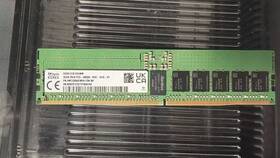
( Brand: Hynix ), ( Manufacturer Part Number: HMCG88AEBRA110N ), ( Form Factor: Rdimm ), ( Type: Ddr5 ), ( Total Capacity: 32 Gb ), ( Unit Type: Unit ), ( Bus Speed: Pc5-38400 ), ( Memory Features: Ecc Memory )
Review HYNIX Ec8 Rdimm Server Memory
The **Hynix HMCG88AEBRA110N DDR5 EC8 32GB 2Rx8 RDIMM Server Memory** represents the pinnacle of high-performance, enterprise-grade memory designed to meet the demanding workloads of modern data centers, cloud computing environments, and high-end server applications. Engineered with cutting-edge **DDR5 technology**, this module operates at an impressive **PC5-4800B (4800 MHz) clock speed**, delivering sustained bandwidth and latency optimization critical for CPU-intensive tasks such as virtualization, AI/ML processing, and large-scale database operations. The **2Rx8 configuration** ensures efficient signal integrity and power management, while the **32GB capacity per stick** maximizes memory density, reducing the need for additional slots and simplifying server architecture without compromising performance.
Built with **Hynix s advanced 112-layer 3D TSV (Through-Silicon Via) technology**, this RDIMM module achieves unparalleled reliability and efficiency, featuring **Error-Correcting Code (ECC) protection** to safeguard against data corruption from single-bit errors a critical feature for mission-critical applications where uptime and data integrity are non-negotiable. The **EC8 (ECC 8-bit) architecture** further enhances error detection and correction, ensuring seamless operation even under extreme workloads. Compatible with **DDR5-compatible server platforms**, this memory module integrates seamlessly with the latest Intel Xeon and AMD EPYC processors, providing the bandwidth and latency reduction necessary for next-generation workloads.
Designed for **high-density server deployments**, the HMCG88AEBRA110N adheres to strict **JEDEC standards** for RDIMM modules, ensuring backward and forward compatibility with a wide range of enterprise-grade servers. Its **low-power, high-efficiency design** minimizes heat generation, contributing to better thermal management and extended component lifespan. Whether deployed in **hyperscale data centers, high-performance computing clusters, or enterprise-grade virtualization environments**, this memory module delivers the speed, capacity, and reliability required to handle the most demanding computational challenges with precision and efficiency. Built for durability and performance, it stands as a cornerstone for next-generation server infrastructure.
### **Pros and Cons of Hynix HMCG88AEBRA110N DDR5 32GB 2Rx8 PC5-4800B RDIMM Server Memory**
#### **Pros:**1. **High Performance for Server Workloads** DDR5-4800 (PC5-4800) provides faster data transfer rates compared to DDR4, improving latency and throughput in memory-intensive applications like databases, virtualization, and high-performance computing (HPC).
2. **Registered DIMM (RDIMM) Design** RDIMMs are optimized for server environments, offering better stability and error correction (via ECC) compared to unbuffered DIMMs. This reduces the risk of data corruption in critical workloads.
3. **Dual Rank (2Rx8) Configuration** The 2-rank design allows for better bandwidth utilization in multi-channel memory architectures, improving performance in multi-socket servers.
4. **Compatibility with Modern Servers** DDR5 is the latest standard, ensuring long-term compatibility with newer Intel Xeon, AMD EPYC, and other high-end server CPUs.
5. **Reliability in Enterprise Environments** Hynix is a reputable manufacturer with a strong track record in server memory, offering consistent quality and support for mission-critical systems.
6. **Scalability** 32GB DIMMs allow for efficient memory scaling in servers, reducing the number of slots needed compared to smaller DIMMs (e.g., 16GB).
7. **Low Latency (B-Die Option)** The "B" in PC5-4800B suggests it may be a low-latency variant, which can improve performance in latency-sensitive applications.
#### **Cons:**1. **Higher Cost Compared to DDR4** DDR5 memory is more expensive than DDR4, which may be a significant factor in budget-conscious deployments.
2. **Limited Availability of DDR5 RDIMMs** DDR5 server memory is still less common than DDR4, potentially leading to longer lead times or higher prices.
3. **Power Consumption** DDR5 modules generally consume more power than DDR4, which could impact server efficiency and cooling requirements.
4. **Compatibility Issues with Older Servers** If upgrading an existing DDR4 server, you ll need a motherboard and CPU that support DDR5, requiring a full system upgrade in some cases.
5. **Potential for Overkill in Some Workloads** If the server is not heavily memory-bound, the performance gains of DDR5 may not justify the cost.
6. **Firmware and BIOS Considerations** Some servers may require BIOS updates to fully support DDR5 RDIMMs, adding complexity to deployment.
7. **Limited Second-Hand Market** Unlike DDR4, DDR5 memory is not yet widely available in the used market, making upgrades or replacements less flexible.
---
### **Conclusion**
The **Hynix HMCG88AEBRA110N DDR5 32GB 2Rx8 PC5-4800B RDIMM** is a strong choice for **high-performance server workloads** where memory bandwidth, latency, and reliability are critical. It offers significant advantages in modern server environments, particularly for **virtualization, databases, and HPC applications**, where DDR5 s faster speeds and RDIMM stability provide measurable benefits.
However, the **higher cost, limited availability, and power consumption** make it less ideal for **budget-sensitive or lightly loaded servers**. If your workload is not heavily memory-intensive, DDR4 may still be a cost-effective alternative.
### **Recommendation:** - **Buy if:**- You are deploying a **new server with DDR5 support** (e.g., Intel Xeon 5th Gen, AMD EPYC 9004 ).
- Your workload requires **high memory bandwidth** (e.g., virtualization, in-memory databases, AI/ML).
- You prioritize **long-term scalability and future-proofing**.
- **Consider alternatives if:**- Your budget is constrained, and **DDR4 RDIMMs** (or even LRDIMMs) are sufficient.
- The server is **not heavily memory-bound**, and performance gains may not justify the cost.
- You need **immediate availability**, as DDR5 RDIMMs may have longer lead times.
For most **enterprise-grade server deployments**, this module is a **solid investment** in performance and reliability, assuming compatibility with your hardware. If unsure, verify with your server manufacturer s memory compatibility list before purchasing.
Details:
This has been tested and it is in good working conditions.
part #: hmcg88aebra110n prices
- $348.99-$999.00
specifications servermemor:
- brand: Hynix
- mpn: Hmcg88aebra110n
- form factor: Rdimm
- type: Ddr5
- total capacity: 32 Gb
- unit type: Unit
- bus speed: Pc5-38400
- memory features: Ecc Memory
general servermemor:
- condition: Used
- Enterprise Networking, Servers > Server Components > Server Memory RAM
seller servermemor:
- city: Walnut, California
- # reviews: 866
- rating: 99.6%
shipping servermemor:
- carrier: USPS
- type: Fixed
- service: USPS Ground Advantage
- transit: 5-8 Days
- cost: $0.00
- class: Standard
returns servermemor:
- time: 30 Days
- policy: Returns Accepted
- paid by: Seller
- method: Money back
offer servermemor:
- quantity: 20
- availability: In Stock
- sold: 0
- best offers: True
- started: May 21, 2026
- options: Ship-to-home
payments servermemor:
- other
- wallet: Paypal
- credit card: Diners-club
Hynix HMCG88AEBRA110N Is Similar To:
- Lysb016yk8t9s-cmptraccs Hynix Memory 7426800357374 (19.8% similar) 26V VD e: picture may match actual product. Product features SK Hynix 8GB PC4-17000P-R DDR4-2133P reg ecc 2RX8 HMA41GR7MFR8N-TF...(January 7th, 2019)
- 0.43175616185203314 Lot Hynix Ecc Registered Server Ram (33.6% similar) I'll get back to you as soon I can. Condition: used, working if a power adapter is required for this item, it not included cord shows signs of normal use w some scuffs scratches blemishes sticker residue no other accessories hardware software...(March 9th, 2018)
- 0.7944198679996979 Lot Hynix Server Vlp Ram (24.8% similar) I'll get back to you as soon I can. Condition: used, working, pictured one but total 16 same if a power adapter is required for this item, it not included cord shows signs of normal use w some scuffs scratches blemishes sticker residue no other accessories hardware software...(October 20th, 2018)
- 0.850481806304197 Lot Samsung Hynix Server Ecc Ram (23.3% similar) Condition: used, working if a power adapter is required for this item, it not included cord shows signs of normal use w some scuffs scratches blemishes sticker residue no other accessories hardware software. I'll get back to you as soon I can...(October 16th, 2018)
- 0b47378 Hynix Mix Brands For An Ecc Udimm Memory Lenovo Thinkstation (39.1% similar) Major brand chips Samsung, micron, Hynix eloped. 8GB DDR3-1600 PC3 ecc rdimm memory 0B47378 for Leno think station E31...(July 7th, 2018)
- Hymp512r724-e3 10b62040-06-12 18gb Hynix 18x 1gb Ddr2 Pc2-3200r Sdram 1rx4 Server Ram Memory (44.4% similar) Boxes, APO, FPO and military bases. However larger items and quantity orders take more time to pack. Customer should in advance to schedule for a pickup...(December 16th, 2015)
- 10x2gb 10600s Elbida Samsung Laptop Ddr3 Hynix Micron Lot Memory (25.4% similar) ...(May 11th, 2015)
- Ecc Sdram Pc2 6400e 4gb 4 Unbuffered Ddr2 Hynix 1gb 240pin Memory Server (29.6% similar) This memory was pulled from fully functional production machines. Tested, in great condition. Warning this ram is designed for use in a server, it will not work in a desktop. Domestic shipping only...(February 26th, 2015)
- 39m5817 512mb Ram 3200r Pc2 2gb 4 Hynix Fru Server (23.3% similar) Hynix 2GB 4 x 512MB PC2 3200R server ram Frau 39M5817PULLED from working server thanks...(September 3rd, 2015)
- 3sr3355b-13 Hynix Lot Of Wintec Server Ecc Ram (31% similar) Is a wholly-owned subsidiary of sci leasing, the largest independent it leasing company in USA. Any repair service cost summary submitted without prior approval from the epic, inc. Customer provided postage us. These states are as follows: AZ, ca, mo, NV, NY, pa, SC, SD, and TX. Special requests. We...(February 27th, 2018)
- 43x5055 Samsung Hynix Ecc Server Memory Ram Ibm (39.3% similar) Leno IBM Hynix 4GB PC3-8500R DDR3-1066 registered ecc 4RX8 CL7 240 pin...(August 14th, 2018)