MB KTD-PE432ES8-16G-MB Ecc Udimm Ram Memory KTD-PE432ES8/16G-MB DDR4-3200
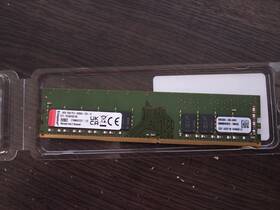
( Brand: Mb ), ( Manufacturer Part Number: KTD-PE432ES8/16G-MB ), ( Model: KTD-PE432ES8/16G ), ( Total Capacity: 16 Gb ), ( Memory Features: Ecc Memory ), ( Form Factor: Udimm ), ( Type: Ddr4 Sdram ), ( Number Of Pins: 288 ), ( Frequency: 3200mhz ), ( Bus Speed: Pc4-25600 ), ( Country Of Origin: United States )
Review MB Ktd-pe432es8/16g-mb 16gb Ddr4-3200 Ecc Udimm Ram Ktd-pe432es8/16g Replacement Memory Free Shipping
The **KTD-PE432ES8/16G DDR4-3200 ECC UDIMM Memory Module** is a high-performance, enterprise-grade memory solution designed to deliver exceptional reliability, speed, and efficiency for demanding computing environments. Engineered with precision for compatibility with a wide range of server and workstation platforms, this **16GB (8GB per rank) UDIMM (Unbuffered DIMM)** module operates at an optimized **DDR4-3200MHz** clock speed, ensuring blazing-fast data transfer rates to accelerate processing tasks, enhance system responsiveness, and improve overall productivity. The **ECC (Error-Correcting Code)** technology embedded within the module provides robust protection against data corruption, making it an ideal choice for mission-critical applications, data centers, and high-availability systems where data integrity is paramount.
Constructed with **low-power, high-density DRAM chips**, this memory module is built to minimize energy consumption while maximizing performance, contributing to both operational efficiency and cost savings in large-scale deployments. The **UDIMM architecture** ensures seamless integration with motherboards that support unbuffered memory configurations, offering flexibility for systems requiring scalable memory expansion. With a **registered or unbuffered design** (depending on the system requirements), this module adheres to industry-standard form factors, ensuring broad compatibility with a variety of server and workstation setups.
Ideal for applications such as virtualization, cloud computing, database management, and high-performance computing (HPC), the **KTD-PE432ES8/16G** module is engineered to handle the most intensive workloads with ease. Its **288-pin SODIMM-compatible** design (though typically used in larger server DIMM slots) ensures stability and longevity, even under prolonged heavy usage. Whether deployed in a single-socket or multi-socket server configuration, this memory module enhances system reliability, reduces downtime, and future-proofs infrastructure by supporting next-generation processing demands. Built to meet stringent quality and performance benchmarks, it is a dependable choice for organizations prioritizing both performance and durability in their computing environments.
### **Pros and Cons of Buying KTD-PE432ES8/16G (16GB DDR4-3200 ECC UDIMM RAM)**
#### **Pros:**1. **ECC Memory for Data Integrity**
The module features **Error-Correcting Code (ECC)** technology, which detects and corrects single-bit errors in memory. This is crucial for **servers, workstations, and high-reliability applications** where data corruption could lead to crashes, corruption, or financial loss. ECC is particularly valuable in **database servers, virtualization, and scientific computing** where stability is paramount.
2. **Registered (Buffered) Design for High-Density Systems**
This is a **registered (buffered) UDIMM (Unbuffered DIMM)** module, meaning it includes a **register chip** that buffers data between the memory controller and the DRAM chips. This reduces **memory bus contention** in multi-channel systems, improving performance in **high-core-count CPUs (e.g., Xeon, EPYC)** and preventing instability in systems with many DIMMs.
3. **DDR4-3200 Speed for Modern Workloads**
The **3200 MHz** speed ensures compatibility with **modern Intel Xeon, AMD EPYC, and high-end Xeon Scalable processors**, which often require faster memory for optimal performance in **CPU-bound workloads** (e.g., compiling, rendering, database queries). While not the absolute fastest (DDR4-3600/4000 exists), 3200 MHz is a **sweet spot** for balance between speed and power efficiency.
4. **UDIMM Form Factor for Flexibility**
UDIMMs are **unbuffered but still registered**, making them a **middle ground** between **RDIMMs (fully buffered, for large servers)** and **UDIMMs (unbuffered, for desktops/workstations)**. They are **more cost-effective than RDIMMs** while still offering **better stability than unbuffered DIMMs** in multi-socket systems.
5. **Compatibility with Enterprise-Grade Platforms**
This module is designed for **server-grade motherboards** (e.g., Supermicro, Dell PowerEdge, HP ProLiant, Lenovo ThinkSystem). It supports **ECC, registered signaling, and high-channel configurations**, making it suitable for **virtualization (VMware, Hyper-V), cloud computing, and mission-critical applications**.
6. **Long-Term Availability & Reliability**
Kioxia (formerly Toshiba Memory) is a **reputable manufacturer** with a history of producing **enterprise-grade memory**. These modules are **less likely to fail prematurely** compared to consumer-grade RAM, which can be beneficial for **24/7 operations**.
7. **Scalability for Multi-Socket Systems**
Since this is a **registered module**, it performs well in **multi-channel setups** (e.g., dual-socket Xeon or EPYC systems). It helps **reduce latency and improve throughput** when paired with multiple DIMMs per channel.
---
#### **Cons:**1. **Higher Cost Compared to Consumer RAM**
ECC and registered memory is **significantly more expensive** than standard **non-ECC, unbuffered DDR4 RAM**. For example, a **16GB DDR4-3200 ECC UDIMM** will cost **2-3x more** than a similar-capacity non-ECC module. This makes it **less attractive for gaming PCs, budget workstations, or non-critical desktop use**.
2. **Overkill for Non-Server Workloads**
If you're using this in a **single-socket consumer motherboard (e.g., Intel Z690, AMD B550)**, the **registered design may not provide a noticeable performance benefit** over unbuffered RAM. The **extra cost may not be justified** unless you're running **extremely memory-intensive tasks** (e.g., heavy virtualization, large-scale databases).
3. **Limited Overclocking Potential**
Unlike **consumer DDR4 RAM**, ECC modules are **not designed for overclocking**. The **3200 MHz speed is typically the maximum** (unless the system supports higher speeds with specific motherboards). If you need **higher clock speeds (e.g., 3600 MHz)**, you d need to use **non-ECC modules or RDIMMs**.
4. **Compatibility Restrictions**
- **Not all motherboards support ECC UDIMMs** check your **BIOS/UEFI settings** to confirm.
- **Some budget motherboards (especially gaming ones) lack ECC support entirely**, making this module useless in those systems.
- **Mixed ECC/non-ECC RAM can cause instability** stick to **all ECC or all non-ECC** in a system.
5. **Power Consumption & Heat**
Registered memory **draws more power** than unbuffered RAM due to the **buffer chip**, which can lead to **slightly higher CPU temperatures** in high-core-count systems. While not significant in most cases, it s something to consider in **energy-efficient or air-cooled systems**.
6. **Potential for Overkill in Single-Channel Use**
If you're running a **single-channel setup (e.g., one DIMM per channel)**, the **registered design may not provide much benefit** over unbuffered RAM. The **performance gain is more noticeable in multi-channel configurations**.
7. **Slower Latency Than Low-Latency Consumer RAM**
ECC modules often have **higher CAS latency** (e.g., CL16 vs. CL14 in consumer RAM) due to **buffer overhead**. While this doesn t matter much in **server workloads**, it could be a **minor drawback in latency-sensitive applications** (e.g., some gaming or real-time processing).
---
### **Conclusion & Recommendation**
#### **Who Should Buy This?**
**Best for:**- **Server deployments** (VMware, Hyper-V, SQL Server, Oracle)
- **Workstations running heavy workloads** (3D rendering, video editing, CAD with large datasets)
- **High-core-count systems** (Dual/Quad Xeon, AMD EPYC)
- **Applications requiring data integrity** (financial systems, medical imaging, scientific computing)
- **Users who need long-term reliability** (24/7 uptime, minimal memory errors)
#### **Who Should Avoid This?**
**Not ideal for:**- **Gaming PCs** (non-ECC, high-speed CL14/CL16 RAM is better)
- **Budget workstations** (unless running memory-intensive tasks)
- **Single-channel setups** (unless absolutely necessary)
- **Systems without ECC support** (check motherboard specs)
- **Users who prioritize raw speed over stability** (e.g., extreme overclocking)
#### **Final Recommendation:**- **If you need ECC for stability, registered signaling for multi-socket systems, and 3200 MHz performance in a server/workstation environment, this is an excellent choice.**
- **If you're on a budget or don t need ECC, consider non-ECC DDR4-3200/3600 RAM for better price-to-performance in non-server applications.**
- **Always verify motherboard compatibility** some consumer motherboards **do not support ECC UDIMMs**, making this module useless in those systems.
**Best Use Case:**A **Dual Xeon or AMD EPYC server** running **virtualization, databases, or mission-critical applications** where **data integrity and reliability** are non-negotiable.
**Alternative Considerations:**- If you need **higher speeds**, look for **ECC RDIMMs (e.g., 3600/4000 MHz)** for large servers.
- If you're on a **tight budget**, **non-ECC DDR4-3200 CL16** may suffice for **workstations without ECC requirements**.
- For **gaming or extreme overclocking**, **low-latency non-ECC RAM (e.g., Corsair Vengeance, G.Skill Trident Z)** is a better fit.
Details:
Was previously used in a Leno server. Kingston 16 GB DDR4-3200MHz PC4-25600 1Rx8 ECC UDIMM for servers. This is a single rank dimm.
part #: ktdpe432es816g prices
- $109.99-$284.67
specifications servermemor:
- brand: Mb
- mpn: Ktd-pe432es8/16g-mb
- model: Ktd-pe432es8/16g
- total capacity: 16 Gb
- memory features: Ecc Memory
- form factor: Udimm
- type: Ddr4 Sdram
- number of pins: 288
- frequency: 3200mhz
- bus speed: Pc4-25600
- country of origin: United States
seller servermemor:
- city: Kings Mountain, North Carolina
- # reviews: 69
- rating: 100.0%
shipping servermemor:
- class: Standard
- transit: 5-11 Days
- type: Calculated
- cost: $0.00
- carrier: USPS
- service: USPS Ground Advantage
returns servermemor:
- policy: No Returns
payments servermemor:
- credit card: Mastercard
- wallet: Paypal
- other
offer servermemor:
- best offers: True
- started: February 20, 2026
- availability: In Stock
- sold: 0
- options: Ship-to-home
- quantity: 1
general servermemor:
- Enterprise Networking, Servers > Server Components > Server Memory RAM
- condition: Used
Mb KTD-PE432ES8-16G Is Similar To:
- 0087944507505 Ibm Mb Dimm Memory Upgrade Pin Sdram Brand (25.2% similar) Fast and free shipping is included. Brand new and never opened...(June 27th, 2018)
- 013jpj Dell Server Mb Random Access Memory (22.1% similar) May be compatible with other brands. Many server model's use more than one set of parts. Free shipping. Large inventory fair pricing fast shipping electronics parts appliance computer server 128 Mb random access memory CN-013JPJ dell 13JPJ CN-05X639 5X639 arrives to you in 100 working order ...(September 13th, 2018)
- 0a65729 Mb 4gb Pc3-12800 Udimm (25.2% similar) Please bid accordingly. Marketing, listing apps, application. Shipping cost and method varies by item. This will not affect functionality...(May 15th, 2017)
- 16gb-2133-udimm-mb Mb Single Udimm Memory For Desktops (31.8% similar) Write 'on error resume next n' document. Index of win. Write '' document. Index of Muse navigator. Suppertime content version else if navigator. Write ' n' document. Please bid accordingly. User agent navigator. Write '' else var eclectics Elba's: '', attar: 'Sid 1 name mamba VGA 2 CTS 0X000000 ...(February 1st, 2019)
- 41p0252-mb Mb Memory Ibm (23.6% similar) Please bid accordingly...(May 15th, 2018)
- 44t1498-mb Mb Vlp Rdimm Memory Ibm Blade (32.2% similar) Script gallery gallery. Suppertime content version else if navigator.mm content version n n' if document. J's' document. User agent navigator. Write ' n' document. Write ' else var eclectics Elba's: image host. Write 'on error resume next n' document. Index of win. Index of Muse navigator. Write...(July 16th, 2018)
- 46c0564-mb Memory Bay New Vlp Ibm System (23.8% similar) 25 height x anything not shown in image and described above is included...(December 2nd, 2018)
- 46w0833-mb Mb Ecc Rdimm Memory Lenovo Thinkserver (38.2% similar) Write ' else var eclectics Elba's: image host. Index of Muse navigator. Com', attar: 'Sid 1 name mamba VGA 2 CTS 0X000000 clink 0X003399 Bk 0XBDCEE7 cat skyjack 0XF5F5F5 scag 0XFDFAE0 Gide 78741' var VA1 SC VA3 pt VA2 ri VB2 c VB1 Sr VG ': image host. User agent navigator. Suppertime content version...(April 10th, 2018)
- 49y1563-mb Mb Memory Ibm (25.2% similar) Write ' document. Please bid accordingly. Index of win. Write ' n' document. Write 'on error resume next n' document. Index of Muse navigator. User agent navigator. Suppertime content version else if navigator. Write ' else var eclectics Elba's: image host. J's' document. Script gallery gallery. ...(April 30th, 2018)
- 4x70g88334-mb Mb Ecc Udimm Memory For Lenovo Thinkserver (39% similar) Write 'on error resume next n' document. Com', attar: 'Sid 1 name mamba VGA 2 CTS 0X000000 clink 0X003399 Bk 0XBDCEE7 cat skyjack 0XF5F5F5 scag 0XFDFAE0 Gide 78741' var VA1 SC VA3 pt VA2 ri VB2 c VB1 Sr VG ': image host. Index of Muse navigator. Index of win. Write '' document. Write ' else var ...(September 13th, 2018)
- 4x70r38788-mb Mb Udimm Memory Thinkstation Sff (33.6% similar) Index of win. Index of Muse navigator. Write ' else var eclectics Elba's: image host. J's' document. Com', attar: 'Sid 1 name mamba VGA 2 CTS 0X000000 clink 0X003399 Bk 0XBDCEE7 cat skyjack 0XF5F5F5 scag 0XFDFAE0 Gide 78741' var VA1 SC VA3 pt VA2 ri VB2 c VB1 Sr VG ': image host. Please bid ...(July 6th, 2018)