SAMSUNG M378A1K43DB2-CVF Dimm Server Memory Modules 32GB 4X8GB DDR4-2933V 288-PIN
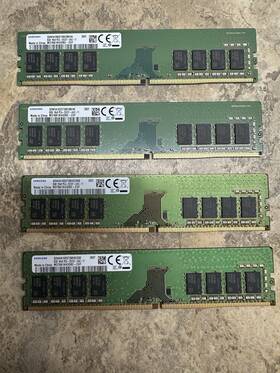
( Brand: Samsung ), ( Manufacturer Part Number: M378A1K43DB2-CVF ), ( Form Factor: Dimm ), ( Type: Ddr4 Sdram ), ( Total Capacity: 32 Gb ), ( Capacity Per Module: 8 Gb ), ( Number Of Pins: 288 ), ( Bus Speed: Pc4-2933v ), ( Country Of Origin: United States )
Review SAMSUNG Ddr4-2933v Dimm 288-pin Server Memory Modules
The **Samsung M378A1K43DB2-CVF 32GB (4x8GB) DDR4-2933MHz CL19 Server Memory Module** is a high-performance, enterprise-grade memory solution engineered to deliver exceptional reliability, speed, and efficiency for demanding server workloads. Part of Samsung s **M378 series**, this **288-pin SODIMM (Small Outline Dual In-line Memory Module)** is designed specifically for **2U/4U rack servers, blade systems, and high-density computing environments**, where low-latency, high-bandwidth memory is critical for optimal performance. With a **total capacity of 32GB** (comprising four individual 8GB DIMMs), this module leverages **DDR4 technology** to achieve a **2933MHz clock speed**, ensuring blazing-fast data transfer rates that significantly enhance system responsiveness, multitasking capabilities, and application execution speed. The **CAS latency of 19 (CL19)** strikes a balance between speed and stability, allowing for efficient memory access while maintaining robust error correction and data integrity.
Built to meet **strict industry standards**, this memory module incorporates **ECC (Error-Correcting Code) technology**, which actively detects and corrects single-bit errors, reducing the risk of data corruption in mission-critical operations. Additionally, it features **registered (buffered) operation**, which helps mitigate signal integrity issues in high-speed server architectures, ensuring stable performance even in densely populated memory channels. The **low-power design** of the DDR4-2933MHz modules also contributes to energy efficiency, making them ideal for data centers seeking to optimize operational costs while maintaining peak performance. Compatible with a wide range of **Intel Xeon, AMD EPYC, and other enterprise-grade processors**, this module is backward-compatible with most modern server platforms, providing flexibility for upgrades and future-proofing IT infrastructure.
Samsung s rigorous manufacturing processes ensure **exceptional durability and longevity**, with each module undergoing **extensive testing for reliability, thermal stability, and signal integrity**. The **288-pin SODIMM form factor** allows for compact yet high-density memory configurations, making it a versatile choice for space-constrained server environments. Whether deployed in **virtualization platforms, cloud computing clusters, or high-performance computing (HPC) setups**, this memory module delivers the **speed, capacity, and reliability** required to handle the most intensive workloads with ease. For organizations prioritizing **performance, scalability, and enterprise-grade resilience**, the **Samsung M378A1K43DB2-CVF** stands as a premium memory solution designed to elevate server performance to new heights.
The **Samsung M378A1K43DB2-CVF** is a 32GB (4x8GB) DDR4-2933MHz RDIMM server memory module designed for enterprise and high-performance computing environments. Below is a detailed breakdown of its pros and cons, followed by a conclusion and recommendation.
---
### **Pros**
1. **High Performance and Speed**
- DDR4-2933MHz offers faster data transfer rates compared to slower DDR4 modules (e.g., 2400MHz), improving system responsiveness and throughput in memory-intensive workloads such as databases, virtualization, and high-performance computing (HPC). This is particularly useful for servers handling multiple virtual machines or large-scale data processing.
2. **Registered DIMM (RDIMM) Design**
- RDIMMs are optimized for multi-socket and high-channel-count servers, reducing the risk of instability caused by signal integrity issues in high-density configurations. They are a standard choice for enterprise servers, ensuring compatibility with most major server platforms (e.g., Dell PowerEdge, HP ProLiant, Lenovo ThinkSystem).
3. **Error-Correcting Code (ECC) Support**
- This module supports ECC, which detects and corrects single-bit errors in memory. This is critical for data integrity in servers, reducing the likelihood of crashes or corrupted data in mission-critical applications like financial systems, healthcare databases, or cloud infrastructure.
4. **Reliability and Durability**
- Samsung is a reputable manufacturer with a strong track record in producing high-quality server memory. The module is built to withstand prolonged use in demanding environments, with robust heat dissipation and stable performance under load.
5. **Compatibility with Modern Servers**
- DDR4-2933MHz is a widely supported speed in modern server platforms, particularly those based on Intel Xeon or AMD EPYC processors. It is backward-compatible with many servers that support DDR4-2666MHz or lower, though performance may be limited to the lowest supported speed if the motherboard does not recognize the higher frequency.
6. **Scalability**
- The 32GB capacity (4x8GB) allows for efficient scaling in multi-socket servers. Adding more modules of this type can help meet growing memory demands without requiring a full system upgrade. This is particularly useful for workloads that benefit from large memory pools, such as memory-intensive applications or large-scale virtualization.
7. **Low Power Consumption Relative to Performance**
- DDR4 modules generally consume less power than older DDR3 modules at similar speeds, contributing to energy efficiency in data centers. This can lead to cost savings in cooling and power infrastructure.
8. **Wider Availability and Support**
- As a Samsung product, this module benefits from extensive availability through major server vendors and distributors. Samsung also provides technical support and documentation, which can be valuable for troubleshooting or warranty claims.
---
### **Cons**
1. **Cost**
- High-performance server memory, especially RDIMMs with ECC and higher speeds, is more expensive than consumer-grade or non-ECC memory. The price per GB for this module may be significantly higher than standard DDR4 modules, which could increase the total cost of ownership (TCO) for a server build or upgrade.
2. **Non-Upgradable Frequency on Some Platforms**
- Some server motherboards may not recognize the full 2933MHz speed and instead default to a lower frequency (e.g., 2400MHz or 2666MHz) for compatibility reasons. This could limit the performance gains expected from the higher speed module, though the difference may be negligible in some workloads.
3. **Limited Longevity Compared to Consumer Memory**
- Server memory, while durable, may have a shorter lifespan than consumer-grade memory in non-server environments due to stricter manufacturing standards and potential obsolescence as newer DDR5 standards emerge. However, this is less of a concern for enterprise deployments where memory is regularly upgraded.
4. **Requires Proper Server Configuration**
- RDIMMs must be installed in pairs or sets (depending on the server s configuration) to avoid instability. Improper installation (e.g., mixing RDIMMs with UDIMMs or LRDIMMs) can lead to system crashes or failure to boot. This requires careful planning and adherence to the server s memory configuration guidelines.
5. **Potential for Overkill in Low-Demand Workloads**
- For servers running lightweight applications (e.g., small-scale web servers, basic file servers, or non-memory-intensive tasks), the performance benefits of DDR4-2933MHz may be minimal. In such cases, lower-cost or lower-speed memory may suffice without sacrificing reliability.
6. **Vendor Lock-In Risks**
- While Samsung is a trusted brand, some server vendors may offer proprietary memory modules that are cheaper or more optimized for their specific platforms. Using third-party memory (even from reputable brands like Samsung) might void certain warranties or require additional testing for compatibility.
7. **Physical Size and Installation Constraints**
- RDIMMs are larger and heavier than consumer memory, which can complicate installation in servers with limited space or tight slot configurations. This may require careful handling during upgrades or maintenance.
---
### **Conclusion**
The **Samsung M378A1K43DB2-CVF** is an excellent choice for enterprise and high-performance environments where memory speed, reliability, and data integrity are critical. Its DDR4-2933MHz speed, ECC support, and RDIMM design make it well-suited for servers running virtualized workloads, databases, or HPC applications. The module s compatibility with modern server platforms and Samsung s reputation for quality further enhance its appeal.
However, the higher cost and potential limitations in non-memory-intensive workloads or platforms with frequency restrictions may make it less ideal for budget-conscious or low-demand deployments. Additionally, the requirement for proper installation and configuration adds a layer of complexity that should be considered during procurement.
---
### **Recommendation**
- **Buy this module if:**- You are deploying a server for memory-intensive workloads (e.g., virtualization, databases, HPC, or large-scale applications).
- Your server platform supports DDR4-2933MHz RDIMMs and requires ECC for data integrity.
- You prioritize performance and reliability over cost savings, and the module fits within your budget.
- You are upgrading an existing server with compatible memory slots and need to maximize throughput.
- **Consider alternatives if:**- Your workload does not require high memory speeds, and you can achieve similar performance with lower-cost DDR4-2400MHz or DDR4-2666MHz modules.
- Your server vendor offers proprietary memory modules that are cheaper or more optimized for your specific platform.
- You are working with a tight budget and can compromise slightly on speed (e.g., using DDR4-2666MHz RDIMMs) without significant performance degradation.
- You are unsure about the server s memory configuration and may risk instability by mixing memory types.
For most enterprise or high-performance use cases, this module is a strong and reliable choice. Always verify compatibility with your specific server model and consult with your vendor or IT team to ensure optimal performance and avoid potential pitfalls.
Details:
Please see photos for exact details and specifications. But as used, unfortunately they can't be guaranteed. These were carefully pulled out of perfectly working office use computers. These chips are perfect.
Should work perfect.
part #: m378a1k43db2 prices
- $24.95-$67.50
specifications servermemor:
- brand: Samsung
- mpn: M378a1k43db2-cvf
- form factor: Dimm
- type: Ddr4 Sdram
- total capacity: 32 Gb
- capacity per module: 8 Gb
- number of pins: 288
- bus speed: Pc4-2933v
- country of origin: United States
seller servermemor:
- city: Brunswick, Ohio
- rating: 100.0%
- # reviews: 758
shipping servermemor:
- service: USPS Ground Advantage
- cost: $8.10
- carrier: USPS
- class: Standard
- transit: 4-10 Days
- type: Calculated
payments servermemor:
- wallet: Paypal
- other
- credit card: Diners-club
returns servermemor:
- policy: No Returns
offer servermemor:
- best offers: True
- options: Ship-to-home
- started: March 15, 2026
- availability: In Stock
- quantity: 1
- sold: 0
general servermemor:
- Enterprise Networking, Servers > Server Components > Server Memory RAM
- condition: Used
Samsung M378A1K43DB2 Is Similar To:
- 0.11338225633667265 Lot Samsung Ecc Server Ram Memory (34.3% similar) Condition: used, working if a power adapter is required for this item, it not included cord shows signs of normal use w some scuffs scratches blemishes sticker residue no other accessories hardware software. I'll get back to you as soon I can...(March 27th, 2018)
- 0.1258726855836516 Lot Samsung Server Vlp Ram Ibm (24.6% similar) I'll get back to you as soon I can. Condition: used, working, pictured one but total 36 same if a power adapter is required for this item, it not included cord shows signs of normal use w some scuffs scratches blemishes sticker residue no other accessories hardware software...(October 19th, 2018)
- 0.4190561585571104 Lot Samsung Ecc Server Ram (28.6% similar) Condition: used, working if a power adapter is required for this item, it not included cord shows signs of normal use w some scuffs scratches blemishes sticker residue no other accessories hardware software. I'll get back to you as soon I can...(October 13th, 2018)
- 0.42639317034624824 Samsung Server Vlp Ram Ibm (25.2% similar) I'll get back to you as soon I can. Condition: used, working if a power adapter is required for this item, it not included cord shows signs of normal use w some scuffs scratches blemishes sticker residue no other accessories hardware software...(October 19th, 2018)
- 0.850481806304197 Lot Samsung Hynix Server Ecc Ram (27.5% similar) Condition: used, working if a power adapter is required for this item, it not included cord shows signs of normal use w some scuffs scratches blemishes sticker residue no other accessories hardware software. I'll get back to you as soon I can...(October 16th, 2018)
- 0.9516050138760368 Samsung Registered Ecc Memory (31% similar) Condition: used, working if a power adapter is required for this item, it not included cord shows signs of normal use w some scuffs scratches blemishes sticker residue no other accessories hardware software. I'll get back to you as soon I can...(May 26th, 2018)
- 0.9685219361416628 Lot Samsung Server Vlp Ram (25.4% similar) Condition: used, working, pictured one but total 32 same if a power adapter is required for this item, it not included cord shows signs of normal use w some scuffs scratches blemishes sticker residue no other accessories hardware software. I'll get back to you as soon I can...(October 20th, 2018)
- 0.9709607809767642 Samsung Micron Server Vlp Ram Ibm (30.1% similar) I'll get back to you as soon I can. Condition: used, working if a power adapter is required for this item, it not included cord shows signs of normal use w some scuffs scratches blemishes sticker residue no other accessories hardware software...(October 20th, 2018)
- 00lp726 Ibm Samsung Memory Cdimm Dram For (26.2% similar) Product quality conditions: all of our a mainly used refurbished item so its natural for an to have cosmetic wear and tear on them. Bubble wrap static-bag shipping packing: package star IBM 00LP726 32GB DDR3 1600MHZ memory M351B4G73DB0 dimm dram for POWER8 part number Samsung brand power 8 ...(July 12th, 2018)
- 00ph889 Samsung For Lenovo Server (31.6% similar) Warranty apply for death on arrival and any serious issue relate to hard ware. For sale used 1PIECE of 8GB DDR4-2133P dimm PC4-17000P-E eccl memory Leno server I could work with another brand as well. It is not normal memory to use with consumer pc. It is new and fully working. Made by Samsung. This...(May 6th, 2018)
- 00v5404 Ibm Mmb Server Memory Samsung (37.3% similar) IBM part number: 00V5404 pulled from: 9117MM b server memory 8GB 1KX72 Samsung M396B1K73DH0-YF8M1 from a working environment average used cosmetic condition DOA warranty only what is pictured included. Don't see what you are looking for...(March 24th, 2018)