SAMSUNG M386A4K40BB0-CRC5Q Ecc Sdram Dimm 32GB DDR4
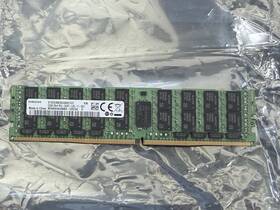
( Brand: Samsung ), ( Manufacturer Part Number: M386A4K40BB0-CRC5Q ), ( Form Factor: Dimm ), ( Type: Ddr4 Sdram ), ( Total Capacity: 32 Gb ), ( Number Of Pins: 288 ), ( Bus Speed: Pc4-19200 ), ( Country Of Origin: China ), ( Memory Features: Ecc Memory )
Review SAMSUNG Ddr4 Ecc Sdram Dimm
The **Samsung M386A4K40BB0-CRC5Q** is a high-performance, enterprise-grade **32GB DDR4 SDRAM DIMM module** designed to deliver exceptional reliability, speed, and efficiency in demanding server, workstation, and high-performance computing environments. Part of Samsung s **DDR4 ECC (Error-Correcting Code) memory lineup**, this module is engineered to meet the stringent requirements of modern data centers, cloud infrastructure, and mission-critical applications where data integrity and low-latency performance are paramount. With a **capacity of 32GB (4 x 8GB) per DIMM**, it provides ample memory bandwidth to support resource-intensive workloads, including virtualization, AI/ML training, database management, and high-frequency trading systems. The module operates at a **2133 MHz (PC4-17000) speed**, ensuring rapid data transfer rates that minimize processing bottlenecks and enhance overall system responsiveness. Built with **low-power DDR4 (LP-DDR4) technology**, it optimizes energy efficiency while maintaining peak performance, making it an ideal choice for power-conscious deployments.
Featuring **ECC memory technology**, the **M386A4K40BB0-CRC5Q** actively detects and corrects single-bit errors, significantly reducing the risk of data corruption in critical applications. This makes it a trusted component in environments where uptime and data accuracy are non-negotiable, such as financial systems, healthcare databases, and scientific simulations. The module adheres to **JEDEC standards**, ensuring compatibility with a wide range of server platforms, including those from Dell, HP, Lenovo, and other leading manufacturers. Its **288-pin SODIMM form factor** (though often referred to as a standard DIMM in server contexts) allows for seamless integration into motherboards and chassis designed for high-density memory configurations. Additionally, Samsung s rigorous manufacturing processes ensure **high reliability and extended product lifespans**, with robust thermal management features to prevent overheating during prolonged operation.
Beyond its technical specifications, the **M386A4K40BB0-CRC5Q** is built with **industrial-grade components**, including Samsung s proprietary **96-layer 16Gb DDR4 DRAM chips**, which enhance stability and reduce latency. The module is also **RoHS-compliant**, aligning with global environmental regulations and ensuring safe disposal and recycling. Whether deployed in a **2U server rack, blade system, or high-end workstation**, this memory module delivers a balance of speed, capacity, and endurance, making it a cornerstone for organizations seeking to optimize performance while maintaining operational resilience. For IT administrators and system architects, the **M386A4K40BB0-CRC5Q** represents a cost-effective yet high-performance solution that elevates the capabilities of any infrastructure it powers.
The **Samsung M386A4K40BB0-CRC5Q** is a 32GB DDR4 ECC SDRAM DIMM module (4x8GB) with a 240-pin configuration, designed for enterprise and high-reliability applications. Below is a detailed analysis of its pros and cons, followed by a conclusion and recommendation.
---
### **Pros**
1. **ECC Memory for Data Integrity**
The module includes **Error-Correcting Code (ECC)**, which detects and corrects single-bit errors in real-time. This is critical for servers, workstations, and applications handling financial, medical, or scientific data where data corruption could lead to catastrophic failures. ECC reduces the risk of silent data corruption, which is a major concern in mission-critical environments.
2. **High Reliability and Durability**
Samsung s **M386A4K40BB0** is part of their **DDR4 ECC registered (RDIMM) or buffered (LRDIMM) series**, designed for **24/7 operation** in enterprise servers. These modules undergo rigorous testing for stability, heat resistance, and longevity, making them suitable for data centers and high-availability systems.
3. **Registered (RDIMM) or Load-Reduced (LRDIMM) Support**
- If this is an **RDIMM**, it includes a **register chip** that buffers signals, reducing signal integrity issues on long memory buses (common in multi-socket servers). This improves performance in high-channel-count systems.
- If it s an **LRDIMM**, it further optimizes signal integrity by reducing load on the memory controller, making it ideal for **scalable servers** (e.g., Dell PowerEdge, HP ProLiant, IBM xSeries).
- *Note: Confirm the exact type (RDIMM/LRDIMM) with the seller or datasheet, as this affects compatibility.*
4. **Low Power Consumption**
DDR4 modules are more power-efficient than DDR3, reducing operational costs in data centers. Samsung s DDR4 ECC modules are optimized for **lower power draw** while maintaining high performance.
5. **Compatibility with Enterprise Platforms**
This module is designed to work with **Intel Xeon, AMD EPYC, and other enterprise-grade CPUs**, making it a reliable choice for:- **Servers** (file servers, database servers, virtualization hosts)
- **Workstations** (CAD, rendering, AI/ML workloads)
- **High-performance computing (HPC) clusters**
- **Storage arrays and NAS systems**
6. **Long-Term Availability**
Samsung s enterprise memory modules are **less likely to be discontinued** compared to consumer-grade RAM. This ensures **spare parts availability** for older servers, reducing obsolescence risks.
7. **Better Performance Than Non-ECC**
While ECC adds a small overhead ( 5-10% latency penalty), the **reliability benefits far outweigh the performance cost** in professional environments. For gaming or consumer PCs, non-ECC RAM is sufficient, but for servers, ECC is non-negotiable.
8. **Support for High-Speed Channels**
This module supports **DDR4-2400 (PC4-19200)** speeds, which is sufficient for most enterprise workloads. Some newer platforms support higher speeds (e.g., DDR4-3200), but the performance gain may not justify the cost unless running memory-intensive applications.
---
### **Cons**
1. **Higher Cost Than Non-ECC RAM**
ECC memory is **significantly more expensive** than standard DDR4 RAM. For example:- A **32GB (2x16GB) non-ECC DDR4 module** might cost **$50-$80**.
- A **32GB (4x8GB) ECC RDIMM/LRDIMM** like this one costs **$150-$250 **, depending on speed and quantity.
- If you don t need ECC (e.g., for a home server or gaming PC), this is unnecessary and wasteful.
2. **Limited Use Case for Consumer Applications**
- **Gaming PCs:** ECC is irrelevant; non-ECC RAM with higher speeds (DDR4-3600 ) is better.
- **Budget builds:** The price premium makes it impractical for non-professional use.
- **Laptops/ultrabooks:** Most consumer laptops don t support ECC RAM.
3. **Compatibility Restrictions**
- **Not all motherboards support ECC RAM.** Check your motherboard s manual most **gaming/entry-level boards** lack ECC support.
- **Server-grade motherboards** (e.g., ASUS WS, Supermicro, Gigabyte TRX40) are required for full ECC functionality.
- **Mixing ECC and non-ECC RAM can cause issues** (some systems may boot but may not work reliably).
4. **Slightly Higher Latency**
ECC introduces a **small performance penalty** due to error-checking overhead. In latency-sensitive applications (e.g., real-time trading, some gaming), this may be noticeable, though the impact is usually minimal in most workloads.
5. **Overkill for Light Workloads**
If you re running **lightweight tasks** (web browsing, office work, small databases), ECC RAM is **completely unnecessary**. The cost doesn t justify the benefit.
6. **Potential for Overkill in Small Businesses**
Small businesses with **low-risk workloads** (e.g., a single-file server) may not need ECC. The extra cost could be better spent on **more RAM, faster storage, or better CPUs**.
7. **Requires Proper Cooling**
Enterprise-grade RAM runs hotter than consumer RAM due to higher power draw. Ensure your server has **adequate airflow and cooling** to prevent throttling or failure.
8. **Vendor Lock-In Risk**
Some enterprise systems (e.g., Dell PowerEdge, Cisco UCS) have **proprietary memory requirements**. While Samsung is a reputable brand, **third-party compatibility can vary**, and some vendors may recommend using their own memory kits.
---
### **Conclusion**
The **Samsung M386A4K40BB0-CRC5Q (32GB DDR4 ECC RDIMM/LRDIMM)** is an **excellent choice for enterprise, server, and high-reliability environments** where data integrity is critical. Its **ECC protection, registered buffering, and Samsung s reliability** make it ideal for:
- **Data centers**
- **Virtualization hosts**
- **Database servers**
- **Financial/medical/scientific computing**
- **High-availability workstations**
However, it is **overkill and unnecessarily expensive** for:- **Gaming PCs**
- **Consumer laptops/desktops**
- **Lightweight home servers**
- **Budget builds**
If you re running a **mission-critical system** where data corruption could lead to **loss of money, safety, or productivity**, this RAM is a **wise investment**. If you re building a **gaming rig, a personal workstation, or a low-risk server**, you should **opt for non-ECC DDR4 RAM** instead to save money without sacrificing performance.
---
### **Recommendation**
- **Buy this module if:**- You are setting up a **server, workstation, or HPC system** where **data integrity is non-negotiable**.
- Your motherboard **supports ECC RDIMM/LRDIMM** (check compatibility with your CPU/motherboard).
- You need **high reliability for 24/7 operation** (e.g., web hosting, database servers).
- You are working in **finance, healthcare, or research** where errors cannot be tolerated.
- **Avoid this module if:**- You are building a **gaming PC, content creation machine, or consumer-grade system**.
- Your budget is tight, and you can achieve similar performance with **non-ECC DDR4 RAM at a fraction of the cost**.
- Your motherboard **does not support ECC memory**.
- You are running **lightweight applications** where ECC s benefits are irrelevant.
- **Alternatives to Consider:**- For **gaming/workstations**, look for **Corsair Vengeance, G.Skill Trident Z, or Kingston Fury** non-ECC DDR4 kits.
- For **enterprise servers**, check **Dell, HP, or Crucial (Micron) ECC RDIMMs** if your system has vendor-specific requirements.
- If you need **higher speeds**, consider **DDR4-3200 ECC** (if supported by your platform).
**Final Verdict:**This is a **premium enterprise-grade memory module** that belongs in **servers and high-reliability systems**, not in consumer builds. If you re in the right environment, it s a **solid, long-lasting investment**. If not, prioritize **cost efficiency** with non-ECC alternatives.
Details:
Internal Control # 04549. Buyer is covered under.
part #: m386a4k40bb0crc5q prices
- $129.33-$200.00
specifications servermemor:
- brand: Samsung
- mpn: M386a4k40bb0-crc5q
- form factor: Dimm
- type: Ddr4 Sdram
- total capacity: 32 Gb
- number of pins: 288
- bus speed: Pc4-19200
- country of origin: China
- memory features: Ecc Memory
shipping servermemor:
- carrier: USPS
- service: USPS Ground Advantage, USPS Priority Mail
- transit: 3-8 Days
- cost: $0.00
- type: Fixed
- class: Standard, Expedited
general servermemor:
- condition: Used
- Enterprise Networking, Servers > Server Components > Server Memory RAM
payments servermemor:
- other
- wallet: Google-pay
- credit card: Visa
offer servermemor:
- availability: In Stock
- started: March 30, 2026
- sold: 0
- options: Ship-to-home
- quantity: 1
seller servermemor:
- rating: 100.0%
- # reviews: 3152
- city: Duluth, Minnesota
returns servermemor:
- policy: No Returns
Samsung M386A4K40BB0-CRC5Q Is Similar To:
- 0.09744922496769814 Samsung Ecc Reg Ram (31.1% similar) No other accessories hardware software. I'll get back to you as soon I can...(November 17th, 2018)
- 0.11338225633667265 Lot Samsung Ecc Server Ram Memory (34.6% similar) Condition: used, working if a power adapter is required for this item, it not included cord shows signs of normal use w some scuffs scratches blemishes sticker residue no other accessories hardware software. I'll get back to you as soon I can...(March 27th, 2018)
- 0.35100209741590715 Hp Samsung Ecc Reg (27% similar) I'll get back to you as soon I can. No other accessories hardware software...(October 12th, 2018)
- 0.3518165772947017 Samsung Cn Ram Ecc Reg Qty (31.3% similar) No other accessories hardware software. I'll get back to you as soon I can...(May 7th, 2018)
- 0.4190561585571104 Lot Samsung Ecc Server Ram (33.3% similar) Condition: used, working if a power adapter is required for this item, it not included cord shows signs of normal use w some scuffs scratches blemishes sticker residue no other accessories hardware software. I'll get back to you as soon I can...(October 13th, 2018)
- 0.4196896457027133 Samsung Ecc Reg Ram (31.5% similar) No other accessories hardware software. I'll get back to you as soon I can...(November 9th, 2018)
- 0.7823584412062607 Samsung Reg Ecc Ram Cn Qty (35.4% similar) I'll get back to you as soon I can. No other accessories hardware software...(June 19th, 2018)
- 0.850481806304197 Lot Samsung Hynix Server Ecc Ram (33.7% similar) Condition: used, working if a power adapter is required for this item, it not included cord shows signs of normal use w some scuffs scratches blemishes sticker residue no other accessories hardware software. I'll get back to you as soon I can...(October 16th, 2018)
- 0.9516050138760368 Samsung Registered Ecc Memory (32.3% similar) Condition: used, working if a power adapter is required for this item, it not included cord shows signs of normal use w some scuffs scratches blemishes sticker residue no other accessories hardware software. I'll get back to you as soon I can...(May 26th, 2018)
- 011110232946 Samsung 8gb Pc10600 Ecc (36.8% similar) Need product support. Byte has you covered. We either re-use, refurbish, re-sell or properly recycle your outdated it equipment...(March 17th, 2017)
- 1 63120 61031 0 Reg Ecc Samsung (17.1% similar) Note: the item specifics detailed info are not always correct. Please with questions before buying. The picture is a stock photo. Listing summary: 1 lot of 64GB 4x 16GB Samsung memory. 5 condition: used, tested good. Sold as used and in working condition. Manufacturer: Samsung P/N: M393B2G70BH0-CK0 ...(August 21st, 2018)