SAMSUNG M393A2G40EB2-CTD70 Ecc Rdimm Server Memory Ram 2RX4 DDR4 2666MHZ
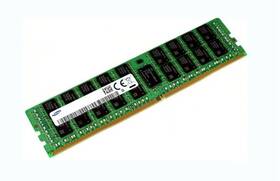
( Brand: Samsung ), ( Manufacturer Part Number: M393A2G40EB2-CTD70 ), ( Total Capacity: 16 Gb ), ( Memory Features: Ecc Memory, Fully Buffered, Registered ), ( Form Factor: Rdimm ), ( Type: Ddr4 Sdram ), ( Unit Type: Unit ), ( Manufacturer Warranty: Lifetime ), ( Item Height: 30mm ), ( Number Of Pins: 288 ), ( Bus Speed: Pc4-21300 )
Review SAMSUNG 16gb 2rx4 Ddr4 2666mhz Ecc Rdimm Server Memory Ram
The **Samsung M393A2G40EB2-CTD70 2Rx4 DDR4 ECC RDIMM Server Memory** is a high-performance, enterprise-grade memory module meticulously engineered to meet the demanding requirements of modern data centers, high-end workstations, and mission-critical server environments. Designed with precision and built to the strictest industry standards, this **2666MHz DDR4** module delivers exceptional speed, reliability, and efficiency, making it an ideal choice for applications requiring low-latency processing, high bandwidth, and robust error correction. Featuring a **2Rx4 configuration**, this module supports dual-channel operation, optimizing data throughput and enhancing system responsiveness for CPU-intensive workloads such as virtualization, database management, and AI/ML computations. The **Registered DIMM (RDIMM)** architecture ensures stable signal integrity over longer memory buses, reducing the risk of data corruption and improving overall system stability particularly in multi-socket server configurations where memory channel scaling is critical.
Crafted with Samsung s proprietary **20nm process technology**, this memory module incorporates **low-power, high-density DRAM chips** that operate efficiently while maintaining peak performance, making it well-suited for energy-conscious data centers. The **ECC (Error-Correcting Code)** functionality provides an additional layer of data integrity, automatically detecting and correcting single-bit errors without requiring manual intervention, which is essential for maintaining uptime in critical infrastructure. With a **capacity of 32GB per module**, this module offers substantial memory expansion options, allowing administrators to scale their systems seamlessly to accommodate growing workloads, large datasets, or high-memory-requiring applications like memory-intensive databases or virtualized environments with numerous VMs. The **CTD70** model designation signifies its compatibility with a wide range of **Intel Xeon and AMD EPYC** processors, ensuring broad interoperability with leading server platforms while adhering to industry-standard form factors for easy integration.
Beyond its technical specifications, this memory module is built with **industrial-grade reliability**, featuring rigorous testing for endurance, thermal stability, and longevity. Samsung s commitment to quality assurance ensures that each module undergoes **stress testing, burn-in procedures, and compliance checks** to meet or exceed **JEDEC standards**, as well as **workload-specific benchmarks** for server environments. The **low-profile heat spreader** enhances thermal dissipation, preventing overheating and prolonging the lifespan of the module, while the **fully buffered design** minimizes power consumption and signal interference, contributing to a more stable and efficient server operation. Whether deployed in a **2U rack server, blade system, or high-density compute node**, this memory module delivers a perfect balance of speed, capacity, and reliability, making it a cornerstone for any high-performance computing infrastructure.
The **Samsung M393A2G40EB2-CTD70 2Rx4 DDR4 2666MHz ECC RDIMM** is a high-performance server memory module designed for enterprise and data center use. Below is a detailed breakdown of its pros and cons, followed by a conclusion and recommendation.
---
### **Pros**
1. **High Performance and Speed**
The module operates at **2666MHz**, which is faster than standard DDR4-2400 modules, improving data throughput and reducing latency in memory-intensive workloads such as virtualization, databases, and high-performance computing (HPC). This is particularly useful in servers running multiple virtual machines or handling large-scale data processing.
2. **Registered DIMM (RDIMM) Design**
RDIMMs feature a **register** that buffers commands between the memory controller and the DIMM, reducing signal interference and improving stability in multi-socket servers. This makes them ideal for servers with multiple CPU sockets, where signal integrity is critical.
3. **Error-Correcting Code (ECC) Support**
ECC memory detects and corrects single-bit errors, which is essential for data integrity in enterprise environments. This reduces the risk of data corruption in critical applications such as financial systems, healthcare databases, or cloud infrastructure.
4. **Reliability and Durability**
Samsung is a reputable manufacturer with a strong track record for producing high-quality memory modules. These modules are built to withstand prolonged use in server environments, with robust heat dissipation and stable performance under heavy loads.
5. **Compatibility with Modern Servers**
The module is designed for **DDR4** architecture, which is widely supported in enterprise servers from manufacturers like Dell, HP (HPE), Lenovo, and others. It is also compatible with many **Intel Xeon** and **AMD EPYC** processors, making it versatile for a range of server configurations.
6. **Low Power Consumption**
DDR4-2666 modules are more power-efficient than older DDR3 modules, reducing energy costs in data centers. This is particularly beneficial for large-scale deployments where power consumption is a concern.
7. **Scalability**
RDIMMs allow for **larger memory configurations** in servers, enabling support for high-capacity workloads. This is advantageous for servers that require **terabytes of RAM**, such as those used in big data analytics or AI training.
8. **Warranty and Support**
Samsung offers **standard warranty coverage** (typically 3-5 years) and access to technical support, which is important for enterprise deployments where uptime is critical.
---
### **Cons**
1. **Higher Cost Compared to Non-ECC or UDIMM**
ECC RDIMMs are **more expensive** than non-ECC or unbuffered DIMMs (UDIMMs). For applications where ECC is not strictly necessary (e.g., some workstations or non-critical servers), the cost may not be justified. The price per GB is significantly higher than consumer-grade memory.
2. **Limited Upgrade Path**
RDIMMs are **not compatible** with all server motherboards. Some servers require **LRDIMMs** (Load-Reduced DIMMs) or **UDIMMs** depending on the memory controller and CPU. Before purchasing, ensure that the server supports RDIMMs and that the module is compatible with the specific motherboard model.
3. **Complex Installation and Configuration**
Installing RDIMMs requires careful placement in **registered memory slots** (typically labeled as "RDIMM" or "REG" slots) to avoid compatibility issues. Mixing RDIMMs with UDIMMs or LRDIMMs can lead to instability or performance degradation, so proper planning is required.
4. **Potential for Overkill in Smaller Deployments**
If the server does not require ECC or high-speed memory (e.g., a small business server running basic applications), the performance benefits of this module may not be fully utilized. In such cases, a cheaper UDIMM module might suffice.
5. **Heat Generation**
High-speed memory modules like this one generate more heat, which may require additional cooling in densely populated server racks. While RDIMMs are designed to handle this, inadequate cooling can lead to throttling or reduced lifespan.
6. **Vendor Lock-In Risks**
Some enterprise servers are optimized for specific memory configurations from certain vendors. While Samsung is a trusted brand, there may be instances where proprietary server solutions require memory from the server manufacturer (e.g., Dell ECC RDIMMs). Always check compatibility with the server s BIOS or documentation.
7. **Limited Availability of Replacement Parts**
In some cases, finding exact replacements for high-end server memory can be challenging, especially if the module is no longer in production. However, Samsung s RDIMMs are widely available through distributors like Amazon, Newegg, or server memory suppliers.
---
### **Conclusion**
The **Samsung M393A2G40EB2-CTD70 2Rx4 DDR4 2666MHz ECC RDIMM** is an excellent choice for **enterprise, data center, and high-performance computing environments** where reliability, speed, and data integrity are paramount. Its **ECC and RDIMM design** make it ideal for servers running virtualization, databases, or other memory-intensive workloads. The **2666MHz speed** ensures better performance compared to slower DDR4 modules, and Samsung s reputation for quality adds to its appeal.
However, the **higher cost** and **specific compatibility requirements** mean it is not suitable for all use cases. If you are running a **small business server, workstation, or non-critical application**, a cheaper UDIMM or non-ECC module may be more cost-effective. Always verify **server compatibility** before purchasing, as mixing memory types or incorrect installation can cause issues.
For **enterprise deployments where uptime, performance, and data integrity are critical**, this module is a strong recommendation. It strikes a balance between speed, reliability, and scalability, making it a solid investment for long-term server use.
---
### **Recommendation**
**Buy this module if:**- You are running a **server in an enterprise, data center, or HPC environment**.
- Your workload requires **ECC memory for data integrity** (e.g., databases, virtualization, financial systems).
- Your server **supports DDR4-2666 RDIMMs** and has the appropriate memory slots.
- You need **high-speed memory (2666MHz) for performance-critical applications**.
**Avoid this module if:**- You are on a **tight budget** and ECC is not strictly necessary.
- Your server **does not support RDIMMs** (check BIOS or motherboard documentation).
- You are upgrading a **small-scale or non-critical server** where cheaper UDIMMs would suffice.
- You are unsure about **memory slot configuration** and risk mixing incompatible memory types.
For most **professional server deployments**, this is a **high-quality, reliable choice** that justifies its cost. Always cross-reference the module number with your server s documentation to ensure compatibility.
Details:
Tested, works.
part #: m393a2g40eb2ctd70 prices
- $199.99-$3200.00
specifications servermemor:
- brand: Samsung
- mpn: M393a2g40eb2-ctd70
- total capacity: 16 Gb
- memory features: Ecc Memory, Fully Buffered, Registered
- form factor: Rdimm
- type: Ddr4 Sdram
- unit type: Unit
- manufacturer warranty: Lifetime
- item height: 30mm
- number of pins: 288
- bus speed: Pc4-21300
offer servermemor:
- options: Ship-to-home
- sold: 0
- started: February 22, 2026
- best offers: True
- availability: In Stock
- quantity: 2
seller servermemor:
- # reviews: 590
- rating: 98.9%
- city: Clermont, Florida
general servermemor:
- condition: Used
- Enterprise Networking, Servers > Server Components > Server Memory RAM
shipping servermemor:
- class: Standard
- transit: 5-9 Days
- type: Calculated
- carrier: USPS
- cost: $5.62
- service: USPS Ground Advantage
payments servermemor:
- other
- wallet: Apple-pay
- credit card: Discover
returns servermemor:
- policy: No Returns
Samsung M393A2G40EB2-CTD70 Is Similar To:
- 0.09744922496769814 Samsung Ecc Reg Ram (31% similar) No other accessories hardware software. I'll get back to you as soon I can...(November 17th, 2018)
- 0.11338225633667265 Lot Samsung Ecc Server Ram Memory (38.5% similar) Condition: used, working if a power adapter is required for this item, it not included cord shows signs of normal use w some scuffs scratches blemishes sticker residue no other accessories hardware software. I'll get back to you as soon I can...(March 27th, 2018)
- 0.1258726855836516 Lot Samsung Server Vlp Ram Ibm (30.2% similar) I'll get back to you as soon I can. Condition: used, working, pictured one but total 36 same if a power adapter is required for this item, it not included cord shows signs of normal use w some scuffs scratches blemishes sticker residue no other accessories hardware software...(October 19th, 2018)
- 0.35100209741590715 Hp Samsung Ecc Reg (24.3% similar) I'll get back to you as soon I can. No other accessories hardware software...(October 12th, 2018)
- 0.3518165772947017 Samsung Cn Ram Ecc Reg Qty (31.1% similar) No other accessories hardware software. I'll get back to you as soon I can...(May 7th, 2018)
- 0.4190561585571104 Lot Samsung Ecc Server Ram (36.1% similar) Condition: used, working if a power adapter is required for this item, it not included cord shows signs of normal use w some scuffs scratches blemishes sticker residue no other accessories hardware software. I'll get back to you as soon I can...(October 13th, 2018)
- 0.4196896457027133 Samsung Ecc Reg Ram (31.3% similar) No other accessories hardware software. I'll get back to you as soon I can...(November 9th, 2018)
- 0.42639317034624824 Samsung Server Vlp Ram Ibm (30.9% similar) I'll get back to you as soon I can. Condition: used, working if a power adapter is required for this item, it not included cord shows signs of normal use w some scuffs scratches blemishes sticker residue no other accessories hardware software...(October 19th, 2018)
- 0.7823584412062607 Samsung Reg Ecc Ram Cn Qty (29.5% similar) I'll get back to you as soon I can. No other accessories hardware software...(June 19th, 2018)
- 0.850481806304197 Lot Samsung Hynix Server Ecc Ram (33.1% similar) Condition: used, working if a power adapter is required for this item, it not included cord shows signs of normal use w some scuffs scratches blemishes sticker residue no other accessories hardware software. I'll get back to you as soon I can...(October 16th, 2018)
- 0.9516050138760368 Samsung Registered Ecc Memory (36.8% similar) Condition: used, working if a power adapter is required for this item, it not included cord shows signs of normal use w some scuffs scratches blemishes sticker residue no other accessories hardware software. I'll get back to you as soon I can...(May 26th, 2018)