SAMSUNG M393A2K43BB1-CRCOQ Ram Module Ecc DDR4 1X16GB 2400MHZ
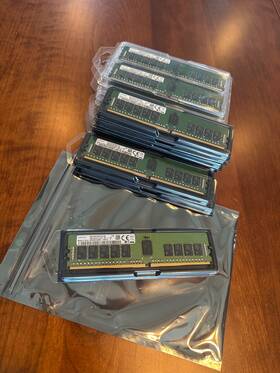
( Brand: Samsung ), ( Manufacturer Part Number: M393A2K43BB1-CRCOQ ), ( Model: DDR4 ), ( Total Capacity: 16 Gb ), ( Memory Features: Ecc Memory, Registered, Fully Buffered ), ( Form Factor: Rdimm ), ( Type: Ecc Ram ), ( Unit Type: Unit ), ( Number Of Pins: 288 ), ( Bus Speed: Pc4-19200 ), ( Country Of Origin: China )
Review SAMSUNG Ram Module 16gb 1x16gb 2400mhz Ecc
The **Samsung M393A2K43BB1-CRCOQ** is a high-performance **16GB (1x16GB) DDR4 memory module** designed to deliver exceptional speed, reliability, and efficiency for demanding computing environments. Engineered with Samsung s proprietary **K4B4G0846D-BCTC** memory chips, this **2400MHz ECC (Error-Correcting Code) DDR4 RAM** module is optimized for enterprise-grade servers, workstations, and high-end desktop systems where data integrity and sustained performance are critical. Built to meet strict industrial standards, it features **low-power consumption** while maintaining blazing-fast data transfer rates, making it ideal for applications such as virtualization, database management, AI/ML workloads, and professional-grade content creation. The **CRCOQ** variant incorporates **ECC memory technology**, which actively detects and corrects single-bit errors, significantly reducing the risk of data corruption in mission-critical operations. With a **CL15 (CAS Latency)** timing profile, this module ensures smooth and responsive operation, minimizing latency in memory access while maintaining stability even under heavy loads. The **2400MHz clock speed** provides a balanced performance boost without excessive power draw, making it a cost-effective solution for users who require both speed and reliability. Whether deployed in a **server rack, high-performance desktop, or HPC cluster**, this Samsung DDR4 module delivers consistent performance, enhanced system stability, and long-term reliability making it a trusted choice for professionals who demand nothing less than excellence in memory performance.
### **Pros and Cons of the Samsung M393A2K43BB1-CRCOQ (1x16GB DDR4 2400MHz ECC RAM Module)**
#### **Pros:**1. **High Capacity (16GB Single Rank)** Provides substantial memory for single-socket servers, workstations, or high-end desktops, reducing the need for multiple modules.
2. **ECC (Error-Correcting Code) Support** Critical for data integrity in servers, workstations, and applications requiring reliability (e.g., databases, virtualization, scientific computing).
3. **Reliability & Stability** Samsung s RAM is known for consistent performance and low error rates, making it suitable for mission-critical systems.
4. **Low Power Consumption** DDR4-2400 is more power-efficient than higher-speed variants, reducing heat and energy costs in long-running systems.
5. **Compatibility with Older Systems** DDR4-2400 is widely supported in mid-range and older Intel Xeon/EPYC or AMD Ryzen Threadripper/EPYC platforms, offering flexibility for upgrades.
6. **Single-Rank Design** Reduces latency compared to dual-rank modules in some configurations, though this depends on the motherboard s memory controller.
7. **Good Brand Reputation** Samsung is a trusted manufacturer with strong warranties and after-sales support.
#### **Cons:**1. **Single Module Limitation** A single 16GB stick may not fully utilize dual-channel memory bandwidth, leading to suboptimal performance in dual-channel setups (unless paired with another identical module).
2. **Lower Speed Than Modern Options** DDR4-2400 is slower than newer DDR4-3200/3600 or DDR5 alternatives, which may bottleneck newer CPUs or high-end workloads.
3. **Cost vs. Performance Trade-off** For high-end workloads, higher-speed or larger-capacity ECC RAM (e.g., 32GB or DDR4-3200 ) may offer better performance per dollar.
4. **Limited Future-Proofing** DDR4 is nearing end-of-life, and DDR5 is becoming the standard for new systems, though this module will still work in DDR4-only platforms.
5. **Potential Latency in Some Configurations** Single-rank modules can sometimes have higher latency than dual-rank ones, depending on the motherboard s memory controller and timing settings.
6. **No RDIMM/LRDIMM Options** This is a standard SODIMM (though not actually SODIMM likely a desktop DIMM), meaning it cannot be used in registered (RDIMM) or load-reduced (LRDIMM) server configurations, which are common in enterprise setups.
---
### **Conclusion**
The **Samsung M393A2K43BB1-CRCOQ (16GB DDR4-2400 ECC)** is a solid choice for:- **Single-socket servers** (e.g., Intel Xeon D, older Xeon Scalable, or AMD Ryzen Threadripper 1000/2000) where dual-channel isn t critical.
- **Workstations** running stable, non-gaming workloads (e.g., CAD, video editing, light virtualization).
- **Budget-conscious buyers** who prioritize reliability over raw speed.
- **Upgrades to older systems** where DDR4-2400 is the maximum supported speed.
However, it may not be ideal for:- **High-performance computing (HPC) or gaming PCs**, where higher speeds (DDR4-3200 ) or larger capacities are preferred.
- **Enterprise environments needing RDIMM/LRDIMM support** (e.g., large-scale servers).
- **Future-proofing**, as DDR5 is becoming the standard for new builds.
---
### **Recommendation**
- **Buy if:**- You need **16GB of ECC RAM for a single-socket system** (e.g., a Xeon D or Ryzen Threadripper 1000/2000 workstation).
- You re upgrading an **older DDR4-2400-compatible motherboard** and want reliable, low-latency memory.
- Your workload is **not CPU-bound** and doesn t require extreme speeds (e.g., light virtualization, office applications, or stable rendering).
- **Consider alternatives if:**- You can afford **DDR4-3200/3600 ECC** for better performance in newer CPUs.
- You need **larger capacities (32GB )** for multi-socket servers or heavy workloads.
- You re building a **gaming PC or high-end desktop**, where non-ECC, higher-speed RAM (e.g., G.Skill Trident Z) may be better.
- You need **RDIMM/LRDIMM support** for enterprise servers (look for registered memory modules).
For most **general-purpose workstations or small servers**, this module is a **good, cost-effective choice**. For **high-performance or future-proofing needs**, evaluate whether upgrading to higher-speed or larger-capacity ECC RAM is justified.
Details:
Memory ships in specifically designed clam shells inside anti-static bags.
part #: m393a2k43bb1 prices
- $124.17-$378.99
specifications servermemor:
- brand: Samsung
- mpn: M393a2k43bb1-crcoq
- model: Ddr4
- total capacity: 16 Gb
- memory features: Ecc Memory, Registered, Fully Buffered
- form factor: Rdimm
- type: Ecc Ram
- unit type: Unit
- number of pins: 288
- bus speed: Pc4-19200
- country of origin: China
general servermemor:
- condition: Used
- Enterprise Networking, Servers > Server Components > Server Memory RAM
shipping servermemor:
- cost: $0.00
- carrier: USPS
- transit: 4-10 Days
- type: Calculated
- class: Standard
- service: USPS Ground Advantage
seller servermemor:
- rating: 100.0%
- # reviews: 292
- city: Ortonville, Michigan
returns servermemor:
- policy: No Returns
offer servermemor:
- best offers: True
- availability: In Stock
- options: Ship-to-home
- started: April 12, 2026
- sold: 0
payments servermemor:
- other
- credit card: Diners-club
- wallet: Apple-pay
Samsung M393A2K43BB1 Is Similar To:
- 0.09744922496769814 Samsung Ecc Reg Ram (28.6% similar) No other accessories hardware software. I'll get back to you as soon I can...(November 17th, 2018)
- 0.11338225633667265 Lot Samsung Ecc Server Ram Memory (33.6% similar) Condition: used, working if a power adapter is required for this item, it not included cord shows signs of normal use w some scuffs scratches blemishes sticker residue no other accessories hardware software. I'll get back to you as soon I can...(March 27th, 2018)
- 0.1258726855836516 Lot Samsung Server Vlp Ram Ibm (29.6% similar) I'll get back to you as soon I can. Condition: used, working, pictured one but total 36 same if a power adapter is required for this item, it not included cord shows signs of normal use w some scuffs scratches blemishes sticker residue no other accessories hardware software...(October 19th, 2018)
- 0.35100209741590715 Hp Samsung Ecc Reg (21.2% similar) I'll get back to you as soon I can. No other accessories hardware software...(October 12th, 2018)
- 0.3518165772947017 Samsung Cn Ram Ecc Reg Qty (28.8% similar) No other accessories hardware software. I'll get back to you as soon I can...(May 7th, 2018)
- 0.4190561585571104 Lot Samsung Ecc Server Ram (28.8% similar) Condition: used, working if a power adapter is required for this item, it not included cord shows signs of normal use w some scuffs scratches blemishes sticker residue no other accessories hardware software. I'll get back to you as soon I can...(October 13th, 2018)
- 0.4196896457027133 Samsung Ecc Reg Ram (28.8% similar) No other accessories hardware software. I'll get back to you as soon I can...(November 9th, 2018)
- 0.42639317034624824 Samsung Server Vlp Ram Ibm (30.4% similar) I'll get back to you as soon I can. Condition: used, working if a power adapter is required for this item, it not included cord shows signs of normal use w some scuffs scratches blemishes sticker residue no other accessories hardware software...(October 19th, 2018)
- 0.7823584412062607 Samsung Reg Ecc Ram Cn Qty (27% similar) I'll get back to you as soon I can. No other accessories hardware software...(June 19th, 2018)
- 0.850481806304197 Lot Samsung Hynix Server Ecc Ram (24.1% similar) Condition: used, working if a power adapter is required for this item, it not included cord shows signs of normal use w some scuffs scratches blemishes sticker residue no other accessories hardware software. I'll get back to you as soon I can...(October 16th, 2018)
- 0.9516050138760368 Samsung Registered Ecc Memory (26.3% similar) Condition: used, working if a power adapter is required for this item, it not included cord shows signs of normal use w some scuffs scratches blemishes sticker residue no other accessories hardware software. I'll get back to you as soon I can...(May 26th, 2018)