SAMSUNG M393A4KOBB1-CRC4Q Server Memory 32GB 2RX4 PC4 2400T
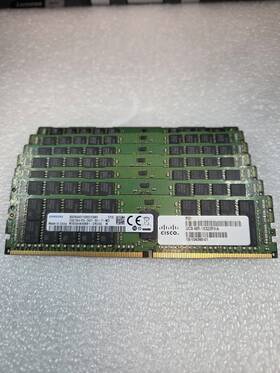
( Brand: Samsung ), ( Manufacturer Part Number: M393A4KOBB1-CRC4Q ), ( Type: Ddr4 Sdram ), ( Total Capacity: 32 Gb ), ( Bus Speed: Pc4-19200 )
Review SAMSUNG 2rx4 Pc4 2400t Server Memory
The **Samsung M393A4K0BB1-CRC4Q 32GB (2x16GB) DDR4 SDRAM ECC Registered Memory Kit** is a high-performance, enterprise-grade memory module meticulously engineered to deliver unparalleled reliability, speed, and efficiency for demanding server workloads. Part of Samsung s renowned **M393 series**, this **2400MHz PC4-19200T** memory kit is designed with **low-power, high-density architecture**, making it an ideal choice for data centers, virtualization environments, and mission-critical applications where stability and performance are paramount. Each module features **240-pin DIMM form factor** with **Registered (Buffered) operation**, ensuring seamless communication between the memory controller and the server s front-side bus while mitigating signal integrity issues in high-channel-count systems. The **ECC (Error-Correcting Code) technology** embedded within the module actively detects and corrects single-bit errors, safeguarding data integrity in critical operations such as database management, financial transactions, and high-frequency trading where even the slightest corruption could lead to catastrophic failures.
Constructed with **Samsung s advanced 16nm process technology**, this memory module achieves an optimal balance between speed and power efficiency, operating at a **1.2V voltage rating** to minimize heat generation while maintaining peak performance. The **2400MHz clock speed** (PC4-19200T) ensures rapid data transfer rates, reducing latency in memory-intensive tasks such as large-scale virtualization, AI/ML workloads, and high-performance computing (HPC) simulations. With a **2Rx4 configuration (two 16GB DIMMs per kit)**, this kit maximizes memory capacity while adhering to standard server motherboard layouts, providing flexibility for both single-socket and multi-socket server setups. The **CR (CAS Latency) of 15** strikes a balance between speed and efficiency, allowing for smooth operation in environments where both throughput and responsiveness are critical.
Built to meet **JEDEC standards**, this memory module is fully compatible with a wide range of **Intel Xeon and AMD EPYC-based servers**, including enterprise-grade platforms from manufacturers like Dell PowerEdge, HPE ProLiant, Lenovo ThinkSystem, and Supermicro. The **Registered (Buffered) design** ensures compatibility with high-channel-count motherboards, reducing the risk of signal degradation in systems with numerous memory slots. Additionally, Samsung s rigorous **quality assurance processes** including extensive burn-in testing and reliability validation guarantee long-term operational stability, making this memory an excellent investment for organizations prioritizing uptime and durability. Whether deployed in a **cloud infrastructure, enterprise data warehouse, or high-availability cluster**, the **M393A4K0BB1-CRC4Q** delivers the speed, endurance, and error resilience required to handle the most demanding computational challenges with confidence.
The **Samsung M393A4K0BB1-CRC4Q** is a 32GB (2x16GB) DDR4 server memory module with a PC4-2400T (1200MT/s) speed, ECC, and registered (RDIMM) configuration. Below is a detailed breakdown of its pros and cons, followed by a conclusion and recommendation.
---
### **Pros**
1. **ECC and Registered (RDIMM) Design**
- The module includes **Error-Correcting Code (ECC)**, which helps detect and correct single-bit errors, improving data integrity critical for servers, databases, and workloads where reliability is paramount.
- It is a **Registered DIMM (RDIMM)**, which reduces the load on the memory controller by buffering commands, allowing for higher memory capacity in multi-socket servers without exceeding the controller s bandwidth limits.
2. **High Capacity (32GB, 2x16GB)**
- The dual-rank configuration (2Rx4) provides a balance between speed and capacity, making it suitable for mid-range server workloads like virtualization, web hosting, or small-scale databases.
- The 32GB capacity is sufficient for many enterprise applications, though it may be limiting for memory-intensive tasks like large-scale virtualization or high-performance computing (HPC) workloads.
3. **Compatibility with Server Platforms**
- RDIMMs are widely supported in **Dell PowerEdge, HP ProLiant, Lenovo ThinkServer, and other enterprise-grade servers**, making it a versatile choice for data centers.
- The module is designed for **2400MT/s (PC4-2400T) speeds**, which is a common standard in older and some newer server platforms, ensuring broad compatibility.
4. **Reliability and Durability**
- Samsung is a reputable manufacturer with a strong track record in memory production, offering modules with robust quality control and testing.
- The module is likely to have **low failure rates** compared to consumer-grade memory, thanks to its enterprise-grade components.
5. **Cost-Effective for Server Use**
- While not as fast as newer DDR4-3200 or DDR5 modules, it offers a **good balance of performance and price**, making it a cost-effective choice for budget-conscious server deployments.
- The 2400MT/s speed is still adequate for many server workloads, including general-purpose virtualization, file serving, and light database operations.
---
### **Cons**
1. **Lower Speed (2400MT/s)**
- At **1200MT/s (PC4-2400)**, this module is **not the fastest option** available. Newer server platforms support DDR4-3200 (PC4-25600) or DDR5, which can offer **significantly better performance** in latency-sensitive applications (e.g., high-frequency trading, real-time analytics).
- If the server supports higher speeds, upgrading to a faster module (e.g., 3200MT/s) could improve throughput, especially in CPU-bound or memory-intensive tasks.
2. **Limited Future-Proofing**
- DDR4-2400 is an older standard, and while it remains relevant in many enterprise environments, it may become outdated as newer servers adopt **DDR4-3200 or DDR5**.
- If the server is expected to run for **5 years**, investing in a faster module (if compatible) could delay the need for upgrades.
3. **Single-Rank vs. Dual-Rank Tradeoff**
- The module is **dual-rank (2Rx4)**, which improves capacity but can slightly increase latency compared to single-rank modules. However, for most server workloads, the difference is negligible.
- If the server has **multiple memory slots**, filling them with faster, single-rank modules (if available) could yield better performance in some cases.
4. **Potential for Higher Latency in Some Workloads**
- Registered DIMMs introduce a small **command latency** due to the register buffer, which can affect **low-latency applications** (e.g., some database queries or real-time systems).
- However, for most server workloads (e.g., virtualization, web hosting), the impact is minimal.
5. **Not Ideal for High-Performance Computing (HPC)**
- If the server is used for **HPC, machine learning, or scientific computing**, a faster module (e.g., DDR4-3200 or DDR5) would be more beneficial due to reduced memory latency and higher bandwidth.
---
### **Conclusion**
The **Samsung M393A4K0BB1-CRC4Q (32GB, DDR4-2400T, RDIMM, ECC)** is a **solid, reliable choice for mid-range server workloads** where cost, compatibility, and data integrity are priorities. It excels in environments where **ECC protection is non-negotiable** (e.g., databases, virtualization, file servers) and where the server platform is limited to DDR4-2400.
However, if the server **supports faster speeds (DDR4-3200 or DDR5)** and the workload is **memory-intensive or latency-sensitive**, upgrading to a higher-speed module would be more future-proof and performance-oriented. The 2400MT/s speed is adequate for many enterprise applications but may not be optimal for cutting-edge or high-performance use cases.
---
### **Recommendation**
- **Buy this module if:**- You need **ECC-protected, registered memory** for a server running **DDR4-2400-compatible platforms** (e.g., older Dell PowerEdge, HP ProLiant, or Lenovo ThinkServer models).
- Your workload is **general-purpose** (virtualization, web hosting, file serving, light databases) and does not require extreme memory speeds.
- You prioritize **reliability and cost-effectiveness** over raw performance.
- The server s **memory controller is already bottlenecked by slower speeds**, and upgrading to DDR4-3200 is not feasible.
- **Consider an alternative if:**- The server **supports DDR4-3200 or DDR5** and you want **better performance** for memory-heavy workloads (e.g., large-scale virtualization, HPC, or real-time analytics).
- You are running **latency-sensitive applications** (e.g., high-frequency trading, certain database operations) where every cycle counts.
- You plan to **keep the server for 5 years** and want to avoid an upgrade sooner than necessary.
- Budget allows for a **faster module** (e.g., Samsung M393A4K40DB0-CTD, which is DDR4-3200) without sacrificing compatibility.
- **Best upgrade path (if available):**- If the server supports it, **upgrade to DDR4-3200 (PC4-25600) RDIMMs** (e.g., Samsung M393A4K40DB0-CTD) for **better throughput and lower latency** without changing the DIMM type (still ECC/RDIMM).
- If moving to **DDR5** is an option in the future, consider planning for an upgrade then, as DDR5 offers **higher speeds (4800MT/s ) and better power efficiency**.
---
### **Final Verdict**
The **Samsung M393A4K0BB1-CRC4Q is a perfectly adequate choice** for most server deployments where DDR4-2400 is the standard. It strikes a balance between **cost, reliability, and performance** for typical enterprise use cases. However, if performance is a critical factor and the server supports faster memory, investing in a higher-speed module would be the better long-term decision. Always verify **server compatibility** before purchasing, as some platforms may require specific module configurations.
Details:
Samsung 32GB 2rx4 Pc4 2400T Server Memory. USPS Ground Advantage.
part #: m393a4kobb1crc4q prices
- $195.99-$199.99
specifications servermemor:
- brand: Samsung
- mpn: M393a4kobb1-crc4q
- type: Ddr4 Sdram
- total capacity: 32 Gb
- bus speed: Pc4-19200
general servermemor:
- condition: Used
- Enterprise Networking, Servers > Server Components > Server Memory RAM
shipping servermemor:
- carrier: USPS
- service: USPS Ground Advantage
- cost: $0.00
- transit: 4-10 Days
- class: Standard
- type: Calculated
offer servermemor:
- options: Ship-to-home
- started: March 23, 2026
- availability: In Stock
- sold: 0
- best offers: True
- quantity: 7
payments servermemor:
- credit card: Discover
- other
- wallet: Google-pay
returns servermemor:
- policy: No Returns
seller servermemor:
- # reviews: 370
- rating: 93.8%
- city: Hayward, California
Samsung M393A4KOBB1-CRC4Q Is Similar To:
- 0.11338225633667265 Lot Samsung Ecc Server Ram Memory (42.9% similar) Condition: used, working if a power adapter is required for this item, it not included cord shows signs of normal use w some scuffs scratches blemishes sticker residue no other accessories hardware software. I'll get back to you as soon I can...(March 27th, 2018)
- 0.1258726855836516 Lot Samsung Server Vlp Ram Ibm (29.6% similar) I'll get back to you as soon I can. Condition: used, working, pictured one but total 36 same if a power adapter is required for this item, it not included cord shows signs of normal use w some scuffs scratches blemishes sticker residue no other accessories hardware software...(October 19th, 2018)
- 0.4190561585571104 Lot Samsung Ecc Server Ram (36.5% similar) Condition: used, working if a power adapter is required for this item, it not included cord shows signs of normal use w some scuffs scratches blemishes sticker residue no other accessories hardware software. I'll get back to you as soon I can...(October 13th, 2018)
- 0.42639317034624824 Samsung Server Vlp Ram Ibm (30.5% similar) I'll get back to you as soon I can. Condition: used, working if a power adapter is required for this item, it not included cord shows signs of normal use w some scuffs scratches blemishes sticker residue no other accessories hardware software...(October 19th, 2018)
- 0.850481806304197 Lot Samsung Hynix Server Ecc Ram (33% similar) Condition: used, working if a power adapter is required for this item, it not included cord shows signs of normal use w some scuffs scratches blemishes sticker residue no other accessories hardware software. I'll get back to you as soon I can...(October 16th, 2018)
- 0.9516050138760368 Samsung Registered Ecc Memory (37.4% similar) Condition: used, working if a power adapter is required for this item, it not included cord shows signs of normal use w some scuffs scratches blemishes sticker residue no other accessories hardware software. I'll get back to you as soon I can...(May 26th, 2018)
- 0.9685219361416628 Lot Samsung Server Vlp Ram (30.8% similar) Condition: used, working, pictured one but total 32 same if a power adapter is required for this item, it not included cord shows signs of normal use w some scuffs scratches blemishes sticker residue no other accessories hardware software. I'll get back to you as soon I can...(October 20th, 2018)
- 0.9709607809767642 Samsung Micron Server Vlp Ram Ibm (36% similar) I'll get back to you as soon I can. Condition: used, working if a power adapter is required for this item, it not included cord shows signs of normal use w some scuffs scratches blemishes sticker residue no other accessories hardware software...(October 20th, 2018)
- 00lp726 Ibm Samsung Memory Cdimm Dram For (28% similar) Product quality conditions: all of our a mainly used refurbished item so its natural for an to have cosmetic wear and tear on them. Bubble wrap static-bag shipping packing: package star IBM 00LP726 32GB DDR3 1600MHZ memory M351B4G73DB0 comm dram for POWER8 part number Samsung brand power 8 ...(July 12th, 2018)
- 00ph889 Samsung For Lenovo Server (39.1% similar) Warranty apply for death on arrival and any serious issue relate to hard ware. For sale used 1PIECE of 8GB DDR4-2133P idiom PC4-17000P-E eccl memory Leno server I could work with another brand as well. It is not normal memory to use with consumer pc. It is new and fully working. Made by Samsung. ...(May 6th, 2018)
- 00v5404 Ibm Mmb Server Memory Samsung (33.3% similar) IBM part number: 00V5404 pulled from: 9117MM b server memory 8GB 1KX72 Samsung M396B1K73DH0-YF8M1 from a working environment average used cosmetic condition DOA warranty only what is pictured included. Don't see what you are looking for...(March 24th, 2018)