SAMSUNG M393B2G70EB0-YKQ2 Sdram Rdimm Ecc Server Memory 2X 2RX4 PC3L-12800R-11-13-E2-D4 DDR3L
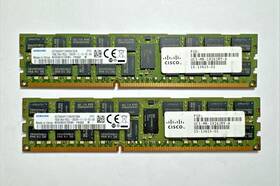
( Brand: Samsung ), ( Manufacturer Part Number: M393B2G70EB0-YKQ2 ), ( Model: PC3L-12800R-11-13-E2-D4 ), ( Form Factor: Rdimm ), ( Type: Ddr3l Sdram ), ( Unit Type: Unit ), ( Total Capacity: 32 Gb ), ( Capacity Per Module: 16 Gb ), ( Bus Speed: Pc3l-12800r ), ( Country Of Origin: China ), ( Memory Features: Ecc Memory )
Review SAMSUNG 2x 16gb 2rx4 Sdram Rdimm Ecc Server Memory
The **Samsung M393B2G70EB0-YKQ2** is a high-performance **2x2GB (2Rx4) DDR3L SDRAM RDIMM** memory module engineered specifically for enterprise and server environments, delivering uncompromising reliability, efficiency, and scalability. Part of Samsung s premium **ECC (Error-Correcting Code) memory lineup**, this module adheres to the **PC3L-12800R** specification, operating at an optimized **1333 MHz (DDR3L)** frequency with a **11-11-11-27** CAS latency timing configuration, ensuring seamless data integrity and low-power consumption ideal for energy-efficient data centers. The **RDIMM (Registered DIMM)** architecture incorporates a registered buffer chip to mitigate signal integrity issues on high-channel-count server motherboards, reducing electromagnetic interference and improving stability in multi-socket configurations. With **ECC protection**, this memory module actively detects and corrects single-bit errors, safeguarding critical workloads such as virtualization, database management, and high-performance computing (HPC) applications from data corruption. The **DDR3L (Low Voltage)** variant operates at a reduced **1.35V** supply voltage compared to standard DDR3, further enhancing power efficiency and reducing heat generation, which is particularly advantageous for servers deployed in dense, high-density environments. Built with Samsung s proprietary **10nm-class NAND flash and advanced DRAM fabrication processes**, these modules offer exceptional endurance, low latency, and consistent performance under sustained workloads. The **D4 (DDR3L-1333)** designation ensures compatibility with a wide range of **Intel Xeon, AMD Opteron, and other enterprise-grade server platforms**, making it a versatile solution for both legacy and modern server architectures. Whether deployed in **2U rack servers, blade systems, or large-scale storage arrays**, this memory module exemplifies Samsung s commitment to delivering enterprise-grade performance, reliability, and energy efficiency making it a trusted choice for mission-critical infrastructure.
**Pros and Cons of buying a Samsung M393B2G70EB0-YKQ2 (2x 2Rx4 PC3L-12800R-11-13-E2-D4 DDR3L SDRAM RDIMM ECC Server Memory)**
### **Pros:**1. **High Performance and Speed** This is a DDR3L RDIMM module with a speed of **1600 MT/s (PC3L-12800R)**, which is optimized for low-power server workloads while maintaining strong throughput. The **registered (RDIMM)** design ensures stable data transfer across multiple channels, reducing latency and improving overall system performance.
2. **ECC (Error-Correcting Code) Support** The module includes **ECC memory**, which is critical for servers as it detects and corrects single-bit errors, preventing data corruption and improving reliability especially in mission-critical applications.
3. **Low Power Consumption (DDR3L)** DDR3L (Low Power) modules operate at a lower voltage (typically **1.35V**) compared to standard DDR3 (1.5V), reducing power draw and heat generation. This makes it ideal for energy-efficient server deployments, particularly in data centers where power costs are a concern.
4. **Registered DIMM (RDIMM) Design** RDIMMs are designed for multi-channel server architectures, allowing for better signal integrity and scalability. They are commonly used in enterprise servers where memory bandwidth and stability are prioritized.
5. **Compatibility with Enterprise Servers** This module is likely designed for **Intel Xeon or AMD Opteron** server platforms, making it suitable for **workloads such as virtualization, databases, and high-performance computing (HPC)**. It fits standard **204-pin DDR3L DIMM slots** found in many enterprise motherboards.
6. **Reliability and Longevity** Samsung is a reputable manufacturer known for producing high-quality server memory with rigorous testing, ensuring long-term stability and reduced failure rates compared to consumer-grade RAM.
7. **Scalability** The **2Rx4 configuration (2 ranks 4GB per DIMM)** allows for higher memory capacity when paired with compatible server motherboards, supporting configurations like **128GB, 256GB, or more** depending on the system.
8. **Low Latency (CL9)** The **CAS latency of 9 (CL9)** is relatively low for server memory, which helps improve system responsiveness in memory-intensive tasks.
---
### **Cons:**1. **DDR3L Obsolescence** DDR3L was introduced in **2011** and has been largely replaced by **DDR4 and DDR5** in modern server architectures. While it remains functional in older or legacy systems, purchasing it now may limit future upgrade options. Most new servers (post-2017) use **DDR4 or DDR5**, making this module less future-proof.
2. **Limited Availability of Compatible Systems** Newer servers (especially those with **Intel Xeon Scalable, AMD EPYC, or newer Intel Xeon D-series**) do not support DDR3L. You would need an **older Intel Xeon E5/E7, AMD Opteron, or low-power server platform** to use this memory effectively. This restricts its usefulness in modern deployments.
3. **Higher Cost per GB Compared to DDR4/DDR5** While DDR3L modules were once competitive, **DDR4 and DDR5 server memory now offer better performance per watt and lower costs for equivalent capacity**. Buying DDR3L today may be more expensive per gigabyte than newer alternatives.
4. **No Support for Advanced Features** Modern servers leverage **memory features like persistent memory (PMEM), NVMe SSD integration, and advanced power management** that are not applicable to DDR3L. This module lacks compatibility with newer memory technologies.
5. **Potential for Higher Latency in Multi-Rank Configurations** While RDIMMs improve stability, **multi-rank configurations (like 2Rx4) can introduce slight latency penalties** compared to single-rank modules in some workloads. However, this is generally negligible in server environments where stability outweighs minor latency differences.
6. **Limited Manufacturer Support for New Releases** Samsung may no longer prioritize DDR3L in their latest product lines, meaning **warranty or driver support** for this module could be less robust than for newer memory types.
7. **Physical Size and Form Factor Constraints** Some newer server motherboards have **reduced memory slot counts** or optimized layouts for DDR4/DDR5, making it harder to integrate older DDR3L modules without sacrificing other features.
---
### **Conclusion:**The **Samsung M393B2G70EB0-YKQ2 (2x 4GB DDR3L RDIMM ECC)** is a **high-quality, reliable memory module** suited for **legacy or low-power server deployments** where DDR3L is still supported. It excels in **stability, ECC protection, and energy efficiency**, making it ideal for:
- **Older Intel Xeon E5/E7 or AMD Opteron servers** (pre-2017).
- **Virtualization hosts** running stable, memory-intensive workloads.
- **Data centers with existing DDR3L-compatible infrastructure** where upgrading to DDR4/DDR5 is not feasible.
However, **for new deployments or modern servers**, this module is **not recommended** due to:- **Obsolescence** (DDR3L is outdated; DDR4/DDR5 are the industry standard).
- **Limited system compatibility** (most new servers do not support DDR3L).
- **Higher cost per GB** compared to newer memory types.
If you are **not tied to a legacy system**, investing in **DDR4 or DDR5 ECC RDIMMs** would be a **more future-proof and cost-effective** choice.
---
### **Recommendation:** - **Buy this module if:**- You have a **compatible legacy server** (e.g., Dell PowerEdge R720, HP ProLiant DL360 G9, or similar) that **cannot run DDR4/DDR5**.
- You need **additional memory for an existing DDR3L-based system** and cannot replace the entire setup.
- Your workload is **not performance-sensitive** (e.g., older database servers, file servers, or low-traffic virtualization hosts).
- **Avoid this module if:**- You are **building or upgrading a new server** (DDR4/DDR5 is the standard).
- Your budget allows for **newer, more efficient memory** (DDR4/DDR5 offers better performance per watt).
- You plan to **scale beyond 128GB memory** (DDR3L may not support the highest-capacity configurations in newer systems).
**Alternative Recommendations:**- For **modern Intel Xeon servers**, consider **DDR4 ECC RDIMMs (e.g., Samsung M393A1G40DB0-CPF, Crucial DDR4-2400 ECC)**.
- For **AMD EPYC servers**, look for **DDR4-2933 or DDR4-3200 ECC RDIMMs**.
- For **low-power or embedded servers**, evaluate **DDR4L or DDR5L options** if available.
If you confirm that your server **explicitly requires DDR3L**, then this module is a **solid, reliable choice**. Otherwise, upgrading to a newer memory standard would be the **better long-term investment**.
Details:
They feature ECC memory for error correction and are built with high-quality components from Samsung. Tested and in good working condition!, M393B2G70EB0-YKQ2, The product is a set of two Samsung 16GB 2Rx4 PC3L-12800R-11-13-E2-D4 DDR3L SDRAM RDIMM ECC server memory modules. These modules have a total capacity of 32GB and are designed for server use. With a bus speed of PC3L-12800R, these memory modules provide reliable and efficient performance for server applications in various industries.
Made in China, these modules are a dependable choice for enhancing the performance and stability of server systems.
part #: m393b2g70eb0ykq2 prices
- $18.49-$259.99
specifications servermemor:
- brand: Samsung
- mpn: M393b2g70eb0-ykq2
- model: Pc3l-12800r-11-13-e2-d4
- form factor: Rdimm
- type: Ddr3l Sdram
- unit type: Unit
- total capacity: 32 Gb
- capacity per module: 16 Gb
- bus speed: Pc3l-12800r
- country of origin: China
- memory features: Ecc Memory
general servermemor:
- condition: Used
- Enterprise Networking, Servers > Server Components > Server Memory RAM
seller servermemor:
- # reviews: 2719
- city: Alpharetta, Georgia
- rating: 99.5%
offer servermemor:
- availability: In Stock
- options: Ship-to-home
- best offers: True
- sold: 0
- quantity: 1
- started: February 6, 2026
returns servermemor:
- policy: Returns Accepted
- time: 30 Days
- paid by: Buyer
- method: Money back
shipping servermemor:
- class: Standard, Economy
- carrier: UPS, USPS
- service: UPS Ground, USPS Ground Advantage, UPS Ground Saver
- transit: 4-8 Days
- type: Fixed
- cost: $0.00
payments servermemor:
- other
- wallet: Google-pay
- credit card: Visa
Samsung M393B2G70EB0-YKQ2 Is Similar To:
- 0.09744922496769814 Samsung Ecc Reg Ram (21.9% similar) No other accessories hardware software. I'll get back to you as soon I can...(November 17th, 2018)
- 0.11338225633667265 Lot Samsung Ecc Server Ram Memory (33.1% similar) Condition: used, working if a power adapter is required for this item, it not included cord shows signs of normal use w some scuffs scratches blemishes sticker residue no other accessories hardware software. I'll get back to you as soon I can...(March 27th, 2018)
- 0.1258726855836516 Lot Samsung Server Vlp Ram Ibm (21.8% similar) I'll get back to you as soon I can. Condition: used, working, pictured one but total 36 same if a power adapter is required for this item, it not included cord shows signs of normal use w some scuffs scratches blemishes sticker residue no other accessories hardware software...(October 19th, 2018)
- 0.35100209741590715 Hp Samsung Ecc Reg (19.1% similar) I'll get back to you as soon I can. No other accessories hardware software...(October 12th, 2018)
- 0.3518165772947017 Samsung Cn Ram Ecc Reg Qty (26.6% similar) No other accessories hardware software. I'll get back to you as soon I can...(May 7th, 2018)
- 0.4190561585571104 Lot Samsung Ecc Server Ram (28% similar) Condition: used, working if a power adapter is required for this item, it not included cord shows signs of normal use w some scuffs scratches blemishes sticker residue no other accessories hardware software. I'll get back to you as soon I can...(October 13th, 2018)
- 0.4196896457027133 Samsung Ecc Reg Ram (22.1% similar) No other accessories hardware software. I'll get back to you as soon I can...(November 9th, 2018)
- 0.42639317034624824 Samsung Server Vlp Ram Ibm (22.2% similar) I'll get back to you as soon I can. Condition: used, working if a power adapter is required for this item, it not included cord shows signs of normal use w some scuffs scratches blemishes sticker residue no other accessories hardware software...(October 19th, 2018)
- 0.7823584412062607 Samsung Reg Ecc Ram Cn Qty (22.4% similar) I'll get back to you as soon I can. No other accessories hardware software...(June 19th, 2018)
- 0.850481806304197 Lot Samsung Hynix Server Ecc Ram (25.7% similar) Condition: used, working if a power adapter is required for this item, it not included cord shows signs of normal use w some scuffs scratches blemishes sticker residue no other accessories hardware software. I'll get back to you as soon I can...(October 16th, 2018)
- 0.9516050138760368 Samsung Registered Ecc Memory (28.8% similar) Condition: used, working if a power adapter is required for this item, it not included cord shows signs of normal use w some scuffs scratches blemishes sticker residue no other accessories hardware software. I'll get back to you as soon I can...(May 26th, 2018)