MICRON MT18HTF12872PY-667F1 Ecc Memory Ram 1GB DDR2 PC2-5300P-555-12-H0 CL5
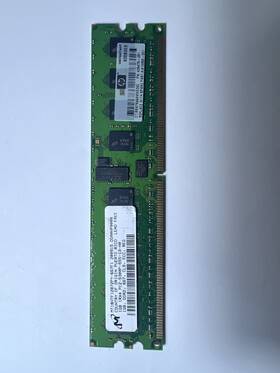
( Brand: Micron ), ( Manufacturer Part Number: MT18HTF12872PY-667F1 ), ( Form Factor: Dimm ), ( Type: Sdr Sdram ), ( Total Capacity: 1 Gb ), ( Bus Speed: Pc2-5300 ), ( Country Of Origin: United States ), ( Memory Features: Ecc Memory, Registered )
Review MICRON 1gb Reg Ecc Memory Ram Cl5
The **Micron MT18HTF12872PY-667F 1GB DDR2 Registered ECC Memory Module (PC2-5300P-555-12-H0, CL5)** is a high-performance, enterprise-grade memory solution designed to deliver exceptional reliability, stability, and efficiency in mission-critical computing environments. Part of Micron s renowned line of server and workstation memory, this module is engineered to meet the stringent demands of data centers, high-end workstations, and specialized computing applications where error correction, low latency, and sustained performance are paramount. Built with **1GB of DDR2 SDRAM** across a single rank of **72-bit wide** memory chips, this module operates at a **667MHz** clock speed, translating to an effective data transfer rate of **5.33GB/s per channel** when paired with compatible motherboards, making it ideal for systems requiring rapid data processing and reduced latency.
The **Registered (Buffered) ECC (Error-Correcting Code)** architecture of this module is a defining feature, ensuring data integrity by detecting and automatically correcting single-bit errors that may occur during memory operations. This capability is critical for preventing system crashes, data corruption, and downtime in environments where uptime and accuracy are non-negotiable, such as financial trading platforms, scientific simulations, or large-scale database management systems. The **CL5 (CAS Latency 5)** timing configuration further enhances performance by optimizing the timing between when a command is issued and when the data is actually delivered, reducing wait states and improving overall throughput. This low-latency characteristic is particularly beneficial for applications involving real-time data analysis, high-frequency trading, or rendering-intensive tasks where every millisecond counts.
Physically, this memory module adheres to the **DDR2-667 (PC2-5300P)** standard, featuring a **240-pin DIMM (Dual Inline Memory Module)** form factor that ensures compatibility with a wide range of enterprise-grade servers and workstations from manufacturers like Dell, HP, IBM, and others. The **PY (Pyramid) series** designation indicates Micron s focus on delivering high-quality, field-proven components with rigorous testing to ensure long-term reliability and consistency. The module s **555** designation in the part number refers to its **5.5V operating voltage**, a standard for DDR2 memory, which balances power efficiency with performance. Additionally, the **H0** suffix denotes a specific revision or variant, often indicating minor optimizations or compatibility enhancements tailored for particular server platforms.
Beyond its technical specifications, this memory module is built with Micron s proprietary **Low Power DDR2 (LP-DDR2)** technology in some configurations, though this particular model adheres to the standard DDR2-667 specification. Micron s manufacturing processes incorporate advanced **silicon-on-insulator (SOI)** technology, which enhances signal integrity, reduces power consumption, and minimizes heat generation key advantages in densely populated server racks where thermal management is a critical concern. The module s **ECC functionality** is implemented via a dedicated register buffer that interfaces between the memory controller and the DRAM chips, filtering out potential timing issues and reducing the risk of errors that could arise from signal degradation over longer memory channels.
For IT administrators and system integrators, the **Micron MT18HTF12872PY-667F** stands out as a **drop-in replacement** for legacy systems still running on DDR2 architecture, offering a balance of performance, reliability, and cost-effectiveness. Its compatibility with **64-bit and 32-bit server platforms** (such as those based on Intel Xeon or AMD Opteron processors) makes it a versatile choice for upgrading older hardware without sacrificing stability. Whether deployed in a **RAID configuration, virtualized environment, or high-performance computing cluster**, this memory module ensures that data-intensive workloads execute with precision and efficiency, reducing the likelihood of errors that could disrupt operations.
In summary, the **Micron MT18HTF12872PY-667F 1GB DDR2 Registered ECC Memory Module** is a robust, high-performance solution tailored for professionals who demand the highest standards of data integrity and system stability. With its **registered ECC protection, low-latency CL5 timing, and reliable 667MHz operation**, this module is well-suited for demanding applications where reliability and performance are critical, making it an excellent investment for enterprises seeking to future-proof their infrastructure while maintaining peak operational efficiency.
The **Micron MT18HTF12872PY-667F 1GB DDR2 REG ECC memory module** (PC2-5300P-555-12-H0, CL5) is a specialized RAM module designed for enterprise and server-grade systems. Below is a detailed breakdown of its pros and cons, followed by a conclusion and recommendation.
---
### **Pros**
1. **Error Correction (ECC)**
- The module includes **ECC (Error-Correcting Code)**, which detects and corrects single-bit errors in memory. This is critical for servers, workstations, and applications running mission-critical software (e.g., databases, virtualization, or financial systems) where data integrity is non-negotiable. Without ECC, a single-bit error could corrupt data, leading to crashes or data loss.
2. **Registered (Buffered) Design**
- This is a **registered (buffered) DDR2 module**, meaning it uses a buffer chip to manage data flow between the RAM and the motherboard. Registered RAM is designed for systems with multiple memory slots (e.g., servers or high-end workstations) where it helps stabilize memory performance and reduce latency spikes caused by high slot counts. It also improves signal integrity in long memory buses.
3. **Low Latency (CL5)**
- The **CAS latency of 5 (CL5)** is relatively low for DDR2, which generally ranges from CL4 to CL8. Lower latency means faster data access, though the impact is less noticeable in modern systems compared to DDR3/DDR4. For older server platforms (e.g., Intel Xeon or AMD Opteron), this can still provide a slight performance edge.
4. **Compatibility with Legacy Systems**
- DDR2 is a mature standard, and this module is likely to work in older enterprise servers (e.g., Intel Xeon 5xxx/7xxx series, AMD Opteron, or some high-end workstations from the mid-2000s to early 2010s). If you re maintaining or upgrading legacy hardware, this is a practical choice.
5. **Reliability and Stability**
- Micron is a reputable manufacturer with a strong track record for reliability. ECC and registered memory are inherently more stable than unbuffered (non-ECC) RAM, making them suitable for 24/7 operations.
6. **Cost-Effective for Specific Use Cases**
- While DDR2 is outdated by modern standards, it remains affordable compared to newer ECC DDR3/DDR4/DDR5 modules. For legacy systems where upgrading to DDR3/DDR4 isn t feasible, this can be a cost-effective solution.
7. **Low Power Consumption**
- DDR2 modules generally consume less power than newer generations (e.g., DDR3/DDR4), which can be beneficial for older power-constrained systems.
---
### **Cons**
1. **Outdated Technology**
- DDR2 is **over 20 years old** (introduced in 2005). Modern systems (especially consumer or newer enterprise hardware) use DDR3, DDR4, or DDR5. This module will **not** work in modern motherboards or CPUs, limiting its usefulness to legacy systems. If you re running a recent server (post-2010), this RAM is obsolete.
2. **Limited Capacity**
- The module is only **1GB**, which is extremely small by today s standards. Modern servers typically use 16GB, 32GB, or more per module. A single 1GB stick is impractical for most modern workloads and may not even fit in newer motherboards due to physical slot constraints.
3. **Performance Limitations**
- DDR2 operates at **533MHz (PC2-5300)**, which is significantly slower than modern DDR standards (e.g., DDR4-2400 or DDR5-4800 ). Even in legacy systems, this can be a bottleneck compared to newer DDR3 modules (e.g., PC3-8500 at 1066MHz). The **CL5 latency** is also higher than what modern RAM offers, further reducing performance.
4. **No Support for Modern Features**
- Newer memory standards (DDR3/DDR4/DDR5) include features like **lower power consumption, higher bandwidth, and better error handling** (e.g., advanced ECC in DDR4). DDR2 lacks these improvements, making it less efficient and less future-proof.
5. **Physical Compatibility Issues**
- DDR2 modules use a **240-pin DIMM** design, while newer systems use **288-pin (DDR3) or 320-pin (DDR4/DDR5)** slots. Attempting to install DDR2 in a modern motherboard will fail due to physical incompatibility. Even in older systems, some motherboards may require specific configurations (e.g., registered vs. unbuffered slots).
6. **No Support for Dual-Channel or Multi-Rank Configurations**
- DDR2 modules like this are typically single-rank. Modern systems benefit from **dual-rank or multi-channel configurations** for better performance, which are not possible with this module in most cases.
7. **Limited Availability and Support**
- As DDR2 hardware becomes rarer, finding compatible motherboards, CPUs, and support for this module is increasingly difficult. Micron may no longer produce or support this exact part, and finding replacements or upgrades will be challenging.
---
### **Conclusion**
The **Micron MT18HTF12872PY-667F 1GB DDR2 REG ECC** module is a **niche product** with specific use cases. It excels in **legacy enterprise environments** where:
- ECC and registered memory are required for data integrity.
- Upgrading to newer memory standards is not feasible due to hardware constraints.
- The system is running **very old server hardware** (e.g., Intel Xeon 51xx/71xx, AMD Opteron, or early 2000s workstations).
However, for **any modern or near-modern system**, this RAM is **completely obsolete**. Its 1GB capacity, DDR2 speed, and lack of compatibility with newer platforms make it impractical for any real-world use case beyond historical or museum-grade applications.
---
### **Recommendation**
- **If you re maintaining a legacy server (pre-2010) that requires DDR2 ECC REG RAM:**- This module is a **valid choice**, provided it fits your system s specifications. Ensure your motherboard supports registered ECC DDR2 and that the module s speed (533MHz) matches your CPU s memory controller. Consider buying in bulk if you need multiple sticks for a server.
- **If you re working with modern or newer hardware (post-2010):**- **Do not use this module.** Instead, invest in **DDR3 ECC REG (e.g., PC3-8500 or PC3-10600)** for older enterprise systems, or upgrade to **DDR4/DDR5 ECC** for newer platforms. For example:
- For a **modern Xeon or EPYC server**, use **DDR4-2666 ECC REG** or **DDR5-4800 ECC**.
- For a **workstation**, consider **DDR4-3200 ECC** if running a recent Intel/AMD CPU.
- If you re unsure about compatibility, check your motherboard s manual or consult a hardware specialist.
- **If you re unsure whether your system is compatible:**- Verify the **memory type (DDR2/DDR3/DDR4/DDR5), speed, and registered/unbuffered requirements** in your motherboard s documentation. Mixing memory types can cause instability or failure.
- **For new purchases:**- Avoid DDR2 entirely unless you have a **specific, documented need** for it. The performance, capacity, and compatibility drawbacks far outweigh any benefits for modern use.
In summary, this RAM is **only useful for very specific, outdated systems**. For everything else, newer memory standards are the only practical choice.
Details:
Ships fast and free in anti-static.
part #: mt18htf12872py667f1 prices
- $55.00-$89.96
specifications servermemor:
- brand: Micron
- mpn: Mt18htf12872py-667f1
- form factor: Dimm
- type: Sdr Sdram
- total capacity: 1 Gb
- bus speed: Pc2-5300
- country of origin: United States
- memory features: Ecc Memory, Registered
general servermemor:
- condition: Used
- Enterprise Networking, Servers > Server Components > Server Memory RAM
offer servermemor:
- started: February 11, 2026
- availability: In Stock
- sold: 0
- best offers: True
- options: Ship-to-home
- quantity: 4
returns servermemor:
- paid by: Seller
- method: Money back
- time: 30 Days
- policy: Returns Accepted
shipping servermemor:
- transit: 3-9 Days
- service: USPS Ground Advantage, USPS Priority Mail, USPS Priority Mail Express
- carrier: USPS
- class: Standard, Expedited
- type: Fixed
- cost: $0.00
payments servermemor:
- credit card: Diners-club
- other
- wallet: Paypal
seller servermemor:
- city: Ann Arbor, Michigan
- # reviews: 6262
- rating: 99.3%
Micron MT18HTF12872PY-667F1 Is Similar To:
- 0 11110 23158 1 Ecc Micron (22.9% similar) The picture is a stock photo. Listing summary: 1 lot of 8GB 4x 2GB Micron memory. Note: the item specifics detailed info are not always correct. Sold as used and in working condition. Please with questions before buying. 5 condition: used, tested good...(July 2nd, 2018)
- 0.20224299680992108 Lot Micron Ecc Server Ram Hp (29.9% similar) I'll get back to you as soon I can. Condition: used, working if a power adapter is required for this item, it not included cord shows signs of normal use w some scuffs scratches blemishes sticker residue no other accessories hardware software...(June 8th, 2018)
- 0.26622135794166435 Lot Micron Ecc Server Ram Memory Dell (27.9% similar) Condition: used, working if a power adapter is required for this item, it not included cord shows signs of normal use w some scuffs scratches blemishes sticker residue no other accessories hardware software. I'll get back to you as soon I can...(June 11th, 2018)
- 0.3483837301561905 Micron Ecc Server Ram Hp (31.1% similar) I'll get back to you as soon I can. Condition: used, working if a power adapter is required for this item, it not included cord shows signs of normal use w some scuffs scratches blemishes sticker residue no other accessories hardware software...(July 17th, 2018)
- 0.36513694130424335 Lot Micron Server Vlp Ram Ibm (21.9% similar) Condition: used, working if a power adapter is required for this item, it not included cord shows signs of normal use w some scuffs scratches blemishes sticker residue no other accessories hardware software. I'll get back to you as soon I can...(October 19th, 2018)
- 0.6842008029848028 Lot Micron Server Ecc Memory Hp (32.6% similar) Condition: used, working if a power adapter is required for this item, it not included cord shows signs of normal use w some scuffs scratches blemishes sticker residue no other accessories hardware software. I'll get back to you as soon I can...(June 18th, 2018)
- 0.6896737264585662 Lot Micron Ecc Server Ram Ibm (28.3% similar) I'll get back to you as soon I can. Condition: used, working if a power adapter is required for this item, it not included cord shows signs of normal use w some scuffs scratches blemishes sticker residue no other accessories hardware software...(June 29th, 2018)
- 0.6910968341728292 Lot Micron Ecc Ram (24.1% similar) Condition: used, working if a power adapter is required for this item, it not included cord shows signs of normal use w some scuffs scratches blemishes sticker residue no other accessories hardware software. I'll get back to you as soon I can...(April 4th, 2018)
- 0.7963132840829785 Lot Micron Mhz Ecc Reg Ram Hp (33.1% similar) Condition: used, working if a power adapter is required for this item, it not included cord shows signs of normal use w some scuffs scratches blemishes sticker residue no other accessories hardware software. I'll get back to you as soon I can...(May 16th, 2018)
- 0.8117968287077875 Lot Micron Ecc Server Ram Ibm (28.3% similar) I'll get back to you as soon I can. Condition: used, working if a power adapter is required for this item, it not included cord shows signs of normal use w some scuffs scratches blemishes sticker residue no other accessories hardware software...(June 30th, 2018)
- 0.9709607809767642 Samsung Micron Server Vlp Ram Ibm (21.4% similar) I'll get back to you as soon I can. Condition: used, working if a power adapter is required for this item, it not included cord shows signs of normal use w some scuffs scratches blemishes sticker residue no other accessories hardware software...(October 20th, 2018)