MICRON MTA18ASF2G72XF1Z-3G2WP Nvrdimm DDR4 1RX4 3200A
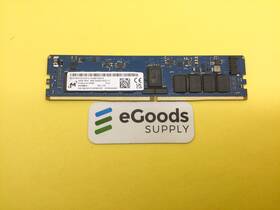
( Brand: Micron ), ( Manufacturer Part Number: MTA18ASF2G72XF1Z-3G2WP ), ( Type: Ram )
Review MICRON Technology Ddr4 Nvrdimm No Pr 16gb 1rx4
The **Micron MTA18ASF2G72XF1Z-3G2WP** is a high-performance, enterprise-grade **DDR4 Non-Volatile RAM Direct Media Module (NVDIMM)**, engineered to deliver unparalleled speed, reliability, and scalability for mission-critical workloads in data centers, cloud computing, and high-performance computing (HPC) environments. This cutting-edge module integrates **32GB of DDR4 memory** across a **1Rx4 configuration**, paired with **Micron s advanced 3D NAND flash technology**, enabling seamless persistence and persistent memory capabilities. With a **3200A (3200MHz) memory speed**, the module ensures blazing-fast data access and transfer rates, optimizing performance for applications requiring low-latency operations, such as in-memory databases, real-time analytics, and high-frequency trading systems. The **NVDIMM architecture** eliminates the need for traditional persistent storage solutions by combining volatile DRAM with non-volatile flash, providing both fast, in-memory processing and durable data retention even during power interruptions without sacrificing performance. Built with **Micron s industry-leading reliability standards**, this module features **endurance-optimized NAND flash**, **error correction mechanisms**, and **robust thermal management**, ensuring long-term stability and data integrity in demanding environments. Ideal for **server and storage systems** that demand both speed and persistence, the **MTA18ASF2G72XF1Z-3G2WP** is a game-changer for enterprises looking to push the boundaries of computational efficiency while maintaining data availability and consistency. Whether deployed in **persistent memory workloads, caching layers, or hybrid storage architectures**, this module delivers a seamless blend of volatility and non-volatility, future-proofing infrastructure for next-generation computing demands.
The **Micron MTA18ASF2G72XF1Z-3G2WP** is a **32GB DDR4 NVDIMM-N (Non-Volatile Dual Inline Memory Module)** designed for enterprise and high-performance computing systems that support **persistent memory** (also known as **PMem**). Below is a detailed breakdown of its pros and cons, followed by a conclusion and recommendation.
---
### **Pros of the Micron MTA18ASF2G72XF1Z-3G2WP**
1. **Persistent Memory (PMem) Capability**
- Unlike traditional DRAM, this module retains data even when power is lost, acting as both **fast storage and RAM**. This is useful for applications requiring **low-latency persistence**, such as databases, in-memory analytics, and caching layers.
2. **High Performance & Low Latency**
- Operates at **3200 MT/s (DDR4)**, matching or exceeding the speed of standard DRAM in many systems. This ensures near-RAM-like access speeds while providing storage-like persistence.
- Supports **1Rx4 configuration**, meaning it uses four channels for data transfer, improving bandwidth and throughput compared to single-channel modules.
3. **Enterprise-Grade Reliability**
- Micron is a trusted manufacturer with a strong reputation for **durability and compatibility** in data centers and high-availability environments.
- The module is designed for **24/7 operation**, reducing the risk of data loss during power interruptions.
4. **Scalability & Flexibility**
- Can be used in **hybrid memory architectures**, where it complements traditional DRAM while providing persistent storage.
- Works with **Intel Optane DC Persistent Memory** (when paired with compatible CPUs like Xeon Scalable with Optane support) and other platforms that support **ACPI-based NVDIMMs**.
5. **Reduced Need for Battery Backup (Compared to Traditional NVRAM)**
- Unlike battery-backed DRAM (e.g., in some RAID controllers), this module **does not require additional power sources** to maintain data integrity, simplifying deployment.
6. **Future-Proofing for Persistent Memory Workloads**
- As **persistent memory adoption grows** (e.g., in databases like PostgreSQL, Redis, and in-memory databases), this module prepares systems for next-gen workloads without requiring a full storage upgrade.
7. **Compatibility with Modern Platforms**
- Works with **Intel Xeon Scalable (Skylake-X, Cascade Lake, Ice Lake, Sapphire Rapids) and AMD EPYC (Rome, Milan, Genoa)** processors that support **ACPI 6.0 and NVDIMM functionality**.
- Requires a **motherboard with NVDIMM slots** (not all enterprise boards support it).
---
### **Cons of the Micron MTA18ASF2G72XF1Z-3G2WP**
1. **High Cost Compared to Standard DRAM**
- Persistent memory is **significantly more expensive per GB** than traditional DDR4 RAM. For example, a 32GB NVDIMM may cost **3-5x more** than a 32GB DDR4 module.
- This makes it **less cost-effective for general-purpose computing** where persistence is not required.
2. **Limited Availability & Platform Support**
- Not all **servers or workstations** support NVDIMMs. You need a **motherboard with NVDIMM slots** and a **CPU that recognizes persistent memory** (e.g., Intel with Optane, AMD with certain EPYC models).
- Some **cloud providers and consumer-grade systems** do not offer NVDIMM support.
3. **Software & Driver Complexity**
- Requires **OS and firmware support** for persistent memory (e.g., **Windows Server with NVDIMM support, Linux with ACPI 6.0 and kernel modules like pmem **).
- **Application-level changes** may be needed to fully leverage persistent memory (e.g., using **DAX (Direct Access) or PMem libraries**).
- Some **legacy applications** may not work efficiently with persistent memory due to lack of optimization.
4. **Not a Direct Replacement for Storage**
- While it provides **fast persistence**, it is **not a substitute for SSDs or HDDs** for large-scale storage needs. It is best used as **cache or in-memory storage** rather than primary storage.
- **Capacity limitations** 32GB is small compared to modern SSDs (1TB ), so it s not suitable for storing large datasets without additional storage.
5. **Power & Thermal Considerations**
- Persistent memory modules **consume more power** than DRAM due to their non-volatile nature (though Micron s implementation is optimized).
- May require **better cooling** in high-density deployments, as some persistent memory workloads can generate more heat.
6. **Fragmentation & Wear Issues (Over Time)**
- Unlike DRAM, which has no wear, **persistent memory has a finite lifespan** due to **endurance limitations** (though Micron s modules are designed for **millions of write cycles**).
- **Data fragmentation** can occur over time, potentially requiring **defragmentation or reallocation** in some use cases.
7. **Vendor Lock-In Risks**
- Some persistent memory features (e.g., **Intel Optane integration**) may **tie you to a specific ecosystem**. While Micron is a major vendor, compatibility with non-Intel platforms (e.g., AMD) may vary.
---
### **Conclusion**
The **Micron MTA18ASF2G72XF1Z-3G2WP** is a **high-performance, persistent memory module** that excels in **enterprise, high-availability, and low-latency persistent storage workloads**. It is ideal for:
- **Databases** (PostgreSQL, Oracle, MongoDB) needing **instant recovery**.
- **In-memory analytics** (Apache Ignite, Redis) where **fast persistence** reduces latency.
- **Caching layers** (e.g., **Redis with PMem, Ceph with NVDIMMs**).
- **Disaster recovery** scenarios where **near-instant boot and data restoration** are critical.
However, it is **not cost-effective for general computing** and requires **specific hardware and software support**. If you need **fast, persistent memory** in a **supported enterprise environment**, this module is a strong choice. If you only need **standard RAM or storage**, traditional DDR4 or NVMe SSDs will be more practical.
---
### **Recommendation**
**Buy this module if:**You have a **server/workstation with NVDIMM support** (e.g., Intel Xeon with Optane, AMD EPYC with PMem).
Your workload **requires persistent memory** (e.g., databases, in-memory caching, low-latency storage).
You are **optimizing for performance-critical applications** where **data persistence without battery backup** is a priority.
You are **future-proofing** for **persistent memory adoption** in your infrastructure.
**Avoid this module if:**You need **standard RAM** and **cost efficiency** is the top priority.
Your **hardware does not support NVDIMMs** (check motherboard and CPU compatibility).
Your **applications are not optimized for persistent memory** (may require significant software changes).
You need **large-scale storage** (this is **not a replacement for SSDs/HDDs**).
**Alternative Considerations:**- If you need **persistent storage but not RAM-like speeds**, consider **NVMe SSDs with battery backup (e.g., Intel P5800P)**.
- If you need **more capacity**, look for **larger NVDIMM modules** (e.g., 64GB or 128GB if available).
- If **cost is a concern**, evaluate **hybrid setups** (e.g., using NVDIMMs alongside traditional DRAM and SSDs).
**Final Verdict:**This is a **premium, high-performance component** best suited for **enterprise-grade persistent memory applications**. If your use case aligns with its strengths, it is a **solid investment**. Otherwise, traditional memory and storage solutions may be more appropriate.
Details:
Item:MTA18ASF2G72XF1Z-3G2WP Micron Technology DDR4 NVRDIMM no PR 16GB 1Rx4 3200A, condition: USED, Qty:1 Shipping 1.
part #: mta18asf2g72xf1z-3g2wp prices
- $34.99-$59.99
specifications servermemor:
- brand: Micron
- mpn: Mta18asf2g72xf1z-3g2wp
- type: Ram
general servermemor:
- condition: Used
- Enterprise Networking, Servers > Server Components > Server Memory RAM
offer servermemor:
- sold: 0
- availability: In Stock
- best offers: True
- options: Ship-to-home
- started: June 11, 2026
- quantity: 1
shipping servermemor:
- service: USPS First Class
- type: Fixed
- class: Standard
- carrier: USPS
- cost: $0.00
- transit: 2-6 Days
returns servermemor:
- policy: Returns Accepted
- paid by: Seller
- method: Money back
- time: 30 Days
seller servermemor:
- # reviews: 22387
- city: Walnut, California
- rating: 99.9%
payments servermemor:
- wallet: Apple-pay
- other
- credit card: Discover
Micron 3200A Is Similar To:
- Hb52r1289e22-a6b Micron Technology Hitachi Ecc Reg (32% similar) Hitachi 1GB PC1 eccl, register PC100-222-622R, CL2 reg, 168-PINP n: HB52R1289E22-A6B, test pass by expert technician. Questions?: please feel free to upon any questions or request...(May 25th, 2018)
- Mt18jsf25672pdz-1g1f1 Micron Technology 1pc Re0000000197 (33.6% similar) Unit comes from a working environment and original packaging may show cosmetic wear item in pictures is sale item and includes all pictured items. MT18JSF25672PDZ 1G1F1 1PC re Micron technology 2GB DDR3 1066 CL7 eccl reg single dimm. Unit is tested for full functions dimensions 6l x 2w x 1h inches...(May 24th, 2016)
- Mt18jsf512722pdz-1g4d1dd Micron Technology Genuine 4 Gb 2rx8 Pc3 10600r (38.4% similar) All checks must clear prior to shipping. Shipping and handling via ups or USPS...(January 15th, 2016)
- Mt18jsf51272az-1g4d1ze Micron Technology 4gb Ram Ddr3-1333 (34.6% similar) Part #: MT18JSF51272AZ-1G4D1ZE prices...(May 22nd, 2016)
- Bzaatrta06 Micron Technology Lot Of 2 Mt18ld1672fg-5-x 128 Mb Edo 50ns Ecc Ram (37.9% similar) Micron MT18LD1672FG 5 x BZAATRTA06 128 MB EDP 50NS eccl ram this offer include lot of 2 pictured cards both cards are in excellent used working condition please see my other offers for more cards other electronics...(February 15th, 2016)
- Mt18htf12872ay-53eb1 Micron Technology Ecc Dimm (36.1% similar) Questions?: please feel free to upon any questions or request...(April 30th, 2018)
- Mt18htf25672fdz-667h Micron Technology 2 Gb Memory Module (34.8% similar) ...(February 25th, 2018)
- Mt18htf6472y-40eb2 Micron Technology 1gb 2x (39% similar) Fully tested with MEMTEST86. Micron 1GB 2x 512MB 1RX4 PC2-3200R DDR2 400 MHz eccl reg server ram memory MT18HTF6472Y-40EB2 with and registered...(February 4th, 2018)
- Mt18jsf1g72az-1g9e1z Micron Technology (30.1% similar) NUMBERMT18JSF1G72AZ-1G9E1ZMEMORY TYPEDDR3 SDRAMCAPACITY8GBPINS240 Pincus TYPEPC-14900ERROR CLOCK233MHZDATA transfer RATE1866MHZ voltage 1. If item is damaged during transit, please immediately. Pulled from working hp Z420 workstation desktop...(April 2nd, 2018)
- 133 Mt18lsdt3272g Pc Crucial 8 256mb 2gb Micron Sdram Technology (27.3% similar) 8 x 256MB dram...(February 25th, 2015)
- Mt36ksf2g72pz-1g4e1 Micron Technology 6x 16gb Tech (46.4% similar) We help companies manage the risks and complexities of it asset disposition with ease, security, sustainable value recovery. Please for a quote. Feel free to reach out with any questions...(March 7th, 2017)