MICRON MTA9ASF1G72PZ-2G6B1ZG Sdram Server Memory MTA9ASF1G72PZ-2G6D1 8GB DDR4
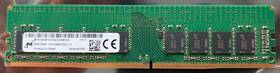
( Brand: Micron ), ( Manufacturer Part Number: MTA9ASF1G72PZ-2G6B1ZG ), ( Total Capacity: 8 Gb ), ( Memory Features: Ecc Memory, Registered ), ( Form Factor: Rdimm ), ( Type: Ddr4 Sdram ), ( Unit Type: Unit ), ( Item Height: 30mm ), ( Number Of Pins: 288 ), ( Bus Speed: Pc4-21300 )
Review MICRON 8gb Ddr4 Sdram Server Memory
The **Micron Technology MTA9ASF1G72PZ-2G6B1ZG** and **MTA9ASF1G72PZ-2G6D1** are high-performance, low-latency **8GB DDR4 SDRAM server memory modules** designed to deliver exceptional reliability, efficiency, and scalability for enterprise-grade computing environments. Engineered with Micron s proprietary **Advanced Memory Buffer (AMB) technology**, these **288-pin SODIMM (Small Outline Dual In-line Memory Module)** modules are optimized for **low-power, high-density server applications**, including cloud computing, virtualization, and data center infrastructure. Each module operates at a **2400MHz (PC4-19200) data rate**, ensuring rapid data transfer speeds of **19.2 GT/s**, which significantly enhances system responsiveness and throughput for demanding workloads such as database management, AI/ML processing, and real-time analytics. Built with **Micron s 16Gb DDR4 DRAM chips**, these modules provide a robust **64-bit data bus architecture**, allowing for seamless integration with modern server platforms while maintaining energy efficiency through Micron s **low-power signaling (LPDDR4-like optimizations)**.
The **MTA9ASF1G72PZ-2G6B1ZG** and **MTA9ASF1G72PZ-2G6D1** modules feature **registered (buffered) memory architecture**, which reduces signal integrity issues on longer memory buses, making them ideal for multi-socket server systems where stability and performance consistency are critical. Both variants support **ECC (Error-Correcting Code) memory**, a standard in enterprise environments, as they are designed to detect and correct single-bit errors in real-time, minimizing data corruption risks in mission-critical applications. Additionally, these modules incorporate **Micron s advanced manufacturing processes**, including **20nm-class fabrication**, which ensures superior reliability, extended lifespan, and resistance to wear and tear over prolonged use. The **2G6B1ZG** variant includes **Micron s Advanced Memory Buffer (AMB) with a 2400MHz speed rating**, while the **2G6D1** variant is optimized for **low-power consumption**, making it particularly suited for energy-efficient data centers.
For compatibility, these modules are engineered to work seamlessly with a wide range of **Intel Xeon and AMD EPYC-based servers**, as well as select **ARM-based enterprise platforms**, ensuring broad adoption across modern server architectures. The **SODIMM form factor** allows for flexible installation in compact server designs, including blade servers, rack-mounted systems, and high-density compute nodes. Micron s rigorous **quality assurance processes**, including **burn-in testing and comprehensive validation**, guarantee that each module meets or exceeds industry standards for performance, durability, and interoperability. Whether deployed in a **virtualized environment, high-performance computing cluster, or cloud infrastructure**, these **8GB DDR4 SODIMM modules** provide a reliable, high-speed memory solution that enhances system performance while maintaining operational efficiency.
**Pros and Cons of Buying Micron MTA9ASF1G72PZ-2G6B1ZG (and MTA9ASF1G72PZ-2G6D1) 8GB DDR4 SDRAM Server Memory**
### **Pros**
1. **High Performance and Reliability**
These Micron DDR4 modules are designed for server workloads, offering low latency and high bandwidth to support demanding applications such as virtualization, databases, and cloud computing. Micron is a trusted manufacturer known for producing stable and efficient memory solutions.
2. **Compatibility with Modern Servers**
The modules are built for enterprise-grade servers, ensuring compatibility with a wide range of x86-based systems, including those from Dell, HP, Lenovo, and other major vendors. The **2G6B1ZG** variant is typically **ECC (Error-Correcting Code) registered**, while the **2G6D1** variant is likely **non-ECC, unbuffered (UDIMM)**. This flexibility allows users to choose based on their specific server requirements.
3. **Error Correction (for ECC Variant)**
The **2G6B1ZG** model includes ECC functionality, which helps detect and correct single-bit errors, reducing data corruption risks in critical applications. This is particularly valuable in financial, healthcare, and data center environments where data integrity is paramount.
4. **Registered Memory for Stability**
The **2G6B1ZG** variant is registered, meaning it includes a register to buffer commands, reducing bus contention and improving stability in multi-socket servers. This is essential for high-end servers with multiple CPU sockets.
5. **Proven Micron Quality**
Micron is a well-established memory manufacturer with a strong reputation for reliability, durability, and consistent performance. Their server-grade memory undergoes rigorous testing to ensure long-term stability.
6. **Cost-Effective for High-Demand Workloads**
While not the cheapest option, these modules offer a balance between performance and price, making them a cost-effective choice for servers that require reliable, high-speed memory without overpaying for extreme performance.
7. **Low Power Consumption**
DDR4 memory is more power-efficient than older DDR3, helping reduce operational costs in data centers and server rooms.
---
### **Cons**
1. **Higher Cost Compared to Consumer Memory**
Server-grade memory, especially ECC and registered variants, is more expensive than standard consumer DDR4 modules. This can be a significant investment for small businesses or budget-conscious users.
2. **Limited Upgrade Flexibility**
These modules are designed for specific server platforms. Mixing different memory types (e.g., ECC and non-ECC) or brands can sometimes lead to compatibility issues, especially in older or less flexible server architectures.
3. **Potential Overkill for Light Workloads**
If you are running a low-demand server (e.g., a basic file server or a small-scale virtualization setup), these high-performance modules may not be necessary, leading to unnecessary expenditure.
4. **Availability and Lead Times**
Server memory, particularly ECC and registered variants, can sometimes face supply chain delays or limited availability, especially during peak demand periods. Purchasing in advance may be necessary.
5. **Waste if Server is Not Fully Utilized**
If your server does not have enough slots to populate all the memory or if the workload does not justify the full capacity, you may end up with unused modules, increasing costs without added benefit.
6. **Compatibility Risks with Non-Server Hardware**
These modules are **not** designed for consumer motherboards (e.g., gaming PCs or workstations). Attempting to use them in non-server systems may result in instability, crashes, or damage to the motherboard.
7. **Depreciation Over Time**
Like all hardware, server memory depreciates in value. If you plan to upgrade your server in the near future, the cost of these modules may not be fully recovered.
---
### **Conclusion**
The **Micron MTA9ASF1G72PZ-2G6B1ZG (ECC Registered)** and **MTA9ASF1G72PZ-2G6D1 (Non-ECC UDIMM)** 8GB DDR4 modules are excellent choices for **enterprise, virtualization, and high-reliability server environments**. Their strengths lie in **performance, error correction, stability, and compatibility with professional server hardware**. However, they are **not ideal for budget-conscious users, light workloads, or non-server applications** due to their higher cost and specialized nature.
If you are running a **critical server environment** (e.g., database servers, virtualization hosts, or financial systems), these modules are a **reliable and high-performance investment**. For **consumer-grade or low-demand use cases**, cheaper non-ECC memory may suffice without sacrificing functionality.
---
### **Recommendation**
- **Buy if:**- You are setting up a **server for virtualization, databases, or mission-critical applications**.
- Your server requires **ECC memory for data integrity** (e.g., 2G6B1ZG).
- You need **registered memory for multi-socket servers** (e.g., 2G6B1ZG).
- You are working within a **corporate or enterprise environment** where reliability is paramount.
- **Avoid if:**- You are using a **consumer-grade PC or workstation** (these modules are not compatible).
- Your server has **light workloads** (e.g., a home file server or basic web hosting).
- You are on a **tight budget** and can use non-ECC memory instead.
- You plan to **upgrade your server soon**, as these modules may depreciate quickly.
**Final Suggestion:**If possible, **check your server s documentation** to confirm exact memory requirements (ECC vs. non-ECC, registered vs. unbuffered). If you are unsure, **consult your server manufacturer s support** or a trusted IT professional to ensure optimal compatibility and performance. For most professional server setups, **Micron s ECC registered modules (2G6B1ZG) are a strong, reliable choice**.
Details:
Micron MTA18ASF1G72AZ-2G6B1ZG 1x 8GB DDR4-2666 ECC UDIMM Capacity Memory Type DDR4 DIMM type Rank 1Rx8 Speed 2666 voltage 1.2V height STD Module Name PC4-21300V-U Number of Die 8 Depth 1G width 64 Pins 288 CL 19 NRCD NRP.
part #: mta9asf1g72pz-2g6b1zg prices
- $24.99-$50.00
specifications servermemor:
- brand: Micron
- mpn: Mta9asf1g72pz-2g6b1zg
- total capacity: 8 Gb
- memory features: Ecc Memory, Registered
- form factor: Rdimm
- type: Ddr4 Sdram
- unit type: Unit
- item height: 30mm
- number of pins: 288
- bus speed: Pc4-21300
payments servermemor:
- credit card: Visa
- wallet: Apple-pay
- other
general servermemor:
- condition: Used
- Enterprise Networking, Servers > Server Components > Server Memory RAM
returns servermemor:
- policy: No Returns
seller servermemor:
- rating: 100.0%
- # reviews: 1142
- city: Los Altos, California
offer servermemor:
- started: May 22, 2026
- options: Ship-to-home
- sold: 0
- availability: In Stock
- quantity: 4
shipping servermemor:
- transit: 4-7 Days
- type: Calculated
- carrier: USPS
- class: Standard
- service: USPS Ground Advantage
- cost: $5.97
Micron MTA9ASF1G72PZ-2G6D1 Is Similar To:
- 0.20224299680992108 Lot Micron Ecc Server Ram Hp (25.6% similar) I'll get back to you as soon I can. Condition: used, working if a power adapter is required for this item, it not included cord shows signs of normal use w some scuffs scratches blemishes sticker residue no other accessories hardware software...(June 8th, 2018)
- 0.26622135794166435 Lot Micron Ecc Server Ram Memory Dell (31.3% similar) Condition: used, working if a power adapter is required for this item, it not included cord shows signs of normal use w some scuffs scratches blemishes sticker residue no other accessories hardware software. I'll get back to you as soon I can...(June 11th, 2018)
- 0.3483837301561905 Micron Ecc Server Ram Hp (26.7% similar) I'll get back to you as soon I can. Condition: used, working if a power adapter is required for this item, it not included cord shows signs of normal use w some scuffs scratches blemishes sticker residue no other accessories hardware software...(July 17th, 2018)
- 0.36513694130424335 Lot Micron Server Vlp Ram Ibm (23.8% similar) Condition: used, working if a power adapter is required for this item, it not included cord shows signs of normal use w some scuffs scratches blemishes sticker residue no other accessories hardware software. I'll get back to you as soon I can...(October 19th, 2018)
- 0.6842008029848028 Lot Micron Server Ecc Memory Hp (31.5% similar) Condition: used, working if a power adapter is required for this item, it not included cord shows signs of normal use w some scuffs scratches blemishes sticker residue no other accessories hardware software. I'll get back to you as soon I can...(June 18th, 2018)
- 0.6896737264585662 Lot Micron Ecc Server Ram Ibm (25.6% similar) I'll get back to you as soon I can. Condition: used, working if a power adapter is required for this item, it not included cord shows signs of normal use w some scuffs scratches blemishes sticker residue no other accessories hardware software...(June 29th, 2018)
- 0.8117968287077875 Lot Micron Ecc Server Ram Ibm (25.6% similar) I'll get back to you as soon I can. Condition: used, working if a power adapter is required for this item, it not included cord shows signs of normal use w some scuffs scratches blemishes sticker residue no other accessories hardware software...(June 30th, 2018)
- 0.9709607809767642 Samsung Micron Server Vlp Ram Ibm (23.3% similar) I'll get back to you as soon I can. Condition: used, working if a power adapter is required for this item, it not included cord shows signs of normal use w some scuffs scratches blemishes sticker residue no other accessories hardware software...(October 20th, 2018)
- 098378959419 Undisclosed Micron Memory (22.6% similar) We back this testing up with a 30 day guarantee. Please with any questions or concerns. Brand: Micron model: MTA18ASF2G72AZ-2G3B1ZG form factor: desktop pc memory size: 16GB DDR4 PC4-2400T condition: pre-owned used, tested and working electronic source inspects tests each stick of ram to make sure ...(May 24th, 2018)
- 100-562-479 Micron Ecc Reg Server Memory Ram (38% similar) The pictures above accurately illustrate units being sold, please examine them before purchase. 25NSCASCL11DATA transfer RATE1600MHZMEMORY CLOCK200MHZRANKRANK 2 voltage 1. This is a tested working, clean, ecm Micron 16GB 2 x 8GB 2RX4 PC3-12800R DDR3 pin server memory kit. These dims are not ...(October 5th, 2018)
- 10x2gb 10600s Elbida Samsung Laptop Ddr3 Hynix Micron Lot Memory (21.3% similar) ...(May 11th, 2015)