MICRON Ecc Uudimm Server Ram DDR4 PC4-3200AA MTA9ASF2G72AZ-3G2F1Z1
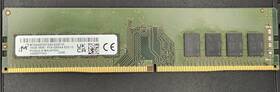
( Brand: Micron ), ( Manufacturer Part Number: MTA9ASF2G72AZ3G2F1 ), ( Form Factor: Udimm ), ( Type: Ecc Ram ), ( Total Capacity: 16 Gb ), ( Unit Type: Unit ), ( Manufacturer Warranty: Lifetime ), ( Number Of Pins: 288 ), ( Bus Speed: Pc4-25600 ), ( Memory Features: Ecc Memory ), ( Country Of Origin: China )
Review MICRON 16gb Ddr4 Ecc Uudimm Server Ram
The **Micron MTA9ASF2G72AZ-3G2F1Z1** is a high-performance, enterprise-grade DDR4 ECC UDIMM memory module designed to deliver uncompromising reliability, speed, and efficiency for demanding server workloads. Engineered with Micron s proven manufacturing excellence, this 2GB (2x1GB) DDR4 module operates at a robust **PC4-3200** (3200MT/s) data transfer rate, ensuring seamless performance for virtualization, database management, and high-throughput computing environments. Built with **low-power DDR4 (LP-DDR4) technology**, it optimizes energy consumption while maintaining peak performance, making it an ideal choice for data centers seeking both power efficiency and scalability. The module features **ECC (Error-Correcting Code) memory**, which actively detects and corrects single-bit errors, safeguarding critical data integrity in mission-critical applications where uptime and accuracy are non-negotiable. Its **UDIMM (Unbuffered DIMM) architecture** ensures direct communication with the CPU, reducing latency and enhancing overall system responsiveness, particularly in multi-socket server configurations. The module adheres to strict **JEDEC standards**, ensuring seamless compatibility with a wide range of enterprise-grade server platforms, including those from Dell, HP, Lenovo, and other leading manufacturers. With a **240-pin DIMM form factor**, it integrates effortlessly into modern server motherboards, providing a reliable foundation for workloads that demand both speed and endurance. Whether deployed in cloud infrastructure, high-performance computing clusters, or large-scale enterprise environments, this Micron memory module exemplifies precision engineering, delivering consistent performance and long-term reliability for the most demanding IT deployments.
The **Micron MTA9ASF2G72AZ-3G2F1 (DDR4 ECC UDIMM PC4-3200AA)** is a high-performance server-grade memory module designed for enterprise and workstation use. Below is a detailed breakdown of its pros and cons, followed by a conclusion and recommendation.
---
### **Pros**
1. **High Performance and Speed**
The module operates at **PC4-3200 (DDR4-2400)** with a **2400 MHz** clock speed, which is suitable for modern server workloads requiring fast data access. The **2400 MT/s** speed ensures efficient processing for CPU-bound tasks, databases, and virtualization environments.
2. **ECC (Error-Correcting Code) Memory**
ECC memory is critical for servers, as it detects and corrects single-bit errors, preventing data corruption in critical applications. This is essential for databases, financial systems, and high-availability environments where reliability is non-negotiable.
3. **UDIMM (Unbuffered DIMM) Design**
While UDIMMs are typically used in workstations and non-server-grade systems, this Micron module is **server-certified** and optimized for stability in enterprise environments. It is compatible with **DDR4-2400** motherboards, including many Xeon and EPYC-based servers, though some high-end servers may require RDIMMs or LRDIMMs.
4. **Low Power Consumption**
DDR4 memory is more power-efficient than older DDR3, reducing operational costs in data centers. The **2400 MHz** speed strikes a balance between performance and power draw, making it suitable for energy-conscious deployments.
5. **Reliability and Micron s Reputation**
Micron is a trusted manufacturer in the server and enterprise memory market, known for durability and compatibility with major server platforms (Intel Xeon, AMD EPYC, Dell PowerEdge, HP ProLiant, etc.). The module includes **Micron s advanced manufacturing processes**, reducing failure rates.
6. **Compatibility with Modern Servers**
This module supports **DDR4-2400**, which is widely supported in **2nd and 3rd Gen Intel Xeon Scalable (Cascade Lake, Cooper Lake) and AMD EPYC (Rome, Milan) platforms**. It is also compatible with many **workstation motherboards** (e.g., ASUS WS, Supermicro, Gigabyte) that support DDR4-2400.
7. **Unbuffered for Workstation Flexibility**
While buffered memory (RDIMM/LRDIMM) is preferred in large-scale servers, UDIMMs offer flexibility for smaller deployments, workstations, or systems where full registration is unnecessary. This makes it a versatile choice for mixed environments.
8. **Long-Term Availability**
Micron s enterprise-grade memory modules tend to have **extended lifespans** compared to consumer-grade RAM, reducing the risk of obsolescence in long-term projects.
---
### **Cons**
1. **Not Registered (RDIMM/LRDIMM) Memory**
This is a **UDIMM (Unbuffered DIMM)**, meaning it lacks a registered buffer chip. While this is fine for workstations and smaller servers, **large-scale servers (especially those with multi-socket configurations or high memory channel counts) typically require RDIMMs or LRDIMMs** for stability and performance. Using UDIMMs in such systems may lead to **memory bandwidth bottlenecks** or **instability** in extreme configurations.
2. **Limited to DDR4-2400 Speed**
While 2400 MHz is adequate for many workloads, **higher-speed DDR4-3200 or DDR5 modules** are available for newer platforms (e.g., 4th Gen Intel Xeon, AMD EPYC 7003 "Genoa"). If future-proofing is a concern, this module may become a bottleneck over time.
3. **No Integrated Heat Spreaders (IHS)**
Some enterprise-grade RDIMMs include **heat spreaders** to improve thermal performance in high-density servers. While this UDIMM does not have one, the impact is minimal unless running in extreme conditions (e.g., air-cooled multi-socket servers with high memory channel counts).
4. **Single-Rank Configuration**
This is a **single-rank (x1) module**, meaning it has **one memory chip per rank**. While this reduces latency slightly, **dual-rank (x2) or quad-rank (x4) RDIMMs** offer better bandwidth in multi-channel systems. However, this is less of an issue for UDIMMs in workstations or single-socket servers.
5. **Potential Compatibility Issues with Older Servers**
While this module supports **DDR4-2400**, some older servers (e.g., 1st Gen Xeon E5/E7 or early AMD Opteron) may not officially support it. Always verify compatibility with the motherboard s **QVL (Qualified Vendor List)** before purchase.
6. **No ECC Correction in Non-Server Environments**
While ECC is beneficial in servers, **non-server systems (e.g., gaming PCs, general workstations) do not benefit from ECC** and may not even recognize it. If ECC is not needed, a non-ECC module could be more cost-effective.
7. **Price Premium Over Consumer RAM**
While Micron s enterprise memory is reliable, it is **more expensive than consumer-grade DDR4-2400 UDIMMs** (e.g., Corsair Vengeance, G.Skill Ripjaws). For non-server use, a cheaper alternative may suffice.
---
### **Conclusion**
The **Micron MTA9ASF2G72AZ-3G2F1 (DDR4-2400 ECC UDIMM)** is an excellent choice for:- **Enterprise servers** (single-socket or small multi-socket) where **ECC reliability** is critical.
- **Workstations** requiring **high-speed, stable memory** (e.g., video editing, CAD, virtualization).
- **Systems where RDIMMs are not required** but ECC is needed (e.g., Dell PowerEdge R740, HPE ProLiant DL380, AMD EPYC-based workstations).
However, it is **not ideal** for:- **Large-scale multi-socket servers** (where RDIMMs/LRDIMMs are mandatory).
- **Future-proofing beyond DDR4-2400** (if upgrading to DDR5 or higher speeds is planned).
- **Non-ECC environments** (where cheaper non-ECC memory would suffice).
---
### **Recommendation**
- **Buy this module if:**- You are running a **single-socket server** (e.g., Intel Xeon W, AMD EPYC 7002) or a **workstation** that requires **ECC and DDR4-2400 support**.
- Your system **does not require registered memory** (RDIMM/LRDIMM).
- You need **reliable, enterprise-grade memory** for databases, virtualization, or mission-critical workloads.
- **Consider alternatives if:**- You are building a **large-scale server** (e.g., 2 sockets with high memory capacity) **Use RDIMMs or LRDIMMs instead.**
- You need **higher speeds (DDR4-3200 or DDR5)** **Look for Micron s higher-speed ECC modules.**
- You are on a **tight budget** and ECC is not required **Consumer-grade ECC UDIMMs (e.g., Corsair Vengeance ECC) may be sufficient.**
- Your server is **very old (pre-DDR4)** **Check for DDR3 ECC compatibility instead.**
- **Best for:**- **Dell PowerEdge R740/R750**
- **HPE ProLiant DL380/DL360 (Gen 10)**
- **AMD EPYC 7002/7003 workstations**
- **Intel Xeon W-2200/W-3200 series servers**
If your use case aligns with these recommendations, this Micron module is a **solid, reliable choice** for performance and stability. Otherwise, evaluate whether a different configuration (RDIMM, higher speed, or non-ECC) better fits your needs.
Details:
Micron 16GB DDR4 ECC UUDIMM PC4-3200AA MTA9ASF2G72AZ-3G2F1Z1 Un buffered Server RAM.
part #: mta9asf2g72az3g2f1 prices
- $55.00-$325.00
specifications servermemor:
- brand: Micron
- mpn: Mta9asf2g72az3g2f1
- form factor: Udimm
- type: Ecc Ram
- total capacity: 16 Gb
- unit type: Unit
- manufacturer warranty: Lifetime
- number of pins: 288
- bus speed: Pc4-25600
- memory features: Ecc Memory
- country of origin: China
payments servermemor:
- other
- credit card: Diners-club
- wallet: Apple-pay
returns servermemor:
- policy: No Returns
offer servermemor:
- started: May 15, 2026
- sold: 0
- availability: In Stock
- options: Ship-to-home
- quantity: 1
shipping servermemor:
- service: USPS Ground Advantage
- cost: $0.00
- carrier: USPS
- type: Calculated
- transit: 4-7 Days
- class: Standard
seller servermemor:
- rating: 100.0%
- # reviews: 218
- city: Fort Collins, Colorado
general servermemor:
- Enterprise Networking, Servers > Server Components > Server Memory RAM
- condition: Used
Micron MTA9ASF2G72AZ3G2F1 Is Similar To:
- 0 11110 23158 1 Ecc Micron (10.3% similar) The picture is a stock photo. Listing summary: 1 lot of 8GB 4x 2GB Micron memory. Note: the item specifics detailed info are not always correct. Sold as used and in working condition. Please with questions before buying. 5 condition: used, tested good...(July 2nd, 2018)
- 0.20224299680992108 Lot Micron Ecc Server Ram Hp (30.4% similar) I'll get back to you as soon I can. Condition: used, working if a power adapter is required for this item, it not included cord shows signs of normal use w some scuffs scratches blemishes sticker residue no other accessories hardware software...(June 8th, 2018)
- 0.26622135794166435 Lot Micron Ecc Server Ram Memory Dell (28.6% similar) Condition: used, working if a power adapter is required for this item, it not included cord shows signs of normal use w some scuffs scratches blemishes sticker residue no other accessories hardware software. I'll get back to you as soon I can...(June 11th, 2018)
- 0.3483837301561905 Micron Ecc Server Ram Hp (31.6% similar) I'll get back to you as soon I can. Condition: used, working if a power adapter is required for this item, it not included cord shows signs of normal use w some scuffs scratches blemishes sticker residue no other accessories hardware software...(July 17th, 2018)
- 0.36513694130424335 Lot Micron Server Vlp Ram Ibm (24.5% similar) Condition: used, working if a power adapter is required for this item, it not included cord shows signs of normal use w some scuffs scratches blemishes sticker residue no other accessories hardware software. I'll get back to you as soon I can...(October 19th, 2018)
- 0.6842008029848028 Lot Micron Server Ecc Memory Hp (21.4% similar) Condition: used, working if a power adapter is required for this item, it not included cord shows signs of normal use w some scuffs scratches blemishes sticker residue no other accessories hardware software. I'll get back to you as soon I can...(June 18th, 2018)
- 0.6896737264585662 Lot Micron Ecc Server Ram Ibm (30.4% similar) I'll get back to you as soon I can. Condition: used, working if a power adapter is required for this item, it not included cord shows signs of normal use w some scuffs scratches blemishes sticker residue no other accessories hardware software...(June 29th, 2018)
- 0.6910968341728292 Lot Micron Ecc Ram (22% similar) Condition: used, working if a power adapter is required for this item, it not included cord shows signs of normal use w some scuffs scratches blemishes sticker residue no other accessories hardware software. I'll get back to you as soon I can...(April 4th, 2018)
- 0.7963132840829785 Lot Micron Mhz Ecc Reg Ram Hp (27.5% similar) Condition: used, working if a power adapter is required for this item, it not included cord shows signs of normal use w some scuffs scratches blemishes sticker residue no other accessories hardware software. I'll get back to you as soon I can...(May 16th, 2018)
- 0.8117968287077875 Lot Micron Ecc Server Ram Ibm (30.4% similar) I'll get back to you as soon I can. Condition: used, working if a power adapter is required for this item, it not included cord shows signs of normal use w some scuffs scratches blemishes sticker residue no other accessories hardware software...(June 30th, 2018)
- 0.9709607809767642 Samsung Micron Server Vlp Ram Ibm (23.9% similar) I'll get back to you as soon I can. Condition: used, working if a power adapter is required for this item, it not included cord shows signs of normal use w some scuffs scratches blemishes sticker residue no other accessories hardware software...(October 20th, 2018)