ZIMA N150 Zimaboard Server Quad Core Emmc Pcie 64GB 1664 X86 DDR5
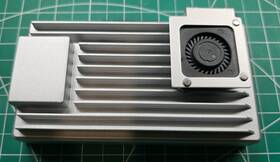
( Brand: Zima ), ( Manufacturer Part Number: N150 ), ( Type: Minipc ), ( Color: Zimaboard 2 1664 )
Review ZIMA Zimaboard X86 Home Server Quad core 16gb Emmc Pcie
The **Zima N150 ZIMABOARD 1664 x86 Server** is a compact yet high-performance embedded system designed for demanding server, storage, and industrial applications where space efficiency and raw computational power are critical. Built around an **Intel Celeron J6412 quad-core processor** operating at a base clock speed of 2.4 GHz with Turbo Boost support up to 3.7 GHz, this board delivers reliable, low-power performance ideal for 24/7 operation in data centers, edge computing, or remote monitoring setups. The inclusion of **DDR5 SO-DIMM memory support** allows for up to **64GB of high-speed RAM**, ensuring seamless multitasking, virtualization, or database management without latency issues. Paired with a **64GB eMMC storage solution**, this board provides ample onboard persistence for OS installation, applications, or lightweight databases, eliminating the need for external SSDs in many use cases.
The **PCIe x16 slot** offers flexibility for expansion, enabling the integration of high-performance GPUs, network adapters, or specialized acceleration cards, making it suitable for AI inference, video processing, or high-speed data analytics. The board features a **dual Gigabit Ethernet ports** with optional support for 2.5G or 10G interfaces via add-on cards, ensuring robust connectivity for network-attached storage (NAS), virtualization hosts, or IoT gateways. Its **low-power design** with a **TDP of just 15W** makes it an energy-efficient choice for green data centers or battery-powered edge deployments, while still maintaining the thermal resilience needed for sustained operation.
The **ZIMABOARD 1664** is engineered for rugged reliability, featuring a **mini-ITX form factor** that fits seamlessly into compact enclosures, server racks, or industrial chassis. Its **comprehensive I/O options** include **SATA III, USB 3.2 Gen 1, USB 2.0, HDMI 2.0, and DisplayPort 1.2**, catering to both display and peripheral needs without sacrificing performance. The board supports **Intel vPro technology**, enhancing security and remote manageability for enterprise environments, while its **BIOS-based hardware monitoring** ensures proactive thermal and power management. Whether deployed as a **headless server, a virtualization host, or a high-performance embedded controller**, the Zima N150 ZIMABOARD 1664 delivers a balanced blend of processing power, expandability, and efficiency, making it a versatile solution for modern computing challenges.
### Pros and Cons of buying a Zima N150 ZimaBoard (1664 x86 Server, Quad-Core, DDR5, 64GB eMMC, PCIe)
#### **Pros:**1. **High Performance for Embedded and Server Workloads**
The ZimaBoard N150 is based on an x86 architecture, which means it can run full-fledged operating systems like Linux (including server distributions) and Windows without emulation. This makes it suitable for applications requiring native x86 performance, such as virtualization, light server workloads, or embedded systems needing compatibility with existing x86 software.
2. **DDR5 Memory Support**
DDR5 offers higher bandwidth and lower power consumption compared to DDR4, which can improve system responsiveness and efficiency, especially in memory-intensive tasks. The 64GB of RAM provides ample headroom for multitasking, virtualization, or running multiple services.
3. **PCIe Expansion**
The presence of PCIe slots allows for the addition of peripherals like network cards, storage controllers, or GPU accelerators. This flexibility is valuable for customizing the board for specific use cases, such as network appliances, storage servers, or AI/ML inference devices.
4. **Compact and Low-Power Design**
The ZimaBoard is a small-form-factor device, making it ideal for space-constrained environments like industrial IoT, edge computing, or home labs. Its low power consumption (typically under 30W) also reduces operational costs and heat generation.
5. **eMMC Storage (for Basic Use Cases)**
While eMMC is slower than NVMe or SATA SSDs, it provides a simple, no-moving-parts storage solution for lightweight applications. For development or testing purposes, it can be sufficient until you migrate to faster storage later.
6. **Compatibility with x86 Software**
Since it runs native x86, you can install and run most x86-based applications, including legacy software, without compatibility issues. This is a significant advantage over ARM-based boards that often require emulation or custom builds.
7. **Good for Development and Prototyping**
The board is well-suited for developers who need a compact yet powerful platform to test software before deploying it on larger servers. Its quad-core CPU and DDR5 RAM make it capable of handling moderate workloads efficiently.
8. **Support for Virtualization**
With enough RAM and a capable CPU, the ZimaBoard can run virtual machines (e.g., using QEMU/KVM or VirtualBox), making it useful for testing different OS environments or running multiple services in isolation.
---
#### **Cons:**1. **Limited Storage Options**
The inclusion of eMMC (typically 64GB or 128GB) is convenient but restrictive. eMMC is slow (compared to NVMe or SATA SSDs) and lacks the capacity for large-scale data storage or persistent workloads. Users will likely need to add external storage (e.g., via USB, SATA, or M.2 NVMe) for practical use, which adds complexity and cost.
2. **No Native NVMe Support (May Require Workarounds)**
Some ZimaBoard models may not have native NVMe support, forcing users to rely on slower USB or SATA connections for additional storage. This can be a bottleneck for storage-intensive applications.
3. **Limited Overclocking or Tuning**
As an embedded board, the ZimaBoard is not designed for overclocking or extensive hardware tweaking. Performance is locked to the manufacturer s specifications, which may not be ideal for users seeking maximum extraction from the hardware.
4. **Potential Heat Management Issues**
While the board is low-power, quad-core x86 CPUs can generate heat, especially under sustained workloads. The lack of a dedicated cooling solution (e.g., a heatsink or fan) may require users to implement passive cooling or ensure proper airflow in their enclosure.
5. **Dependence on Third-Party Support**
ZimaBoard is a niche product, and support (e.g., official documentation, community forums, or vendor assistance) may be limited compared to mainstream server hardware. Troubleshooting issues or finding drivers may require extra effort.
6. **No Built-in Redundancy or Enterprise Features**
Unlike enterprise-grade servers, the ZimaBoard lacks features like RAID, hot-swappable drives, or advanced power management. It is not suitable for high-availability or mission-critical applications without additional hardware.
7. **Potential Compatibility Issues with Some Software**
While x86 compatibility is a pro, some specialized software (e.g., certain enterprise applications or proprietary tools) may not be optimized for embedded or low-power x86 hardware. Testing may be required before deployment.
8. **Cost vs. Performance Trade-off**
For the price, the ZimaBoard offers decent performance, but it may not compete with full-sized servers or even larger embedded boards (e.g., those with more cores or faster storage). If you need raw power, a traditional server or a more expensive embedded system might be a better investment.
9. **Limited Expansion Beyond PCIe**
The board may lack additional expansion slots (e.g., SATA, USB 3.1, or M.2 slots for Wi-Fi/Bluetooth), limiting connectivity options compared to more feature-rich embedded systems.
10. **Longevity and Obsolescence Risk**
Embedded boards can become obsolete quickly as newer architectures or software requirements emerge. The ZimaBoard s lifespan may be shorter than that of a traditional server, especially if the underlying x86 chipset is not widely supported in future OS versions.
---
### **Recommendation**
The **Zima N150 ZimaBoard (1664 x86, Quad-Core, DDR5, 64GB eMMC, PCIe)** is a versatile and compact embedded server that excels in scenarios where x86 compatibility, low power consumption, and PCIe expansion are priorities. It is an excellent choice for:
- **Home labs** where you need a lightweight x86 server for testing, virtualization, or running small-scale services.
- **Edge computing** applications where space and power efficiency are critical, and native x86 software is required.
- **Prototyping or development** environments where you need a platform to validate software before deploying it on larger hardware.
- **Network appliances** (e.g., firewalls, VPNs, or lightweight NAS setups) where PCIe expansion or x86 compatibility is beneficial.
However, it is **not ideal** for:- **High-performance computing** or workloads requiring massive storage (e.g., databases, media servers, or large-scale virtualization).
- **Enterprise or mission-critical applications** where redundancy, scalability, or enterprise support are needed.
- **Users who prioritize raw storage speed** (eMMC is a bottleneck; NVMe or SATA SSDs are preferable).
- **Those seeking long-term hardware support** (embedded boards may become unsupported faster than traditional servers).
#### **Recommendation:** Buy the **Zima N150** if:- You need a **compact, low-power x86 server** for development, testing, or lightweight server tasks.
- You plan to **add external storage** (e.g., NVMe SSD via PCIe or USB) to overcome the eMMC limitation.
- You value **PCIe expansion** for custom hardware (e.g., network cards, GPUs).
- You are working with **x86-compatible software** and need a platform that avoids emulation.
Avoid the **Zima N150** if:- You require **high storage capacity or speed** (consider a board with NVMe or SATA support).
- You need **enterprise-grade reliability, redundancy, or support**.
- Your workloads are **CPU-intensive or require multi-core performance beyond what a quad-core can handle** (e.g., heavy virtualization or AI inference).
- You are on a tight budget and could achieve similar goals with a **Raspberry Pi (for ARM) or a used x86 mini-PC** (if storage is not a concern).
#### **Alternatives to Consider:**- **For x86 compatibility and better storage:** Look for a **mini-ITX or Pico-ITX motherboard** (e.g., ASRock or Gigabyte) with DDR5 and NVMe support.
- **For ARM-based x86-like performance:** Consider the **Radxa Rock 5B** or **Orange Pi 5** (if x86 compatibility is not strictly required).
- **For high-performance embedded:** The **NVIDIA Jetson Orin** or **Intel NUC** (if budget allows) may offer better performance for specific workloads.
- **For budget-friendly x86:** A **used Dell Optiplex or HP EliteDesk** with DDR5 and NVMe could be a cost-effective alternative.
Ultimately, the ZimaBoard is a **great niche product** for its intended use cases but may not be the best fit for everyone. Assess your specific needs carefully before purchasing.
Details:
As a compact, pocket-sized single board server platform, ZimaBoard 2 1664 combines x86 architecture, quad-core performance up to 3.6GHz, 16GB DDR5 memory, and 64GB eMMC storage for reliable always-on home servers, home labs, self-hosted workloads. Ubuntu Server OS Preinstalled u:test,p:test Wide Compatibility - Can install Zima OS for a clean, ad-free private cloud experience, centralized file dashboard, automatic backups, P2P downloads, photo/video sharing, 500 plug-ins, and secure on-device AI that keeps your data at home. Native Dual SATA 2.5GbE Networking - Built with server-class storage and networking I/O in mind, ZimaBoard 2 integrates dual ports for direct HDD/SSD connectivity Ethernet high-throughput, low-latency. Supports 10GbE Nicks, Nome adapters, GPS, and AI accelerators to build salable home servers, home labs, advanced self-hosted systems offering greater expansion flexibility than typical ABCs, Mini PCs, entry-level NAS devices.
Also supports Trina's, Proximity's, Debian, Ubuntu Server, pf Sense, Openest, and Linux containers, making it perfect for Alex media servers, Pi-hole, firewalls, backups, Docker labs, home-cloud services, multi-service deployments. All-in-One NAS, Router, Docker Home lab Server - Replace multiple devices with one low-power, finales system. This architecture enables reliable DIY NAS, fast storage, routing, and multi-service home server deployments while avoiding USB-based performance constraints common in ARM ABCs, Raspberry Pi based setups, Mini PCs, entry-level NAS devices.
specifications servermemor:
- brand: Zima
- mpn: N150
- type: Minipc
- color: Zimaboard 2 1664
shipping servermemor:
- carrier: USPS
- service: USPS Ground Advantage
- cost: $8.65
- class: Standard
- transit: 4-9 Days
- type: Calculated
payments servermemor:
- other
- credit card: Mastercard
- wallet: Google-pay
offer servermemor:
- availability: In Stock
- started: April 2, 2026
- sold: 0
- options: Ship-to-home
- quantity: 1
seller servermemor:
- rating: 100.0%
- # reviews: 275
- city: Benson, Arizona
general servermemor:
- condition: Used
- Enterprise Networking, Servers > Server Components > Server Memory RAM
returns servermemor:
- policy: No Returns