INTEL NMA1XBD512G2S Optane Dcpmm Persistent Memory 512GB DDR4 2666MHZ
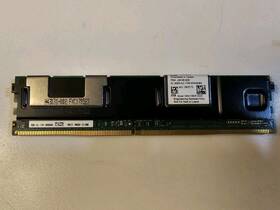
( Brand: Intel ), ( Manufacturer Part Number: NMA1XBD512G2S ), ( Type: Ddr4 Sdram ), ( Total Capacity: 512 Gb ), ( Bus Speed: Pc4-21300 ), ( Country Of Origin: Malaysia ), ( Memory Features: Ecc Memory )
Review INTEL Optane 100 Series 512gb Ddr4 2666mhz Dcpmm Persistent Memory
The **Intel Optane DC Persistent Memory Module (NMA1XBD512G2S)** represents a groundbreaking leap in data storage and processing architecture, seamlessly blending the speed of DRAM with the capacity and endurance of traditional storage solutions. Engineered as a **512GB DDR4-2666MHz module** utilizing Intel s proprietary **3D XPoint** technology, this module operates as **persistent memory**, meaning it retains data even when power is removed a feature that distinguishes it from conventional volatile RAM. Unlike traditional SSDs or HDDs, which rely on mechanical or flash-based storage, the Optane module leverages a **non-volatile, in-memory storage layer**, allowing applications to access vast amounts of data at near-DRAM speeds while maintaining reliability akin to persistent storage. This hybrid capability eliminates the traditional memory hierarchy bottleneck, enabling real-time analytics, in-memory databases, and high-performance computing workloads to operate with unprecedented efficiency. The module s **DCPMM (DC Persistent Memory Module)** form factor ensures compatibility with Intel s Xeon Scalable processors, particularly those featuring **Intel Optane DC Persistent Memory support**, allowing seamless integration into enterprise-grade servers. With a **low-latency, high-throughput architecture**, this module accelerates data-intensive tasks such as machine learning inference, financial modeling, and large-scale simulations, where traditional storage solutions would introduce unacceptable delays. Additionally, its **endurance and reliability** far surpassing conventional NAND flash make it ideal for mission-critical applications where data integrity and uptime are paramount. Whether deployed in cloud data centers, high-frequency trading environments, or AI-driven research facilities, the Intel Optane DC Persistent Memory Module redefines the boundaries of computational performance, offering a future-proof solution that bridges the gap between speed and persistence in modern computing.
### Pros and Cons of buying a Intel NMA1XBD512G2S Optane DC Persistent Memory Module (512GB, DDR4-2666, DCPMM)
#### **Pros**
1. **High Performance for Memory-Intensive Workloads**
The Intel Optane DC Persistent Memory module leverages Intel s 3D XPoint technology, offering near-DRAM speeds (latency comparable to DDR4) while maintaining non-volatile storage characteristics. This makes it ideal for databases, in-memory analytics, and applications requiring fast, persistent data access without the latency penalties of traditional SSDs or HDDs.
2. **Persistent Memory Capabilities**
Unlike traditional RAM, which loses data when power is cut, Optane DCPMM retains data even when the system is powered off. This eliminates the need for frequent checkpointing or write-back operations, improving reliability and reducing downtime in critical applications.
3. **Scalability and Flexibility**
The module integrates seamlessly with DDR4-2666 memory channels, allowing it to be used alongside conventional RAM in a unified memory architecture (UMA). This enables systems to scale memory capacity while maintaining performance, making it suitable for high-end servers, data centers, and enterprise workloads.
4. **Energy Efficiency Compared to Traditional Storage**
Since Optane DCPMM combines fast access times with persistence, it reduces the need for frequent disk I/O operations, lowering power consumption compared to systems relying heavily on SSDs or HDDs for caching or buffering.
5. **Future-Proofing for Persistent Memory Workloads**
Intel s Optane technology is designed to support emerging workloads that require persistent, high-speed memory. As applications like in-memory databases (e.g., Oracle TimesTen, SAP HANA), real-time analytics, and AI/ML models grow in complexity, Optane DCPMM provides a scalable solution to handle these demands without the bottlenecks of traditional storage.
6. **Compatibility with Intel Platforms**
The module is designed to work with Intel Xeon processors and compatible server platforms, ensuring optimal performance and compatibility with existing infrastructure. Intel s ecosystem support includes software optimizations and driver updates to maximize utilization.
7. **Reduced Latency for Critical Operations**
For applications where low latency is critical (e.g., financial trading systems, high-frequency data processing), Optane DCPMM can significantly reduce response times compared to conventional storage solutions, improving overall system throughput.
---
#### **Cons**
1. **High Cost Relative to Traditional Memory**
Optane DCPMM is significantly more expensive per gigabyte than standard DDR4 RAM or even NVMe SSDs. The price per GB is closer to that of enterprise-grade SSDs, which may limit adoption in cost-sensitive environments unless the performance benefits justify the investment.
2. **Limited Availability and Market Penetration**
Optane memory modules are not as widely available as standard RAM, and demand may be constrained by the niche use cases they target. This could lead to longer lead times or higher prices due to limited supply.
3. **Compatibility and Software Support**
While Intel provides drivers and software optimizations, not all operating systems or applications are fully optimized for persistent memory. Some legacy systems or custom applications may require significant development effort to leverage Optane DCPMM effectively. Linux and Windows Server support exist, but not all enterprise software vendors have fully integrated persistent memory into their products.
4. **Durability and Wear Concerns**
Although Optane is designed for high endurance, it is not as durable as traditional SSDs or HDDs in terms of write cycles. While the 3D XPoint technology is more resilient than NAND flash, prolonged heavy write workloads could still pose risks over time, particularly in environments with constant data updates.
5. **Power and Thermal Considerations**
Optane DCPMM modules may generate more heat than standard RAM due to their higher power consumption. This could require additional cooling infrastructure in server deployments, adding complexity and cost to the system design.
6. **Fragmentation and Management Overhead**
Persistent memory introduces new challenges in data management, such as fragmentation and wear leveling. Applications must be designed to handle these complexities, and some workloads may require additional software layers (e.g., file systems like Intel s Optane-aware FS) to manage memory efficiently.
7. **Limited Adoption in Consumer or Small Business Markets**
The target audience for Optane DCPMM is primarily enterprise and data center environments. For individual users, small businesses, or non-memory-intensive applications, the cost and complexity may not be justified, making it a specialized solution rather than a mainstream upgrade.
---
### **Conclusion**
The Intel NMA1XBD512G2S Optane DC Persistent Memory module is a high-performance, persistent memory solution tailored for enterprise workloads that demand low-latency, non-volatile storage. It excels in scenarios where traditional RAM and storage solutions fall short, such as in-memory databases, real-time analytics, and high-frequency trading systems. However, its high cost, limited availability, and the need for software and hardware compatibility make it a niche product best suited for organizations with specific performance requirements and the resources to implement and manage it effectively.
### **Recommendation**
**Purchase the Intel Optane DCPMM if:**- You are running memory-intensive applications (e.g., Oracle, SAP HANA, in-memory analytics) where persistent, low-latency memory is critical.
- Your workloads require reduced downtime due to power loss (e.g., financial systems, real-time processing).
- You have a budget to invest in high-performance, enterprise-grade memory solutions and can justify the cost based on performance gains.
- Your infrastructure is built on Intel Xeon processors, and you have the technical expertise or support to configure and optimize the system for persistent memory.
**Avoid the Intel Optane DCPMM if:**- Your applications do not require persistent memory or low-latency access to large datasets.
- You are working within a tight budget where standard DDR4 RAM or NVMe SSDs would suffice.
- Your software ecosystem lacks full support for persistent memory, or you lack the resources to develop custom solutions.
- You are a small business or individual user where the cost and complexity do not align with your needs.
For most users, standard DDR4 RAM or high-end NVMe SSDs will provide adequate performance without the overhead of persistent memory. Optane DCPMM is best reserved for specialized, high-stakes environments where its unique capabilities can deliver measurable advantages.
Details:
For sale is an Intel Optane 100 Series 512GB memory dim. Good condition. Part number: NMA1XBD512G2S, Note that this is an ES version Optane dim. Pictures of an actual item.
part #: nma1xbd512g2s prices
- $339.95-$349.00
specifications servermemor:
- brand: Intel
- mpn: Nma1xbd512g2s
- type: Ddr4 Sdram
- total capacity: 512 Gb
- bus speed: Pc4-21300
- country of origin: Malaysia
- memory features: Ecc Memory
offer servermemor:
- sold: 0
- quantity: 10
- started: May 11, 2026
- options: Ship-to-home
- availability: In Stock
general servermemor:
- condition: Used
- Enterprise Networking, Servers > Server Components > Server Memory RAM
shipping servermemor:
- type: Fixed
- transit: 4-10 Days
- carrier: USPS
- class: Standard
- service: USPS Ground Advantage
- cost: $0.00
returns servermemor:
- policy: Returns Accepted
- paid by: Buyer
- time: 30 Days
- method: Money back
seller servermemor:
- # reviews: 1897
- rating: 100.0%
- city: Fort Collins, Colorado
payments servermemor:
- other
- wallet: Paypal
- credit card: Mastercard
Intel NMA1XBD512G2S Is Similar To:
- 12-cores 4gb 2x2gb Memory Compatible With Apple Z0m4 Two 2.93ghz 6-core Intel (21.7% similar) If it not on the list, most likely this product will not work for your system device. Expert's recommendation yes, all memory are compatible as long as they meet the requirement of your server. However, the quality and configurations of the memory module can be quite different from the new major ...(April 17th, 2016)
- Cm8062301046404 Intel Hynix Dimm Memory Ecc Server Ram Lot (27.5% similar) Alberta ab: Yukon YT northwest territories nt new Brunswick NB nova Scotia NS Ontario on Newfoundland and Labrador nil Manitoba MB Saskatchewan SK British Columbia BC prince Edward island pe: 14...(December 10th, 2018)
- H2216xxkr2 H2312xxkr2 Hns2600kp Hns2600kpf Hns Computer Memory Solutions Ram Intel (27.2% similar) Mixing registered ecc and un buffered modules is not supported within this system. The third memory bank must be unpopulated. If the merchandise is defective, please for return merchandise replacement. This system supports either registered ecc or un buffered memory. Adding quad rank modules in the ...(April 13th, 2018)
- Hym5v72a3204atng-50 Hyundai Edo Ecc Buffered Dimm Module Intel Server Memory Ram (22.5% similar) 256MB EDP 50NS ecc buffered 168PIN dim module Intel server memory ram 16X4...(April 9th, 2018)
- Iii514b Intel Series Iv Emul System (34.8% similar) USPS or ups ground. All parts, accessories, cables, etc. On a scale from, with 10 being in new or excellent condition, this item is rated as large liquidator for many vendors, our rating system follows. Save packaging for carrier claim. 30-DAY DOA warranty this product carries. DOA stands for dead ...(February 17th, 2017)
- 713539-001 Processor Working Used Intel Pull Cpu Memory (20.7% similar) Used working pull Intel processor CPU processor P/N memory...(October 1st, 2015)
- 751533-204 Intel Memory Board For Spka4 Srka4 Server Platforms Bkosdmem (15.9% similar) 3 length , 4 width , 1 DEPTH0. 2 dims with capacity of 64MB, 128MB, 256MB, 512MB and 1G. Other dram sizes may function correctly but will not be validated. 8 lbs Intel memory board 301MANUFACTURED by Intel part the memory module on the Intel SKA4 server baseboard has 16 dim sockets, which can hold...(January 17th, 2016)
- Kvr13e9k2 Kingston Server Memory Intel Model Kvr13e9k2 4i 4gb 240-pin Ddr3 Sdram Ecc 1333 (18.9% similar) 5v excuse buffered . Sold individually. KVR13E9K2 4i model model KVR13E9K2 4IDETAILSCAPACITY4GB 2 x 2GB TYPE240 pin DDR3 sdram SPEEDDDR3 PC3 CSS LATENCY9 voltage 1. Mint condition. Val testing ensures all modules comply with DEC specifications. Not in pairs. Value ram is Kingston's high quality ...(January 27th, 2016)
- Kvr16r11d8-8 Kingston Ram Memory Module Intel Validated Server Ws 740617241983 (19% similar) 8GB PC3-12800R ram memory module Kingston KVR16R11D8 8 Intel validated server SW used - tested pull fast and free shipping...(June 1st, 2018)
- Mt18ldt1672g-5 Micron Edo Dimm Memory Module Buffered Ecc Intel Ram (24.5% similar) 3v 168PIN dim memory module buffered ecc Intel ram 16X4...(April 9th, 2018)
- Mt9ldt872g-5 X Micron Edo Dimm Buffered Ecc Intel Memory Ram Server (16.3% similar) Shipped with USPS first class package. 256MB 4x 64 EDP 50NS 168PIN dim buffered ecc 8X8 Intel memory ram server. Condition is used...(January 20th, 2019)