SK HYNIX PC3-14900R-13-12-E2 Server Ram DDR3 256GB PC3-14900R-13-13-E2 HMT42GR7BFR4C-RD
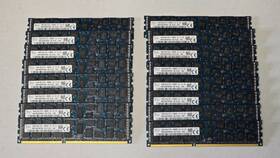
( Brand: Sk Hynix ), ( Manufacturer Part Number: PC3-14900R-13-12-E2 ), ( Model: SK HYNIX PC3-14900R-13-12-E2 HMT42GR7BFR4C-RD T8 AD ), ( Type: Ddr3 Sdram ), ( Total Capacity: 256 Gb ), ( Capacity Per Module: 16 Gb ), ( Item Height: 30mm ), ( Number Of Pins: 240 ), ( Bus Speed: Pc3-14900 ), ( Memory Features: Ecc Memory, Registered )
Review SK HYNIX 256gb Server Ram
The **SK Hynix PC3-14900R-13-12-E2 256GB 16-server-grade DDR3 memory module** is a high-performance, enterprise-class RAM solution designed to deliver uncompromising reliability, speed, and efficiency for demanding server environments. Engineered with precision for data centers, cloud computing, and high-availability workloads, this module represents the pinnacle of SK Hynix s commitment to cutting-edge memory technology. Built around the **HMT42GR7BFR4C-RD** chipset, this **256GB (16x16GB) DDR3 ECC RDIMM** module operates at an impressive **1333MHz (PC3-14900R)** clock speed, ensuring blazing-fast data transfer rates of **14.9 GB/s per module**, which translates to seamless multitasking, rapid database queries, and near-instantaneous virtualization performance. The **ECC (Error-Correcting Code)** functionality provides an additional layer of data integrity, actively detecting and correcting single-bit errors while mitigating the risk of catastrophic system failures an essential feature for mission-critical applications where uptime and accuracy are non-negotiable.
This module adheres to the **DDR3 RDIMM (Registered DIMM)** architecture, which incorporates a buffer chip to manage the high-speed data traffic between the memory controller and the DIMM slots, reducing signal integrity issues and improving overall system stability. The **13-13 timing configuration** (CAS latency of 13, tRCD of 13, tRP of 13) strikes an optimal balance between latency and throughput, ensuring that even the most computationally intensive tasks such as large-scale analytics, AI training, or real-time transaction processing execute with minimal delay. The **16-server-grade** designation underscores its robustness, built to withstand the rigorous demands of 24/7 operation in enterprise environments, where reliability is paramount. With a **low-power design** and optimized power management, this module not only enhances performance but also contributes to energy efficiency, reducing operational costs while maintaining peak productivity.
SK Hynix s **HMT42GR7BFR4C-RD** chips are manufactured using advanced semiconductor processes, ensuring superior signal integrity, reduced latency, and extended lifespan. The module s **256GB capacity** (comprising 16 individual 16GB DIMMs) is ideal for high-memory workloads, such as virtualization hosts, database servers, or high-performance computing clusters, where massive data processing is required. The **RDIMM configuration** also supports **DIMM interleaving**, allowing for scalable memory expansion without compromising performance, making it a versatile choice for both current and future-proofing server deployments. Whether deployed in a **Dell PowerEdge, HP ProLiant, IBM System x, or other x86-based server platforms**, this SK Hynix memory module delivers the speed, endurance, and reliability needed to power modern data infrastructure with confidence.
### **Pros and Cons of SK Hynix PC3-14900R-13-12-E2 (256GB, DDR3, Server RAM)**
#### **Pros:**1. **High Capacity and Density** This module offers 256GB of RAM in a single DIMM, which is ideal for large-scale servers, virtualization, or high-memory workloads. The density reduces the number of slots needed compared to smaller modules.
2. **Server-Grade Reliability** Designed for enterprise and server use, these modules are built to withstand heavy workloads, extended operation, and data integrity requirements. They typically include error-correcting code (ECC) and support for registered (RDIMM) or load-reduced (LRDIMM) configurations, which improve stability in multi-socket systems.
3. **Low Latency and High Performance** The **PC3-14900R** designation indicates a **14.9 GHz** data transfer rate (14.9 GB/s per channel), which is faster than standard DDR3 modules. The **-13** timing (CL13) is relatively low for DDR3, contributing to better performance in memory-bound applications.
4. **Compatibility with High-End Servers** These modules are designed for **Intel Xeon** and **AMD Opteron/EPYC** servers, making them suitable for data centers, cloud infrastructure, and high-performance computing (HPC) environments.
5. **Long-Term Availability** DDR3 is an older standard, but server-grade RAM like this is often produced in larger quantities and may remain available longer than newer, more niche memory types.
6. **Cost-Effective for Bulk Deployments** While the per-GB cost may be higher than consumer RAM, the **high density (256GB per slot)** reduces the total number of DIMMs needed, potentially lowering cabling and slot constraints in large systems.
7. **ECC and Error Correction** The **E2** suffix suggests it is an **ECC module**, which is crucial for preventing data corruption in critical applications like databases, virtual machines, or financial systems.
---
#### **Cons:**1. **High Cost** Server-grade DDR3 modules, especially in large capacities like 256GB, are significantly more expensive than consumer DDR3 or even newer DDR4/DDR5 modules. The price per GB is likely higher than alternatives like LRDIMMs or newer memory types.
2. **Power Consumption** DDR3 modules, even at 1333 MHz (though this is 1600 MHz effective speed), consume more power than DDR4 or DDR5 at similar capacities. This can increase cooling and power costs in large server deployments.
3. **Limited Future Scalability** DDR3 is an older standard, and newer servers (especially those using Intel Xeon Scalable or AMD EPYC 7003 ) may require DDR4 or DDR5. Upgrading later could mean replacing the entire memory subsystem.
4. **Physical Size and Slot Requirements** The **256GB RDIMM** is a **registered module**, meaning it requires a registered DIMM slot (not all motherboards support this). Some older servers may not have enough registered slots, forcing additional purchases.
5. **Heat Generation** High-density modules generate more heat, which may require additional cooling solutions in tightly packed server racks.
6. **Potential for Obsolescence** While DDR3 is still used in some legacy systems, many modern data centers are migrating to DDR4 or DDR5 for better efficiency and performance. This module may become harder to source as demand shifts.
7. **No Support for Advanced Features** Unlike newer memory types, DDR3 does not support features like **persistent memory (PMem)** or **NV-DIMM**, which are useful for caching and non-volatile storage in modern servers.
---
### **Conclusion**
The **SK Hynix PC3-14900R-13-12-E2 256GB DDR3 RDIMM** is an excellent choice for **legacy or high-memory-density server deployments** where cost per GB is less critical than raw capacity and reliability. It excels in environments where:
- **ECC and registered memory** are mandatory (e.g., databases, virtualization, financial systems).
- **Minimizing DIMM count** is important (e.g., large-scale servers with limited slots).
- **Backward compatibility** with older Intel Xeon or AMD Opteron systems is required.
However, if the server is **new or planned for long-term use**, the **higher cost, power consumption, and lack of future scalability** make it a less ideal choice compared to **DDR4 or DDR5 alternatives**. Additionally, if the budget allows, **lower-capacity RDIMMs (e.g., 16GB or 32GB)** may be more cost-effective for most workloads.
### **Recommendation**
- **Buy this module if:**- You are maintaining or upgrading a **legacy server** (e.g., Intel Xeon E5/E7 or AMD Opteron).
- You need **maximum memory density in a constrained slot environment**.
- Your workloads **require ECC and registered memory** (e.g., Oracle, SQL Server, VMware).
- You cannot afford to replace the entire memory subsystem in the near future.
- **Avoid this module if:**- You are deploying a **new server** (prefer DDR4/DDR5 for better efficiency and future-proofing).
- Your budget allows for **multiple lower-capacity RDIMMs** (e.g., 16GB or 32GB) instead of a single 256GB module.
- You plan to **scale the system significantly** in the next 3-5 years (DDR3 may become harder to source).
- Power efficiency and cooling are major concerns (DDR4/DDR5 consume less power at similar capacities).
For most **new deployments**, consider **DDR4 or DDR5 RDIMMs** (e.g., **DDR4-2400/2666** or **DDR5-3200/4800**) if available, as they offer better performance per watt and longer-term support. However, if you are locked into a **DDR3-only environment**, this SK Hynix module is a **reliable, high-capacity solution**.
Details:
Capacity: 16GB per stick 256GB total. Model: HMT42GR7BFR4C-RD T8 AD. Up for sale is a lot of 16 16GB Hynix DDR3 server memory modules total 256GB. Type: DDR3 ECC Registered RDIMM.
All modules are the same exact model and specification, ensuring full compatibility when used together in supported systems.
part #: pc314900r1312e2 prices
- $19.49-$85.49
specifications servermemor:
- brand: Sk Hynix
- mpn: Pc3-14900r-13-12-e2
- model: Sk Hynix Pc3-14900r-13-12-e2 Hmt42gr7bfr4c-rd T8 Ad
- type: Ddr3 Sdram
- total capacity: 256 Gb
- capacity per module: 16 Gb
- item height: 30mm
- number of pins: 240
- bus speed: Pc3-14900
- memory features: Ecc Memory, Registered
returns servermemor:
- policy: No Returns
payments servermemor:
- wallet: Paypal
- other
- credit card: Discover
general servermemor:
- Enterprise Networking, Servers > Server Components > Server Memory RAM
- condition: Used
offer servermemor:
- options: Ship-to-home
- started: April 18, 2026
- sold: 0
- availability: In Stock
- quantity: 1
- best offers: True
shipping servermemor:
- carrier: USPS
- transit: 5-11 Days
- class: Standard
- cost: $0.00
- type: Fixed
- service: USPS Ground Advantage
seller servermemor:
- # reviews: 32
- rating: 100.0%
- city: Ranson, West Virginia
Sk Hynix PC3-14900R-13-12-E2 Is Similar To:
- 06200201 Huawei Sk Hynix 32gb (20.6% similar) Hawaii Sk Hynix 32GB PC4-2133P DDR4 HMA84GR7MFR4N-TF server memory 4GX72, reg,ecc, 288 pins, 36CH 2GX4, Hynix, HMA84GR7MFR4N-TF, tested, bag DDR4, 32GB,PC4-2133P,DDR4 condition used tested. As-is items are advertised as such and no warranty is available...(October 19th, 2017)
- 100-563-384 Sk Hynix In Casing Lot Sale (23.5% similar) This is a lot sale of 16 Sk Hynix 8GB 2RX4 PC3-12800R e2 memory in working condition fresh out service...(October 29th, 2018)
- 46c7420-mb Sk Hynix 46c7420 8gb (25% similar) Frau 46C7423. Opt 46C7420...(November 6th, 2017)
- 662609-572 Hynix Sk P-n Hmt351u7cfr8c-pb (29.2% similar) Sk Hynix P/N 572HMT351U7CFR8C-PB 4GB 2RX8 PC3-12800WE...(February 12th, 2018)
- 672042060054 Hynix Sk Ecc Reg Memory Module (20% similar) We back this testing up with a 30 day guarantee. Please with any questions or concerns. Sk Hynix 8GB HMA41GR7AFR4N-UH 1RX4 PC4-2400T DDR4 ecc reg memory module storage capacity: technology: sdram number of modules: 1 x chips organization: x4 bus speed: 2400MHZ DDR4-2400 PC4 data integrity check: ...(June 30th, 2018)
- 740617162158 Sk Hynix Free Shipping Never Opened Dell Memory (30.6% similar) Brand new, unopened dell memory 64GB 8X8GB DDR3 PC3-10600RTHIS is not for desktops condition: new capacity per module: 8 gb each, total of PC3-10600RMEMORY features: 2RX4, PC3-10600R 1333MHZ, this desktops...(May 7th, 2018)
- 740617216882 Sk Hynix Dell (17.9% similar) Po 10027MEMORY room gray shelf. To schedule a time if you are going pickup. Someone will need to be available sign for deliveries...(July 5th, 2018)
- 740617224184 Sk Hynix Dell 32gb (23.4% similar) Someone will need to be available sign for deliveries USPS 32GB Hynix PC3 box memory room. To schedule a time if you are going pickup...(January 11th, 2018)
- 78p1914 Sk Hynix Lot Of (18.3% similar) If it is not in the picture, does come with item unless stated...(March 20th, 2017)
- 809079-581 Hp Sk Hynix 8gb (17.9% similar) Ecc ram modules are for servers, workstations and a few compatible motherboards. Details: 1 x 8GB DDR4 hp 1RX8 PC4-2400T 288-PIN ecc registered -HMA41GR7AFR4N-UH ad P/N all memory sticks have been fully tested and are 100 functional...(February 7th, 2018)
- 840759-091 Sk Hynix Hpe Quad Rank Memory (26.3% similar) A buyers attempt to use the equipment purchased in special configuration or application...(July 29th, 2018)