SK HYNIX PC3-8500R-7-12-AB0 Server Ram 32GB DDR3 4RX4
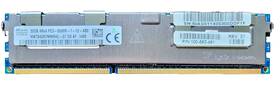
( Brand: Sk Hynix ), ( Manufacturer Part Number: PC3-8500R-7-12-AB0 ), ( Model: SK HYNIX PC3-8500R-7-12-AB0 ), ( Type: Server Ram ), ( Total Capacity: 32 Gb ), ( Bus Speed: Pc3-8500 ), ( Country Of Origin: China ), ( Memory Features: Ecc Memory, Registered )
Review SK HYNIX 4rx4 Server Ram
The **SK Hynix PC3-8500R-7-12-AB0 32GB (4Rx4) DDR3 Server RAM** is a high-performance, enterprise-grade memory module meticulously engineered to deliver unparalleled reliability, speed, and efficiency in demanding server environments. Part of SK Hynix s premium server memory lineup, this module adheres to strict industrial standards, ensuring seamless integration with modern data center infrastructure while maximizing computational throughput. Featuring a **4Rx4 configuration**, it consists of four ranks of DDR3 memory chips operating in a registered (buffered) configuration, which significantly enhances stability and reduces latency in multi-socket server systems. With a **total capacity of 32GB**, this module is ideal for high-end servers, virtualization platforms, and workload-intensive applications such as database management, cloud computing, and AI-driven analytics, where memory bandwidth and consistency are critical.
The **PC3-8500R-7-12** designation indicates a **PC3-8500 (1066 MHz) memory standard with a registered (R) interface**, paired with a **CAS latency of 7 (CL7)**, ensuring optimal data transfer rates and reduced latency for faster processing cycles. The **7-12 timing specification** further optimizes performance by balancing speed and stability, making it suitable for servers requiring both high throughput and low error rates. The **AB0** model designation signifies a specific memory organization and pinout, ensuring compatibility with a wide range of server motherboards and ECC (Error-Correcting Code) memory controllers, which are essential for maintaining data integrity in mission-critical environments.
Constructed with **low-power, high-density DDR3 SDRAM chips**, this module is designed to operate efficiently within standard server power envelopes while delivering sustained performance under heavy loads. SK Hynix s advanced manufacturing processes ensure consistent signal integrity and reduced electromagnetic interference, which is particularly beneficial in densely populated server racks where thermal management and signal stability are paramount. The **ECC functionality** built into the module provides real-time error detection and correction, safeguarding against data corruption and system crashes, a feature indispensable for environments where uptime and data reliability are non-negotiable.
Whether deployed in a **two-socket or multi-socket server architecture**, this 32GB DDR3 module excels in scenarios requiring substantial memory capacity and robust performance. Its compatibility with **Intel Xeon and AMD Opteron processors**, along with support for advanced server features like memory interleaving and hot-plug capabilities, makes it a versatile choice for administrators looking to upgrade or expand their server infrastructure. The combination of **high-speed data transfer, error resilience, and enterprise-grade build quality** positions this SK Hynix module as a cornerstone for modern data centers seeking to balance performance, scalability, and reliability.
The SK Hynix PC3-8500R-7-12-AB0 (32GB, 4Rx4, DDR3) is a server-grade DDR3 memory module designed for high-performance computing environments. Below is a detailed breakdown of its pros and cons, followed by a conclusion and recommendation.
---
### **Pros:**1. **Server-Grade Quality and Reliability**
This module is manufactured by SK Hynix, a reputable semiconductor company known for producing high-quality memory, especially for enterprise and server applications. It is designed to meet strict reliability standards, including extended lifespan, lower error rates, and better thermal stability compared to consumer-grade RAM.
2. **High Performance for Server Workloads**
The module operates at **1333 MHz (PC3-10666)** with a **7-7-7-20 CAS latency**, which is optimized for server workloads such as virtualization, database management, and high-transaction processing. The **4Rx4 configuration** (four ranks, four modules per channel) allows for better bandwidth utilization in multi-channel server motherboards.
3. **Low Latency and High Bandwidth**
The **CAS latency of 7** is relatively low for DDR3 server memory, improving performance in latency-sensitive applications. The **PC3-8500R** designation indicates a **10.66 GB/s** bandwidth per channel, which is suitable for demanding server tasks.
4. **Registered (Buffered) Design**
The module is **registered (buffered)**, which helps stabilize memory signals on server motherboards with multiple DIMM slots. This reduces the risk of data corruption and improves stability in large memory configurations.
5. **Compatibility with Server Platforms**
This module is designed for **Intel Xeon** and **AMD Opteron** server motherboards, ensuring compatibility with enterprise-grade hardware. It supports **ECC (Error-Correcting Code)**, which is essential for data integrity in servers.
6. **Long-Term Availability**
As a widely used server memory module, this part is likely to remain available for an extended period, reducing the risk of obsolescence compared to newer, less common modules.
7. **Cost-Effective for High-Density Servers**
For servers requiring **32GB of memory**, this module provides a balance between performance and cost. It is often more affordable than newer DDR4 or DDR5 alternatives for legacy server setups.
---
### **Cons:**1. **Outdated Technology (DDR3)**
DDR3 is now **over a decade old**, and modern server workloads (especially those involving AI, high-core-count CPUs, or next-gen storage) may benefit more from **DDR4 or DDR5**. DDR3 has lower power efficiency, higher latency in some configurations, and limited bandwidth compared to newer standards.
2. **Limited Upgrade Path**
If you plan to upgrade your server in the future, DDR3 modules may not be compatible with newer motherboards. Most modern servers use **DDR4 or DDR5**, making this module a dead-end for future-proofing.
3. **Higher Power Consumption**
DDR3 modules consume more power than DDR4 or DDR5 at similar speeds, which can increase cooling requirements and operational costs in data centers.
4. **Lower Density Options May Be Available**
While 32GB is a useful capacity, newer server memory modules often offer **64GB or 128GB DIMMs**, which can reduce the number of slots needed for large-scale deployments.
5. **Potential for Higher Cost in Bulk**
While individual modules may be affordable, purchasing in bulk for large server deployments could be more expensive than newer DDR4/DDR5 alternatives due to lower demand and production shifts.
6. **Limited Support for Newer CPU Architectures**
Modern **Intel Xeon Scalable (SAP/SAPL) and AMD EPYC** processors are optimized for DDR4/DDR5, meaning this module may not be ideal for the latest high-end server CPUs.
7. **Thermal and Cooling Considerations**
DDR3 modules can generate more heat than newer generations, requiring adequate cooling in high-density server racks.
---
### **Conclusion:**The **SK Hynix PC3-8500R-7-12-AB0 (32GB, 4Rx4, DDR3)** is a **solid choice for legacy server environments** where DDR3 is still in use, such as older Intel Xeon or AMD Opteron systems. It offers **reliable, server-grade performance** with **ECC support, low latency, and registered design**, making it suitable for virtualization, database servers, and general enterprise workloads.
However, if you are **planning to upgrade your server infrastructure in the near future**, this module may become obsolete quickly. Newer **DDR4 or DDR5 server memory** provides **better power efficiency, higher bandwidth, and support for modern CPUs**, which could lead to **long-term cost savings and performance improvements**.
---
### **Recommendation:** - **Buy this module if:**- You are maintaining or upgrading a **legacy server** (e.g., Intel Xeon E5/E7 or AMD Opteron) that **only supports DDR3**.
- You need **reliable, ECC-protected memory** for a **virtualization or database server** where stability is critical.
- You are working within a **budget constraint** and DDR3 is the only available option for your hardware.
- **Avoid this module if:**- You are building or upgrading a **modern server** (Intel Xeon Scalable, AMD EPYC, or newer) that requires **DDR4 or DDR5**.
- You anticipate **future-proofing** your infrastructure, as DDR3 will not be supported in next-gen systems.
- You are running **high-core-count or AI workloads**, where DDR4/DDR5 provides **significantly better performance**.
- **Alternative Considerations:**- If possible, **upgrade to DDR4 or DDR5 server memory** (e.g., **DDR4-2400 or DDR5-4800**) for better long-term compatibility and performance.
- If you must stay with DDR3, consider **larger capacity modules (64GB or 128GB)** if your motherboard supports them, to reduce the number of DIMMs needed.
- Check for **refurbished or open-box DDR4/DDR5 modules** if your budget allows, as they may offer better value for future-proofing.
**Final Verdict:** This is a **good, functional choice for DDR3-only servers**, but not ideal for long-term or modern server deployments. If possible, invest in **DDR4/DDR5 memory** for better scalability and efficiency.
Details:
I bought this module used for my R720 years ago but never installed it. I currently have no way to test it.
part #: pc38500r712ab0 price
- $24.95
specifications servermemor:
- brand: Sk Hynix
- mpn: Pc3-8500r-7-12-ab0
- model: Sk Hynix Pc3-8500r-7-12-ab0
- type: Server Ram
- total capacity: 32 Gb
- bus speed: Pc3-8500
- country of origin: China
- memory features: Ecc Memory, Registered
returns servermemor:
- policy: No Returns
shipping servermemor:
- transit: 3-8 Days
- class: Standard
- type: Fixed
- cost: $5.58
- service: USPS Ground Advantage
- carrier: USPS
general servermemor:
- Enterprise Networking, Servers > Server Components > Server Memory RAM
- condition: Used
seller servermemor:
- rating: 100.0%
- city: Valparaiso, Indiana
- # reviews: 132
payments servermemor:
- other
- wallet: Google-pay
- credit card: Mastercard
offer servermemor:
- quantity: 1
- options: Ship-to-home
- sold: 0
- availability: In Stock
- started: May 6, 2026
Sk Hynix PC3-8500R-7-12-AB0 Is Similar To:
- 06200201 Huawei Sk Hynix 32gb (31.7% similar) Hawaii Sk Hynix 32GB PC4-2133P DDR4 HMA84GR7MFR4N-TF server memory 4GX72, reg,ecc, 288 pins, 36CH 2GX4, Hynix, HMA84GR7MFR4N-TF, tested, bag DDR4, 32GB,PC4-2133P,DDR4 condition used tested. As-is items are advertised as such and no warranty is available...(October 19th, 2017)
- 100-563-384 Sk Hynix In Casing Lot Sale (32.6% similar) This is a lot sale of 16 Sk Hynix 8GB 2RX4 PC3-12800R e2 memory in working condition fresh out service...(October 29th, 2018)
- 46c7420-mb Sk Hynix 46c7420 8gb (38.1% similar) Frau 46C7423. Opt 46C7420...(November 6th, 2017)
- 662609-572 Hynix Sk P-n Hmt351u7cfr8c-pb (21.5% similar) Sk Hynix P/N 572HMT351U7CFR8C-PB 4GB 2RX8 PC3-12800WE...(February 12th, 2018)
- 672042060054 Hynix Sk Ecc Reg Memory Module (22.9% similar) We back this testing up with a 30 day guarantee. Please with any questions or concerns. Sk Hynix 8GB HMA41GR7AFR4N-UH 1RX4 PC4-2400T DDR4 ecc reg memory module storage capacity: technology: dram number of modules: 1 x chips organization: x4 bus speed: 2400MHZ DDR4-2400 PC4 data integrity check: ...(June 30th, 2018)
- 740617162158 Sk Hynix Free Shipping Never Opened Dell Memory (31.9% similar) Brand new, unopened dell memory 64GB 8X8GB DDR3 PC3-10600RTHIS is not for desktops condition: new capacity per module: 8 gb each, total of PC3-10600RMEMORY features: 2RX4, PC3-10600R 1333MHZ, this desktops...(May 7th, 2018)
- 740617216882 Sk Hynix Dell (27.8% similar) Po 10027MEMORY room gray shelf. To schedule a time if you are going pickup. Someone will need to be available sign for deliveries...(July 5th, 2018)
- 740617224184 Sk Hynix Dell 32gb (33.3% similar) Someone will need to be available sign for deliveries USPS 32GB Hynix PC3 box memory room. To schedule a time if you are going pickup...(January 11th, 2018)
- 78p1914 Sk Hynix Lot Of (26.3% similar) If it is not in the picture, does come with item unless stated...(March 20th, 2017)
- 809079-581 Hp Sk Hynix 8gb (30.4% similar) Ecc ram modules are for servers, workstations and a few compatible motherboards. Details: 1 x 8GB DDR4 hp 1RX8 PC4-2400T 288-PIN ecc registered -HMA41GR7AFR4N-UH ad P/N all memory sticks have been fully tested and are 100 functional...(February 7th, 2018)
- 840759-091 Sk Hynix Hpe Quad Rank Memory (30.1% similar) A buyers attempt to use the equipment purchased in special configuration or application...(July 29th, 2018)