SK HYNIX PC3L-12800R-11-13-B1 Server Memory 64GB 2RX8S 8GB
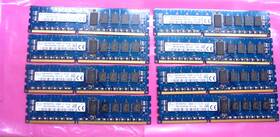
( Brand: Sk Hynix ), ( Manufacturer Part Number: PC3L-12800R-11-13-B1 ), ( Form Factor: Rdimm ), ( Type: Ddr3 Sdram ), ( Total Capacity: 64 Gb ), ( Capacity Per Module: 8 Gb )
Review SK HYNIX Lot Of 8gb Server Memory
The **SK Hynix PC3L-12800R-11-13-B1 64GB (8GB x 8) 2Rx8 Server Memory** module represents a high-performance, low-latency solution engineered for demanding enterprise and server environments where reliability, speed, and efficiency are paramount. Designed to operate seamlessly within high-end computing architectures, this **DDR3L (Low Power) Registered DIMM (RDIMM)** module adheres to the **PC3L-12800R-11-13** specification, delivering a robust **12.8 GT/s** data transfer rate across its eight 64-bit channels, enabling sustained bandwidth of up to **102.4 GB/s** per module. The **13.33 ns** CAS latency (CL11) ensures rapid data access, making it ideal for workloads that require minimal response times, such as virtualization, high-frequency trading, database management, and large-scale cloud computing applications.
Built with **SK Hynix s advanced 20nm process technology**, this memory module incorporates **8GB DDR3L DRAM chips** arranged in a **2Rx8 configuration**, meaning it occupies two slots per module while maintaining full compatibility with server motherboards that support RDIMM configurations. The **DDR3L (Low Voltage) specification** operates at a reduced **1.35V** power supply, significantly enhancing energy efficiency compared to standard DDR3 modules, which typically run at 1.5V or higher. This reduction in power consumption not only lowers operational costs but also contributes to a more sustainable computing environment, making it a preferred choice for data centers seeking to optimize both performance and power usage.
The module features **fully buffered architecture**, with an integrated **memory buffer chip (MBC)** that manages data transactions between the memory controller and the DRAM chips. This buffering mechanism enhances system stability by reducing the risk of data corruption and ensuring consistent performance under heavy loads. Additionally, the **ECC (Error-Correcting Code) capability** embedded within the module provides real-time detection and correction of single-bit errors, safeguarding critical data integrity in mission-critical applications where uptime and accuracy are non-negotiable. The **B1** timing grade ensures optimal performance across a wide range of server platforms, offering a balance between speed and compatibility without compromising on reliability.
Constructed with high-quality, military-grade components, this memory module is built to withstand the rigorous demands of 24/7 server operations, including extended runtime, high-temperature environments, and frequent data access cycles. The **240-pin DIMM form factor** ensures seamless integration with a variety of server architectures, including those from major vendors like Dell, HP, IBM, and Cisco, making it a versatile upgrade option for both legacy and modern server systems. Whether deployed in blade servers, rack-mounted systems, or high-density computing clusters, this module delivers the performance and endurance required to handle the most intensive computational workloads with ease.
For organizations prioritizing scalability and future-proofing, the **64GB capacity** of this module allows for seamless expansion, enabling administrators to scale memory resources incrementally as demand grows. When paired with compatible server hardware, it unlocks the potential for enhanced virtualization, improved multi-tasking capabilities, and accelerated processing speeds, making it an indispensable component for businesses aiming to maximize their infrastructure s efficiency and output. With its blend of cutting-edge technology, energy efficiency, and enterprise-grade durability, the **SK Hynix PC3L-12800R-11-13-B1 64GB (8GB x 8) 2Rx8 Server Memory** stands as a cornerstone for next-generation server deployments.
**Pros and Cons of SK Hynix PC3L-12800R-11-13-B1 (64GB, 8GB 2Rx8) Server Memory**
**Pros:**1. **High Capacity and Density** This module offers 64GB of total capacity in a single DIMM slot, which is ideal for high-memory workloads such as virtualization, large databases, or memory-intensive applications. The 8GB per rank (2Rx8 configuration) provides a good balance between density and performance.
2. **Low Latency (CL9)** The CAS latency of 9 is relatively low for a server-grade memory module, which can improve performance in latency-sensitive applications. This is particularly useful in environments where memory access speed is critical.
3. **Registered (RDIMM) Design** As a registered DIMM, it includes a register to buffer commands, reducing the load on the memory controller. This makes it more stable and reliable in multi-socket servers, where signal integrity is crucial.
4. **ECC Support** This module supports Error-Correcting Code (ECC), which helps detect and correct single-bit errors. This is essential for data integrity in server environments where uptime and reliability are paramount.
5. **Compatibility with DDR3L** The "L" in DDR3L indicates it runs at a lower voltage (1.35V) compared to standard DDR3 (1.5V). This can improve power efficiency in servers, reducing heat generation and potentially lowering cooling costs.
6. **SK Hynix Reliability** SK Hynix is a well-known manufacturer of server-grade memory, offering modules with robust build quality and performance consistency. Their products are widely used in enterprise and data center environments.
7. **Scalability** The 64GB capacity allows for easier scaling in environments where memory requirements are growing. It can be paired with other modules to meet larger capacity needs without needing to replace the entire memory configuration.
8. **Wide Availability** DDR3L modules are still widely available, especially in the used or refurbished market, which can make them cost-effective compared to newer DDR4 or DDR5 modules.
---
**Cons:**1. **Outdated Technology** DDR3L is an older generation of memory compared to DDR4 or DDR5. While it may still perform adequately for many workloads, it lacks the bandwidth, power efficiency, and features of newer standards. This could limit future scalability or compatibility with newer server platforms.
2. **Lower Bandwidth** DDR3L operates at 1333MHz (12800MT/s), which is significantly slower than DDR4 (up to 3200MT/s) or DDR5 (up to 6400MT/s). This can become a bottleneck in modern applications that rely on high memory throughput, such as AI, machine learning, or high-performance computing.
3. **Limited Future-Proofing** Many newer server platforms are transitioning to DDR4 or DDR5, and DDR3L modules may not be supported on newer motherboards or CPUs. This could require costly upgrades in the future if the server hardware is replaced.
4. **Power Consumption** Although DDR3L is more power-efficient than standard DDR3, it still consumes more power than DDR4 or DDR5 at similar capacities. Higher power consumption can lead to increased cooling requirements and operational costs.
5. **Higher Cost per GB Over Time** While DDR3L modules may be cheaper upfront, the cost per gigabyte of memory has generally decreased with newer generations. Over time, newer DDR4 or DDR5 modules may offer better value for money, especially as DDR3L becomes less common.
6. **Limited Availability of New Stock** New production of DDR3L modules has largely ceased, meaning most available units are either refurbished, used, or from older inventory. This can introduce risks related to module quality, warranty, and support.
7. **Compatibility Issues** Not all server motherboards or CPUs support DDR3L, especially newer models. Ensuring compatibility with your specific hardware can be challenging, and mixing generations of memory may not be supported.
8. **No Support for Advanced Features** Newer memory standards (e.g., DDR4/5) include features like extended data output (XMP/DOCP), improved error correction, and better power management. DDR3L lacks these advancements, which could impact performance in modern workloads.
---
**Conclusion:**The SK Hynix PC3L-12800R-11-13-B1 (64GB, 8GB 2Rx8) module is a solid choice for environments where you are running older server hardware that supports DDR3L, and where memory capacity and reliability are critical. It offers a good balance of density, ECC protection, and low latency, making it suitable for legacy systems or workloads that do not require the latest memory technology. However, if your server is still in active use or you plan to upgrade hardware in the near future, the limitations of DDR3L such as lower bandwidth, outdated technology, and potential compatibility issues may outweigh its benefits.
**Recommendation:** - **Use this module if:**- Your server hardware is limited to DDR3L (e.g., older Intel Xeon or AMD Opteron platforms).
- You are running memory-intensive applications that do not require the latest memory standards (e.g., legacy virtualization, database servers, or older enterprise workloads).
- You are working within a budget constraint and need high-capacity, reliable memory for a specific use case where newer generations are not feasible.
- **Avoid or replace this module if:**- Your server hardware supports DDR4 or DDR5, as upgrading to a newer standard would provide better performance, efficiency, and future-proofing.
- You are running modern workloads (e.g., AI, machine learning, high-performance computing) that benefit from higher memory bandwidth and lower latency.
- You anticipate upgrading your server hardware in the next few years, as DDR3L may become incompatible with newer platforms.
- You prioritize power efficiency and lower operational costs, as DDR4 or DDR5 modules offer better power management and reduced heat generation.
If possible, consider evaluating whether your workloads truly require the performance of DDR3L or if a more modern memory standard could provide better long-term value. If you must use DDR3L, ensure that the modules are from a reputable source (e.g., refurbished or new from a trusted supplier) to avoid quality or reliability issues.
Details:
The product is a lot of 64GB SK Hynix server memory, consisting 8 modules with each module having capacity 8GB. With a total capacity of 64GB, this memory is perfect for enhancing the performance and efficiency servers in enterprise networking setups. This DDR3 SDRAM memory is designed in a RDIMM form factor and ideal for use server environments requiring high capacity reliability.
part #: pc3l12800r1113b1 prices
- $19.99-$23.99
specifications servermemor:
- brand: Sk Hynix
- mpn: Pc3l-12800r-11-13-b1
- form factor: Rdimm
- type: Ddr3 Sdram
- total capacity: 64 Gb
- capacity per module: 8 Gb
shipping servermemor:
- transit: 4-9 Days
- carrier: USPS
- cost: $6.65
- class: Standard
- service: USPS Ground Advantage
- type: Fixed
payments servermemor:
- other
- credit card: Mastercard
- wallet: Apple-pay
seller servermemor:
- city: Houston, Texas
- # reviews: 1342
- rating: 100.0%
offer servermemor:
- options: Ship-to-home
- availability: In Stock
- quantity: 1
- sold: 0
- started: April 9, 2026
returns servermemor:
- policy: Returns Accepted
- paid by: Buyer
- method: Money back
- time: 30 Days
general servermemor:
- condition: Used
- Enterprise Networking, Servers > Server Components > Server Memory RAM
Sk Hynix PC3L-12800R-11-13-B1 Is Similar To:
- 06200201 Huawei Sk Hynix 32gb (26.8% similar) Hawaii Sk Hynix 32GB PC4-2133P DDR4 HMA84GR7MFR4N-TF server memory 4GX72, reg,eccl, 288 pins, 36CH 2GX4, Hynix, HMA84GR7MFR4N-TF, tested, bag DDR4, 32GB,PC4-2133P,DDR4 condition used tested. As-is items are advertised as such and no warranty is available...(October 19th, 2017)
- 100-563-384 Sk Hynix In Casing Lot Sale (29.9% similar) This is a lot sale of 16 Sk Hynix 8GB 2RX4 PC3-12800R e2 memory in working condition fresh out service...(October 29th, 2018)
- 46c7420-mb Sk Hynix 46c7420 8gb (28.3% similar) Frau 46C7423. Opt 46C7420...(November 6th, 2017)
- 662609-572 Hynix Sk P-n Hmt351u7cfr8c-pb (20.4% similar) Sk Hynix P/N 572HMT351U7CFR8C-PB 4GB 2RX8 PC3-12800WE...(February 12th, 2018)
- 672042060054 Hynix Sk Ecc Reg Memory Module (28.8% similar) We back this testing up with a 30 day guarantee. Please with any questions or concerns. Sk Hynix 8GB HMA41GR7AFR4N-UH 1RX4 PC4-2400T DDR4 eccl reg memory module storage capacity: technology: sdram number of modules: 1 x chips organization: x4 bus speed: 2400MHZ DDR4-2400 PC4 data integrity check: ...(June 30th, 2018)
- 740617162158 Sk Hynix Free Shipping Never Opened Dell Memory (35.9% similar) Brand new, unopened dell memory 64GB 8X8GB DDR3 PC3-10600RTHIS is not for desktops condition: new capacity per module: 8 gb each, total of PC3-10600RMEMORY features: 2RX4, PC3-10600R 1333MHZ, this desktops...(May 7th, 2018)
- 740617216882 Sk Hynix Dell (21.3% similar) Po 10027MEMORY room gray shelf. To schedule a time if you are going pickup. Someone will need to be available sign for deliveries...(July 5th, 2018)
- 740617224184 Sk Hynix Dell 32gb (26.3% similar) Someone will need to be available sign for deliveries USPS 32GB Hynix PC3 box memory room. To schedule a time if you are going pickup...(January 11th, 2018)
- 78p1914 Sk Hynix Lot Of (33% similar) If it is not in the picture, does come with item unless stated...(March 20th, 2017)
- 809079-581 Hp Sk Hynix 8gb (25.5% similar) Eccl ram modules are for servers, workstations and a few compatible motherboards. Details: 1 x 8GB DDR4 hp 1RX8 PC4-2400T 288-PIN eccl registered -HMA41GR7AFR4N-UH ad P/N all memory sticks have been fully tested and are 100 functional...(February 7th, 2018)
- 840759-091 Sk Hynix Hpe Quad Rank Memory (31.5% similar) A buyers attempt to use the equipment purchased in special configuration or application...(July 29th, 2018)