RAM VL33A1H63F-N6SC Virtium Server Memory 8GB DDR4
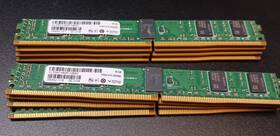
( Brand: Ram ), ( Manufacturer Part Number: VL33A1H63F-N6SC ), ( Form Factor: Rdimm ), ( Type: Ddr4 ), ( Total Capacity: 64 Mb ), ( Capacity Per Module: 8 Gb ), ( Bus Speed: Pc4-2133 ), ( Memory Features: Registered )
Review RAM Virtium 8gb Ddr4 Low Profile Server Memory
The **RAM VL33A1H63F-N6SC Virtium 8GB DDR4 Server Memory** is a high-performance, enterprise-grade memory module meticulously engineered to deliver exceptional reliability, speed, and efficiency in demanding server environments. Part of the Virtium lineup a trusted brand synonymous with quality and durability this **8GB DDR4 SODIMM (Small Outline Dual In-line Memory Module)** is designed to meet the rigorous demands of modern data centers, workstations, and high-performance computing (HPC) applications. Built with **low-power, high-density architecture**, this module operates at a **1600MHz (PC4-12800) clock speed**, ensuring rapid data transfer rates and reduced latency for seamless multitasking, virtualization, and intensive workloads such as database management, AI processing, and real-time analytics. The **ECC (Error-Correcting Code) capability** embedded within the module provides an added layer of protection against data corruption, making it an ideal choice for mission-critical systems where data integrity is non-negotiable. Constructed with **industrial-grade components**, including **16GBit (256Mb x 4) DDR4 DRAM chips**, this memory module ensures long-term stability and resistance to wear and tear, even under sustained heavy loads. Its **low-profile SODIMM form factor** makes it compatible with a wide range of **server motherboards, workstations, and embedded systems**, including those from major manufacturers like Dell, HP, Lenovo, and custom-built servers. Whether deployed in a **2U rack server, a high-end desktop for professional use, or a compact NAS (Network-Attached Storage) system**, this memory module optimizes system performance while maintaining energy efficiency, thanks to its **low-power consumption profile**. The **N6SC designation** further underscores its compatibility with **DDR4-1600 (DDR4-2133) compatible slots**, ensuring seamless integration without the need for additional firmware updates or BIOS modifications. For organizations prioritizing **scalability and future-proofing**, this module serves as a versatile building block, allowing for easy expansion to larger capacities while adhering to strict industry standards for reliability and performance. Whether deployed in a **cloud infrastructure, a financial trading platform, or a scientific computing cluster**, the **RAM VL33A1H63F-N6SC Virtium 8GB DDR4 Server Memory** stands as a dependable asset, delivering consistent speed, error resilience, and operational excellence in the most demanding computing scenarios.
The **RAM VL33A1H63F-N6SC (Virtium 8GB DDR4-3200 CL16 ECC RDIMM)** is a high-performance server memory module designed for enterprise and data center use. Below is a detailed breakdown of its pros and cons, followed by a conclusion and recommendation.
---
### **Pros**
1. **High Performance and Speed**
The module operates at **DDR4-3200 MHz**, which is faster than standard DDR4-2400 or DDR4-2666 modules commonly found in mid-range servers. This translates to improved data throughput and reduced latency in memory-intensive workloads such as virtualization, databases, and high-performance computing (HPC).
2. **Low Latency (CL16)**
A **CAS latency of 16** ensures quicker data access compared to higher CAS values (e.g., CL18 or CL20), which can be critical for applications requiring rapid memory response times.
3. **ECC (Error-Correcting Code) Support**
ECC memory is essential for servers, as it detects and corrects single-bit errors caused by radiation or hardware malfunctions. This enhances data integrity, which is crucial for financial systems, databases, and mission-critical applications where errors cannot be tolerated.
4. **Registered DIMM (RDIMM) Design**
RDIMMs are optimized for multi-channel server architectures, providing better signal integrity and reduced power consumption compared to unbuffered DIMMs (UDIMMs). They are also more scalable, allowing for larger memory configurations in servers with multiple DIMM slots.
5. **Compatibility with High-End Servers**
This module is designed for **Intel Xeon and AMD EPYC-based servers**, including models from Dell EMC PowerEdge, HPE ProLiant, Lenovo ThinkSystem, and Supermicro. It is suitable for workloads requiring robust memory performance, such as:
- Virtualization (VMware, Hyper-V, KVM)
- Cloud computing and containerization (Docker, Kubernetes)
- Big data and analytics (Hadoop, Spark)
- AI/ML and deep learning workloads
6. **Reliability and Durability**
Virtium (a brand under SK Hynix) is known for producing high-quality server memory with rigorous testing standards. The module is built to withstand the demanding environments of data centers, including extended operational lifespans and resistance to thermal stress.
7. **Scalability**
RDIMMs allow for the installation of multiple DIMMs in a server, enabling configurations with **up to 256GB or more per socket** (depending on the server model). This scalability is ideal for growing workloads without requiring frequent hardware upgrades.
8. **Power Efficiency**
DDR4-3200 modules are generally more power-efficient than older DDR3 or even some DDR4-2133 modules, reducing cooling requirements and operational costs in large-scale deployments.
9. **Widely Available and Supported**
As a standard RDIMM module, it is supported by most major server manufacturers and is easy to source from reputable vendors. It is also backward-compatible with many server platforms that support DDR4-3200 memory.
---
### **Cons**
1. **Higher Cost Compared to Lower-Speed Modules**
DDR4-3200 ECC RDIMMs are more expensive than slower alternatives (e.g., DDR4-2400 or DDR4-2666). For budget-conscious deployments where performance is not a bottleneck, cheaper options may suffice. The price difference can be significant in large-scale purchases (e.g., for a 100 node cluster).
2. **Limited Compatibility with Older Servers**
While this module works with modern Intel Xeon and AMD EPYC CPUs, it may not be compatible with older server platforms (e.g., some Intel Xeon E5 or Xeon D-series servers) that only support DDR4-2133 or DDR3. Always verify compatibility with your server s BIOS or manufacturer documentation.
3. **Heat Generation**
Higher-speed memory modules (like DDR4-3200) can generate more heat than slower modules. While this is generally manageable with proper server cooling, it may require additional attention in densely populated racks or environments with limited airflow.
4. **Potential for Overkill in Low-End Workloads**
If your workload does not heavily utilize memory bandwidth (e.g., simple file servers, low-traffic web servers), the performance gains of DDR4-3200 may not be justified. In such cases, a slower but cheaper module (e.g., DDR4-2400) could be a more cost-effective choice.
5. **Vendor Lock-In Risks**
While Virtium is a reputable brand, purchasing memory from a single vendor (especially in large quantities) may limit flexibility if you need to switch suppliers in the future. Always consider mixing and matching from multiple vendors if possible.
6. **Latency Sensitivity in Some Workloads**
While CL16 is low, some specialized workloads (e.g., certain database optimizations or real-time systems) may benefit from even lower latency (e.g., CL14 or CL15). If your application is highly sensitive to memory latency, you may need to evaluate alternatives.
7. **Potential for Mix-and-Match Issues**
Mixing different memory modules (e.g., mixing DDR4-3200 with DDR4-2660) in the same server can sometimes lead to performance degradation or instability, depending on the server s memory controller. It is generally safer to use identical modules in pairs or sets.
---
### **Conclusion**
The **Virtium 8GB DDR4-3200 CL16 ECC RDIMM (VL33A1H63F-N6SC)** is an excellent choice for **high-performance server workloads** where memory speed, reliability, and scalability are critical. Its advantages in speed, ECC protection, and compatibility with modern Intel and AMD CPUs make it ideal for:
- Virtualization environments (VMware, Hyper-V, KVM)
- Cloud and containerized applications
- Databases and analytics workloads
- AI/ML and HPC applications
However, it is **not the best fit** for:- Budget-conscious deployments where performance is not a bottleneck.
- Older server platforms that do not support DDR4-3200.
- Low-memory-usage workloads where slower, cheaper modules would suffice.
---
### **Recommendation**
- **Buy this module if:**- You are deploying a **modern Intel Xeon or AMD EPYC server** (e.g., Xeon Scalable, EPYC 7000/9000 series).
- Your workload is **memory-intensive** (e.g., virtualization, databases, big data).
- You require **ECC protection** for data integrity.
- You need **scalability** and plan to expand memory capacity in the future.
- **Consider alternatives if:**- Your budget is tight, and you can use **DDR4-2666 or DDR4-2400 ECC RDIMMs** instead (e.g., for less demanding workloads).
- Your server **does not officially support DDR4-3200**, and you risk instability or compatibility issues.
- You are working with **legacy servers** that require DDR3 or older DDR4 speeds.
- **For optimal performance:**- Pair or set this module in **identical configurations** (e.g., use 4x 8GB or 2x 16GB modules per channel for balanced performance).
- Ensure your server s **BIOS is updated** to support DDR4-3200.
- Monitor memory performance using tools like **Intel XTU, HWiNFO, or server-specific diagnostics** to confirm stability.
In summary, this is a **high-quality, high-performance memory module** that justifies its cost for the right use cases. Always verify compatibility with your specific server model before purchasing.
Details:
Memory Type: DDR4 SDRAM 288-pin RDIMM. Form Factor: ULP Ultra Low Profile RDIMM. The is an 8GB DDR4 2133MT/s PC4-2133 CL15, 1Rankx8 Ultra Low Profile ULP Registered DIMM RDIMM designed for industrial applications. Key Specifications: Capacity: 8GB.
It operates at 1.2V and utilizes Samsung components, offering high reliability.
part #: vl33a1h63fn6sc price
- $556.79
specifications servermemor:
- brand: Ram
- mpn: Vl33a1h63f-n6sc
- form factor: Rdimm
- type: Ddr4
- total capacity: 64 Mb
- capacity per module: 8 Gb
- bus speed: Pc4-2133
- memory features: Registered
shipping servermemor:
- cost: $0.00
- service: USPS Ground Advantage
- carrier: USPS
- transit: 5-12 Days
- type: Calculated
- class: Standard
seller servermemor:
- rating: 99.6%
- # reviews: 4864
- city: North Canton, Ohio
returns servermemor:
- policy: Returns Accepted
- time: 30 Days
- paid by: Buyer
- method: Money back
payments servermemor:
- wallet: Apple-pay
- other
- credit card: Diners-club
general servermemor:
- condition: Used
- Enterprise Networking, Servers > Server Components > Server Memory RAM
offer servermemor:
- sold: 0
- quantity: 8
- started: February 20, 2026
- options: Ship-to-home
- availability: In Stock
- best offers: True
Ram VL33A1H63F-N6SC Is Similar To:
- Ram-4gdr3ec-ld-1600 Qnap Ecc Server Memory 329466282424 (37.3% similar) 02 POUNDSSIZE:'4 ibidem DIMENSIONS:0. 5 anarchistic: 24...(July 14th, 2018)
- 0.09990480113157552 Kingston Registered Ecc Server Ram (22.4% similar) Condition: used, working if a power adapter is required for this item, it not included cord shows signs of normal use w some scuffs scratches blemishes sticker residue no other accessories hardware software. I'll get back to you as soon I can...(May 23rd, 2018)
- 0.11338225633667265 Lot Samsung Ecc Server Ram Memory (40% similar) Condition: used, working if a power adapter is required for this item, it not included cord shows signs of normal use w some scuffs scratches blemishes sticker residue no other accessories hardware software. I'll get back to you as soon I can...(March 27th, 2018)
- 0.1258726855836516 Lot Samsung Server Vlp Ram Ibm (27% similar) I'll get back to you as soon I can. Condition: used, working, pictured one but total 36 same if a power adapter is required for this item, it not included cord shows signs of normal use w some scuffs scratches blemishes sticker residue no other accessories hardware software...(October 19th, 2018)
- 0.16016782161547916 Lot Kingston Ecc Server Memory Ram (41.4% similar) I'll get back to you as soon I can. Condition: used, working if a power adapter is required for this item, it not included cord shows signs of normal use w some scuffs scratches blemishes sticker residue no other accessories hardware software...(March 14th, 2018)
- 0.17102408485190423 0.9405744960718601 Server Ram Pc3 (20.9% similar) Architectures shown in photos. Shows signs of normal use w some scuffs scratches blemishes sticker residue no other accessories hardware software. Condition: used. I'll get back to you as soon I can. As shown in pictures...(November 4th, 2017)
- 0.20224299680992108 Lot Micron Ecc Server Ram Hp (29.1% similar) I'll get back to you as soon I can. Condition: used, working if a power adapter is required for this item, it not included cord shows signs of normal use w some scuffs scratches blemishes sticker residue no other accessories hardware software...(June 8th, 2018)
- 0.26622135794166435 Lot Micron Ecc Server Ram Memory Dell (38.7% similar) Condition: used, working if a power adapter is required for this item, it not included cord shows signs of normal use w some scuffs scratches blemishes sticker residue no other accessories hardware software. I'll get back to you as soon I can...(June 11th, 2018)
- 0.3483837301561905 Micron Ecc Server Ram Hp (26.7% similar) I'll get back to you as soon I can. Condition: used, working if a power adapter is required for this item, it not included cord shows signs of normal use w some scuffs scratches blemishes sticker residue no other accessories hardware software...(July 17th, 2018)
- 0.36513694130424335 Lot Micron Server Vlp Ram Ibm (30.6% similar) Condition: used, working if a power adapter is required for this item, it not included cord shows signs of normal use w some scuffs scratches blemishes sticker residue no other accessories hardware software. I'll get back to you as soon I can...(October 19th, 2018)
- 0.4190561585571104 Lot Samsung Ecc Server Ram (31.8% similar) Condition: used, working if a power adapter is required for this item, it not included cord shows signs of normal use w some scuffs scratches blemishes sticker residue no other accessories hardware software. I'll get back to you as soon I can...(October 13th, 2018)