MICRON MTA36ASF8G72PZ-2G9B1UL Rdimm Server Memory 64GB 2RX4 PC4-2933Y DDR4
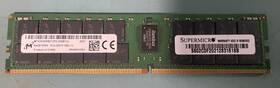
( Brand: Micron ), ( Manufacturer Part Number: MTA36ASF8G72PZ-2G9B1UL ), ( Form Factor: Rdimm ), ( Type: Ddr4 Sdram ), ( Total Capacity: 64 Gb ), ( Number Of Pins: 288 ), ( Bus Speed: Pc4-23400 ), ( Memory Features: Ecc Memory )
Review MICRON 2rx4 Ddr4 Rdimm Server Memory
The **Micron MTA36ASF8G72PZ-2G9B1UL 64GB 2Rx4 PC4-2933Y DDR4 RDIMM Server Memory** is a high-performance, enterprise-grade memory module meticulously engineered to deliver unparalleled reliability, speed, and scalability for demanding server environments. Part of Micron s trusted line of Registered DIMMs (RDIMMs), this module is designed to meet the rigorous requirements of modern data centers, cloud infrastructure, and high-performance computing (HPC) workloads where stability, low latency, and maximum throughput are critical. With a robust **64GB capacity** (comprising eight 8GB DDR4 DRAM chips arranged in a **2Rx4 configuration**), this module ensures efficient data handling while maintaining optimal signal integrity and power efficiency. The **PC4-2933Y** designation signifies its support for **DDR4-2933 MHz** operation, delivering a sustained data transfer rate of **23.33 GT/s per pin**, which translates to exceptional memory bandwidth for applications requiring real-time processing, large-scale database operations, or AI/ML workloads. The **Y-grade** designation further underscores its premium quality, indicating enhanced reliability and extended operational lifespan under sustained high-load conditions.
Built to adhere to **JEDEC standards**, this RDIMM module features a **registered buffer** that mitigates signal noise and timing issues on high-channel-count server motherboards, making it ideal for systems with multiple memory slots. The **2G9B1UL** part of the model number denotes its compatibility with **Micron s advanced memory controllers**, ensuring seamless integration with leading server platforms from major vendors. The module s **low-power design** optimized for efficiency without compromising performance reduces heat generation, contributing to a more stable thermal environment within the server chassis. Additionally, Micron s rigorous **quality assurance processes**, including stringent testing for endurance, error correction, and environmental resilience, guarantee that this memory module will perform consistently even in the most demanding 24/7 deployments.
Whether deployed in **virtualized environments, high-frequency trading systems, or large-scale storage solutions**, this memory module provides the speed and capacity needed to accelerate computational tasks while maintaining enterprise-grade reliability. Its **ECC (Error-Correcting Code) capability** standard in RDIMMs ensures data integrity by detecting and correcting single-bit errors on the fly, minimizing downtime and data corruption risks. The **Dual Inline Memory Module (DIMM) form factor** ensures compatibility with a wide range of server architectures, from mid-range business servers to high-end blade systems. For administrators and IT professionals, this module represents a strategic investment in infrastructure that balances performance, scalability, and long-term operational efficiency, making it an excellent choice for organizations prioritizing both immediate productivity and future-proofing.
The **Micron MTA36ASF8G72PZ-2G9B1UL** is a 64GB (8x8GB) **DDR4 RDIMM** module rated for **PC4-2933Y (2933MHz)** with **registered (RDIMM)** architecture. Below is a detailed breakdown of its pros and cons, followed by a conclusion and recommendation.
---
### **Pros**
1. **High Capacity and Scalability**
- The 64GB capacity (8x8GB) is ideal for high-end servers, virtualization, and workloads requiring large memory pools. It supports configurations up to **2TB per socket** (depending on server platform), making it suitable for enterprise-grade systems.
2. **Registered DIMM (RDIMM) Design**
- RDIMMs are optimized for server environments where multiple DIMMs are installed. They reduce bus contention by buffering commands, improving stability and performance in multi-socket or high-channel-count systems.
- Better suited for servers with **ECC (Error-Correcting Code)** support, which is standard in enterprise hardware.
3. **High-Speed Performance (PC4-2933Y)**
- The **2933MHz** speed is competitive for modern servers, offering a balance between performance and power efficiency. It is compatible with many Intel Xeon and AMD EPYC platforms, including newer generations that support **DDR4-2933/3200**.
4. **Low Power Consumption (Y-Speed Grade)**
- The **Y-speed grade** indicates lower power draw compared to standard-speed DDR4 modules, which can reduce cooling requirements and operational costs in data centers.
5. **Reliability and Micron s Reputation**
- Micron is a trusted manufacturer with a strong track record in server memory. Their RDIMMs are designed for durability, with robust quality control and compatibility with major server vendors (Dell, HPE, Lenovo, etc.).
6. **Compatibility with ECC**
- Since this is an RDIMM, it is designed to work with **ECC memory controllers**, which are standard in enterprise servers. ECC helps detect and correct single-bit errors, improving data integrity in critical applications.
7. **Future-Proofing**
- DDR4 is still widely used in servers (especially older or mid-range models), and 2933MHz is a common speed for many Intel Xeon and AMD EPYC CPUs. While DDR5 is emerging, DDR4 remains relevant for upgrades in existing infrastructure.
8. **Cost-Effective for High Capacity**
- For servers requiring **large memory configurations**, buying in bulk (e.g., 8x8GB kits) can be more cost-effective than smaller DIMMs, reducing per-GB pricing.
---
### **Cons**
1. **DDR4 Obsolescence**
- DDR4 is being phased out in favor of **DDR5** in newer server platforms (e.g., Intel Sapphire Rapids, AMD Milan/Vermeer). While this module will work in current DDR4-based servers, it may become obsolete in the next 2 3 years, limiting long-term flexibility.
- If upgrading to a **DDR5-only** system (e.g., Intel Ice Lake, AMD Milan ), this memory will not be usable.
2. **Higher Latency Compared to DDR5**
- DDR5 offers **lower latency** and **higher bandwidth** (e.g., DDR5-4800 vs. DDR4-2933). If your workload is latency-sensitive (e.g., high-frequency trading, real-time analytics), DDR5 may provide better performance.
3. **Power and Thermal Considerations**
- While the **Y-speed grade** reduces power, DDR4 modules still consume more power than DDR5 (which is more power-efficient per cycle). In large-scale deployments, this can add to cooling costs.
4. **Limited to RDIMM Slots**
- RDIMMs require **registered memory slots**, which may not be available in all server motherboards. Some budget or older servers use **UDIMMs (Unbuffered DIMMs)**, making this module incompatible.
- Check your server s **memory slot type** (e.g., Intel Xeon Scalable platforms typically use RDIMMs).
5. **Potential Overkill for Smaller Workloads**
- If your server only needs **32GB or less**, buying a full 64GB kit may be unnecessary, leading to wasted capacity. Smaller kits (e.g., 16GB or 32GB) might be more practical for lower-end servers.
6. **No Support for Future CPU Generations**
- Newer Intel (e.g., Sapphire Rapids) and AMD (e.g., Genoa) CPUs may **drop DDR4 support** in favor of DDR5. While this module will work in current DDR4 systems, future upgrades may require DDR5-compatible memory.
7. **Price Sensitivity**
- While Micron is reliable, **DDR4 prices have stabilized** but may not offer the same performance-per-dollar as DDR5 in newer systems. If budget is a concern, DDR5 modules (even at higher speeds) may provide better long-term value.
8. **No Integrated Heat Spreaders (IHS) in Some Configurations**
- Some Micron RDIMMs (depending on the exact model) may lack **integrated heat spreaders**, which can lead to higher temperatures in high-channel-count systems. This is less common with Micron s enterprise-grade modules but worth verifying.
---
### **Conclusion**
The **Micron MTA36ASF8G72PZ-2G9B1UL** is an **excellent choice for servers running DDR4-based CPUs** (e.g., Intel Xeon Skylake/Xeon Scalable, AMD EPYC Rome) that require **high-capacity, reliable memory**. Its **RDIMM architecture, ECC support, and 2933MHz speed** make it well-suited for:
- **Virtualization hosts** (VMware, Hyper-V)
- **Database servers** (Oracle, SQL Server)
- **Enterprise applications** (ERP, SAP)
- **High-memory workloads** (memory-intensive computing)
However, if you are **planning to upgrade to a DDR5-based system** (e.g., Intel Ice Lake, AMD Milan ), this module will **not be usable**, making it a **short-term solution**. Additionally, if your workload is **latency-sensitive or power-efficient**, DDR5 may offer better performance.
---
### **Recommendation**
- **Buy this module if:**- You are using a **DDR4-only server** (e.g., Intel Xeon E5/E7 v4/v5, AMD EPYC Rome).
- Your workload requires **large memory pools** (e.g., >32GB per socket).
- You prioritize **reliability and Micron s support** over the latest DDR5 features.
- You are **not planning DDR5 upgrades** in the near future.
- **Consider alternatives if:**- You are **upgrading to a DDR5 server** (e.g., Intel Sapphire Rapids, AMD Milan ). In this case, look for **DDR5 RDIMMs** (e.g., Micron s **MTA32ASF4G80AZ-2G1E** for DDR5-4800).
- Your server uses **UDIMMs** instead of RDIMMs (e.g., some workstations or budget servers). In this case, you ll need **UDIMMs** instead.
- You need **lower latency or higher bandwidth** (DDR5-4800/5200 may be better for some workloads).
- You are on a **tight budget** and can find **DDR4-3200 modules** at a lower price (though performance may be slightly lower).
- **For future-proofing:**- If possible, **plan for DDR5** now, as DDR4 will eventually be discontinued. DDR5 offers **better performance, lower latency, and higher capacity** (e.g., 128GB DIMMs).
- If you must stay on DDR4, ensure your server has **enough RDIMM slots** and that the **CPU supports 2933MHz**.
---
### **Final Verdict**
This **Micron RDIMM module is a solid, high-quality choice for DDR4 servers**, especially in enterprise environments where **reliability, capacity, and ECC support** are critical. However, if you are **not locked into DDR4** and can transition to DDR5, doing so will provide **better long-term performance and flexibility**. Always verify **server compatibility** (CPU, chipset, and memory slot type) before purchasing.
Details:
part #: mta36asf8g72pz-2g9b1ul prices
- $114.99-$525.00
specifications servermemor:
- brand: Micron
- mpn: Mta36asf8g72pz-2g9b1ul
- form factor: Rdimm
- type: Ddr4 Sdram
- total capacity: 64 Gb
- number of pins: 288
- bus speed: Pc4-23400
- memory features: Ecc Memory
returns servermemor:
- paid by: Buyer
- method: Money back
- policy: Returns Accepted
- time: 14 Days
offer servermemor:
- quantity: 1
- started: February 13, 2026
- sold: 0
- options: Ship-to-home
- availability: In Stock
general servermemor:
- condition: Used
- Enterprise Networking, Servers > Server Components > Server Memory RAM
payments servermemor:
- other
- credit card: Mastercard
- wallet: Paypal
shipping servermemor:
- service: Standard
- cost: $0.00
- class: Standard
- type: Fixed
- transit: 5-8 Days
seller servermemor:
- rating: 100.0%
- # reviews: 2981
- city: Pacifica, California
Micron PC4-2933Y Is Similar To:
- 0.20224299680992108 Lot Micron Ecc Server Ram Hp (27.9% similar) I'll get back to you as soon I can. Condition: used, working if a power adapter is required for this item, it not included cord shows signs of normal use w some scuffs scratches blemishes sticker residue no other accessories hardware software...(June 8th, 2018)
- 0.26622135794166435 Lot Micron Ecc Server Ram Memory Dell (33.6% similar) Condition: used, working if a power adapter is required for this item, it not included cord shows signs of normal use w some scuffs scratches blemishes sticker residue no other accessories hardware software. I'll get back to you as soon I can...(June 11th, 2018)
- 0.3483837301561905 Micron Ecc Server Ram Hp (29.1% similar) I'll get back to you as soon I can. Condition: used, working if a power adapter is required for this item, it not included cord shows signs of normal use w some scuffs scratches blemishes sticker residue no other accessories hardware software...(July 17th, 2018)
- 0.36513694130424335 Lot Micron Server Vlp Ram Ibm (24.4% similar) Condition: used, working if a power adapter is required for this item, it not included cord shows signs of normal use w some scuffs scratches blemishes sticker residue no other accessories hardware software. I'll get back to you as soon I can...(October 19th, 2018)
- 0.6842008029848028 Lot Micron Server Ecc Memory Hp (32.3% similar) Condition: used, working if a power adapter is required for this item, it not included cord shows signs of normal use w some scuffs scratches blemishes sticker residue no other accessories hardware software. I'll get back to you as soon I can...(June 18th, 2018)
- 0.6896737264585662 Lot Micron Ecc Server Ram Ibm (27.9% similar) I'll get back to you as soon I can. Condition: used, working if a power adapter is required for this item, it not included cord shows signs of normal use w some scuffs scratches blemishes sticker residue no other accessories hardware software...(June 29th, 2018)
- 0.8117968287077875 Lot Micron Ecc Server Ram Ibm (27.9% similar) I'll get back to you as soon I can. Condition: used, working if a power adapter is required for this item, it not included cord shows signs of normal use w some scuffs scratches blemishes sticker residue no other accessories hardware software...(June 30th, 2018)
- 0.9709607809767642 Samsung Micron Server Vlp Ram Ibm (23.8% similar) I'll get back to you as soon I can. Condition: used, working if a power adapter is required for this item, it not included cord shows signs of normal use w some scuffs scratches blemishes sticker residue no other accessories hardware software...(October 20th, 2018)
- 098378959419 Undisclosed Micron Memory (23.2% similar) We back this testing up with a 30 day guarantee. Please with any questions or concerns. Brand: Micron model: MTA18ASF2G72AZ-2G3B1ZG form factor: desktop pc memory size: 16GB DDR4 PC4-2400T condition: pre-owned used, tested and working electronic source inspects tests each stick of ram to make sure ...(May 24th, 2018)
- 100-562-479 Micron Ecc Reg Server Memory Ram (40.7% similar) The pictures above accurately illustrate units being sold, please examine them before purchase. 25NSCASCL11DATA transfer RATE1600MHZMEMORY CLOCK200MHZRANKRANK 2 voltage 1. This is a tested working, clean, ecm Micron 16GB 2 x 8GB 2RX4 PC3-12800R DDR3 pin server memory kit. These dims are not ...(October 5th, 2018)
- 10x2gb 10600s Elbida Samsung Laptop Ddr3 Hynix Micron Lot Memory (21.7% similar) ...(May 11th, 2015)