WINTEC 3SH1600011R5-8GPD8AP Server Ecc Ram DDR3 8GB PC3 CL11
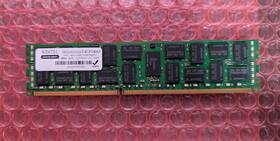
( Brand: Wintec ), ( Manufacturer Part Number: 3SH1600011R5-8GPD8AP ), ( Type: Ddr3 Sdram Ecc Registered ), ( Capacity Per Module: 8 Gb ), ( Number Of Pins: 240 ), ( Bus Speed: Pc3l-12800s Ddr3-1600 ), ( Memory Features: Ecc Memory )
Review WINTEC Server Series 8gb 1600 Pc3 Reg Ecc Ram
The **Wintec 3SH1600011R5-8GPD8AP** is a high-performance, enterprise-grade DDR3 memory module designed to deliver reliable, low-latency performance in demanding server environments. Engineered for compatibility with a wide range of x86-based servers, this **8GB (2x4GB) DDR3 Registered ECC (RDIMM) module** operates at a robust **1600MHz (PC3-12800) clock speed** with a **CAS latency of CL11**, striking an optimal balance between speed and stability for mission-critical workloads. The **Registered (Buffered) architecture** ensures efficient data handling across multi-socket systems, reducing signal integrity issues and minimizing power consumption while maintaining high throughput. Built with **low-power DDR3 (LP-DDR3) compliant components**, this module is optimized for energy efficiency without compromising performance, making it an ideal choice for data centers seeking to balance power savings with peak computational output.
Featuring **ECC (Error-Correcting Code) technology**, the Wintec 3SH1600011R5-8GPD8AP actively detects and corrects single-bit errors, significantly enhancing data integrity in high-availability environments such as virtualization, database management, and high-performance computing (HPC). This makes it particularly well-suited for applications where uptime and accuracy are non-negotiable, such as financial transaction processing, cloud computing, or scientific simulations. The **8GB capacity** provides ample memory for modern workloads, supporting multi-core processors and large-scale virtual machines while ensuring smooth operation even under heavy loads.
Constructed with **industrial-grade components**, this memory module adheres to strict manufacturing standards, ensuring long-term reliability and resistance to environmental stressors. The **Dual Inline Memory Module (DIMM) form factor** guarantees seamless integration with compatible server platforms, including those from major vendors like Dell, HP, IBM, and Lenovo, among others. Whether deployed in a single-socket or multi-socket configuration, this module delivers consistent performance, making it a versatile upgrade option for administrators looking to enhance system stability and scalability. With its **low-profile design** and **standard 240-pin DDR3 interface**, it fits seamlessly into existing server architectures, offering an effortless path to improved memory performance without requiring hardware modifications.
### Pros and Cons of buying a Wintec 3SH1600011R5-8GPD8AP (8GB DDR3 1600 PC3-12800 CL11 Registered ECC RAM)
#### **Pros:**1. **Registered (Buffered) ECC Memory** This type of RAM is designed for servers and workstations, offering better stability and error correction compared to unbuffered memory. ECC (Error-Correcting Code) helps prevent data corruption, which is critical for mission-critical applications, databases, and virtualization.
2. **High Performance for Server Workloads** DDR3 1600 MHz (PC3-12800) is a robust speed for server-grade memory, ensuring smooth operation in environments requiring consistent performance, such as virtualization, web hosting, or database management.
3. **Compatibility with Server Hardware** Registered ECC RAM is specifically engineered to work with server motherboards, ensuring proper voltage regulation and signal integrity, which is essential for multi-socket or high-end single-socket server systems.
4. **Reliability in High-Availability Environments** The combination of ECC and registered buffering makes this RAM ideal for environments where uptime is critical, such as data centers, financial systems, or enterprise applications.
5. **Long-Term Availability** DDR3 is an older but still widely supported standard, meaning this RAM is likely to remain available for upgrades or replacements in older server systems for years to come.
6. **Cost-Effective for Server Use** While not the cheapest RAM on the market, it strikes a balance between performance and reliability, making it a practical choice for businesses that need dependable server memory without overpaying for cutting-edge technology.
---
#### **Cons:**1. **Outdated Technology (DDR3)** DDR3 is several generations behind modern DDR4 and DDR5 standards. This means it may not be as energy-efficient, may generate more heat, and could be less future-proof if upgrading to newer server hardware.
2. **Limited Capacity (8GB)** At just 8GB, this module is on the smaller side for modern server workloads, especially if running multiple virtual machines, large databases, or resource-intensive applications. You may need multiple modules to reach optimal performance.
3. **Potential Compatibility Issues with Newer Servers** Many newer server motherboards (especially those supporting DDR4 or DDR5) will not accept DDR3 RAM. If you're planning to upgrade your server hardware in the future, this module may become obsolete quickly.
4. **Higher Latency (CL11)** A CAS latency of 11 is decent for server RAM but not as low as some newer modules. While this isn t a major issue for most server workloads, it may not offer the absolute best performance in CPU-bound tasks.
5. **Price vs. Alternatives** While this RAM is reasonably priced for server-grade ECC memory, there may be newer or higher-capacity DDR4/DDR5 ECC modules available that offer better performance per dollar in modern systems.
6. **No Support for Advanced Features** DDR3 lacks features like integrated memory controllers (IMC) or advanced power management found in newer DDR4/DDR5 modules, which could limit optimization in very high-end server setups.
---
### **Conclusion:**The **Wintec 3SH1600011R5-8GPD8AP** is a solid choice for **legacy server systems, older data centers, or environments where DDR3 is still the standard**. Its **registered ECC design** ensures stability and error correction, making it suitable for critical workloads like databases, virtualization, or financial systems. However, if you're working with **modern server hardware (DDR4/DDR5)**, this module may not be the best long-term investment due to its outdated technology.
For **new deployments or future-proofing**, consider upgrading to **DDR4 or DDR5 ECC RAM** if your server supports it. If you're maintaining an **older server infrastructure** and need reliable, low-latency memory, this module remains a practical and cost-effective option.
### **Recommendation:** - **Buy this module if:**- You are running an **older server (DDR3-compatible)** that requires ECC memory for stability.
- Your workloads are **not CPU-intensive** and benefit from the reliability of registered ECC.
- You need **long-term availability** and don t plan to upgrade hardware soon.
- **Avoid this module if:**- Your server supports **DDR4 or DDR5**, as newer memory will offer better performance and efficiency.
- You require **higher capacity (16GB per module)** for modern virtualization or database workloads.
- You are building a **new server system** and want future-proofing with the latest memory standards.
For **best results**, always verify **compatibility with your server s motherboard and BIOS** before purchasing. If possible, opt for **higher-capacity ECC modules** (e.g., 16GB or 32GB) to reduce the need for multiple sticks.
Details:
part #: 3sh1600011r58gpd8ap prices
- $20.00-$29.99
specifications servermemor:
- brand: Wintec
- mpn: 3sh1600011r5-8gpd8ap
- type: Ddr3 Sdram Ecc Registered
- capacity per module: 8 Gb
- number of pins: 240
- bus speed: Pc3l-12800s Ddr3-1600
- memory features: Ecc Memory
shipping servermemor:
- cost: $0.00
- transit: 7-14 Days
- service: USPS First Class Large Envelope
- carrier: USPS
- type: Calculated
- class: Standard
payments servermemor:
- other
- wallet: Paypal
- credit card: Discover
general servermemor:
- condition: Used
- Enterprise Networking, Servers > Server Components > Server Memory RAM
offer servermemor:
- availability: In Stock
- sold: 0
- started: February 12, 2026
- best offers: True
- options: Ship-to-home
- quantity: 4
seller servermemor:
- city: Knoxville, Tennessee
- # reviews: 1205
- rating: 99.6%
returns servermemor:
- policy: No Returns
Wintec 3SH1600011R5-8GPD8AP Is Similar To:
- 35944581-l Wintec Kit Ecc Registered Dimm Matched Set (23.3% similar) The 8 chips are a matched set, each chip is 512MB for total of 4GB ram. But when they were pulled still working fine, and promptly stored away. Working and in good condition, last tested when they were removed from the system. The board that these came out of had eight memory sockets so all 8 chips ...(May 10th, 2018)
- 39c945342d-il Wintec Pin Dimm Ecc (25.7% similar) ...(May 30th, 2018)
- 3rsl160011r5h-32gq Wintec Industries Sdram Ecc Registered (31.6% similar) Wintec 32GB 4 x 8GB 240-PIN DDR3 sdram ecc registered PC3 shipped with USPS first class package. Condition is used...(March 28th, 2019)
- 3sh10667r5-8gr Cl7 8gb Dimm Ecc Registered Wintec 240-pin Pc3-8500 Ddr3-1066mhz (23.2% similar) Lightly used, but fully functional...(February 15th, 2015)
- 3sh13339r5-4gpf Wintec 16 Gb Ram 4x (27% similar) Four Wintec 4GB 3SH13339R5-4GPF-P PC3 DDR3-1333MHZ ecc registered CL9 240-PIN dim dual rank memory module. Please remember these are ecc server memory modules - they will only work in servers and some workstations not home normal computers. There may be the odd light mark or small scratch from ...(January 11th, 2017)
- 3sh13339r5-4gpf-p Wintec Lot Of Ecc Server Memory Ram (32.6% similar) 5VRANKS: 2RX4FORM factor: radium condition: pre-owned used. 3SH13339R5-4GPF-P CDT 4GB 240P PC3 CL9 36C 256X4 DDR3-1333 2RX4 5v ecc radium, : Wintec size: 4GBPINS: 240PCL9TYPE: ECCPC3-10600 voltage...(April 14th, 2018)
- 3sh13339r5-8gr Wintec Sdram Server Memory Model (30.9% similar) Most orders ship same day. Most items ship same day. This Wintec 3SH13339R5-8GR is in excellent condition and ready to be redeployed. Up for sale is a genuine Wintec 3SH13339R5-8GR unit. Please with any comparability questions or concerns...(March 21st, 2019)
- 3sh13339r9-4gp Wintec Reg Ecc Server Ram (31% similar) Working pull. This is server memory. Don't buy unless you want ecc memory...(April 27th, 2018)
- 3sh160011r5-4gpg-ap Wintec Kit Ecc Registered (44.6% similar) I haven't had any issues with them. Brand: Wintec model part: 3SH160011R5-4GPG-AP memory type: DDR3 sdram registered ecc, pc 1600MHZ, 240PIN, CL11, dual rank capacity per module: 4GB, 9 modules kit. I am breaking up my 72GB into two 36GB kits 9X4GB in case someone doesn't need as much. These were ...(July 7th, 2018)
- 3sl13339r5-8gpc 8gb Wintec Pc3l-10600r Ecc Reg Ddr3 Server Memory 2rx4 Ddr3l Qty (42.3% similar) Do not install these in desktop PCs. 8GB Wintec 3SL13339R5 8GPC PC3L 10600R ecc reg DDR3 server memory 2RX4 DDR3L tested, passed ram check quantity 130 is available, price here is per individual piece. For servers only. Smaller items will normally ship USPS and heavier items will normally ship FedEx...(August 18th, 2016)
- 3sr3355b-13 Hynix Lot Of Wintec Server Ecc Ram (34.4% similar) Is a wholly-owned subsidiary of sci leasing, the largest independent it leasing company in USA. Any repair service cost summary submitted without prior approval from the epic, inc. Customer provided postage us. These states are as follows: AZ, ca, mo, NV, NY, pa, SC, sd, and TX. Special requests. We...(February 27th, 2018)